












Procurement guide · use it on us too
How to Choose a Solar EPC Contractor
Last reviewed August 2026 · written to be used against any contractor bidding, including us
A solar EPC contractor takes single point responsibility for engineering, procurement and construction of a solar plant, delivering it complete rather than supplying parts of it. The value of the model is that one party owns the outcome, so design errors, supply delays and installation defects are all their problem rather than yours to arbitrate between vendors. What determines whether that works in practice is how precisely the scope of work and its exclusions are defined.
The one line that matters most: in solar EPC, disputes almost never arise over the panels. They arise over the things nobody wrote down.
Why we publish this
Because a buyer who runs a proper evaluation gets a better project regardless of who wins it, and because we are content to be judged against these criteria. Take the checklist to every bidder.
The three letters
What EPC commits the contractor to
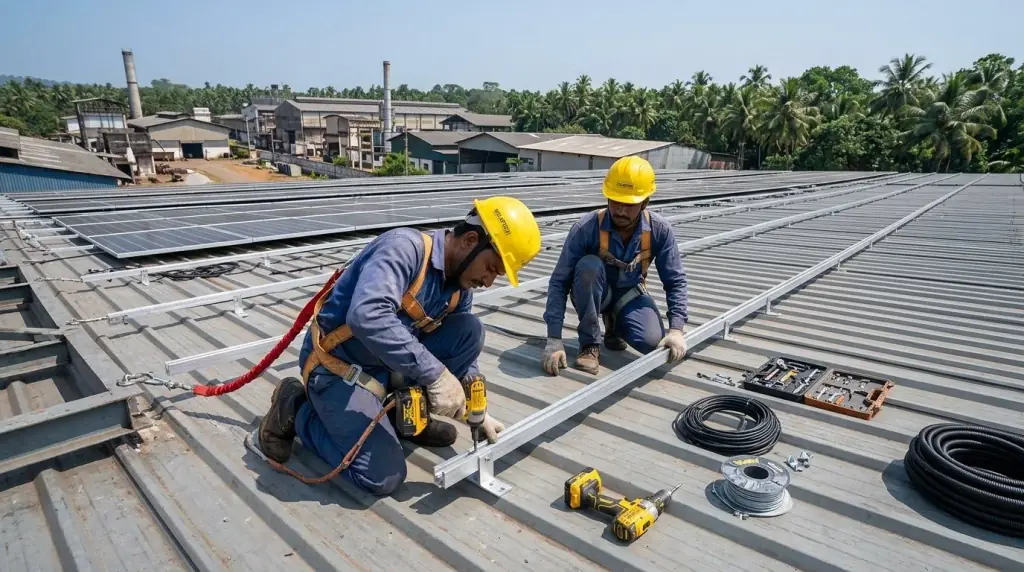
EPC stands for engineering, procurement and construction, and it describes a delivery model rather than a type of company. Under an EPC contract a single party designs the plant, buys the equipment and builds it, handing over a working installation. The defining characteristic is single point responsibility: when something does not work, there is one party accountable rather than a design consultant, a supplier and an installer pointing at each other.
E
Engineering
Electrical design including string configuration, cable sizing and protection coordination. Structural design of the mounting system and its foundations or fixings. Layout, shading analysis and generation modelling. Where required, design certification by a qualified engineer.
P
Procurement
Sourcing modules, inverters, structures, cables, protection equipment and balance of system, to the specification in the contract. This is where compliance obligations such as ALMM listing and DCR status sit.
C
Construction
Site preparation and civil works, structural erection, module installation, electrical works, earthing, testing and commissioning.
Why single point responsibility is worth paying for
On a split contract, a system underperforming raises an immediate question: is it the design, the equipment or the installation? Each party has an interest in the answer being one of the others.
Under EPC that question is not yours to resolve, which is the entire commercial point of the model.
Where it breaks down
Single point responsibility only extends as far as the scope. Anything excluded from the contract is outside it, and if a project needs something nobody scoped, the gap falls to you regardless of what the cover page says about turnkey delivery.
The scope boundary is the most consequential thing on this page.
Delivery models
EPC, or something else
EPC is one of several ways to buy a solar plant, and it is not automatically the right one. Supply-and-install contracting, EPCM arrangements and item rate contracts each suit different buyers, depending on how much technical capability sits in-house and how much risk the buyer wants to hold rather than pay someone else to carry.
Model matcher
Three questions about you, not the plant
Likely fit
EPC, turnkey lump sum
Without in-house electrical and structural engineering, or with a budget that has to hold, single point responsibility is worth what it costs. One party owns the outcome and the price includes their allowance for the risks they carry.
Then spend your effort on the scope boundary rather than on the price, because that is where an EPC contract succeeds or fails.
Go to the scope boundary →| Model | Who holds the risk |
|---|---|
| EPC, turnkey lump sum | The contractor, within the defined scope |
| Supply and install | Split. Supplier for equipment, installer for workmanship |
| EPCM | You, with the contractor managing on your behalf |
| Item rate | Largely you, since quantities are measured |
| RESCO or OPEX | The developer, who owns the asset |
What you pay for under EPC
A lump sum EPC price includes the contractor’s allowance for the risks they are carrying: quantity variation, price movement in equipment, weather, and the cost of putting right anything within their scope.
That allowance is real and it is priced in. A buyer able to carry some of it themselves can sometimes buy the same plant for less under a different model, which is a legitimate choice rather than a failure of EPC. CAPEX vs OPEX vs RESCO covers the funding side.
The scope boundary
Who does what, and the eight gaps that cause disputes
Most disputes on solar EPC projects arise not from the equipment but from work that neither party scoped. A contract that lists the panels and inverters in detail while leaving roof waterproofing, construction power, crane access, approvals liaison or the high tension interface undefined has left the expensive questions unanswered. The scope boundary should be agreed line by line before signing, with exclusions stated as explicitly as inclusions.
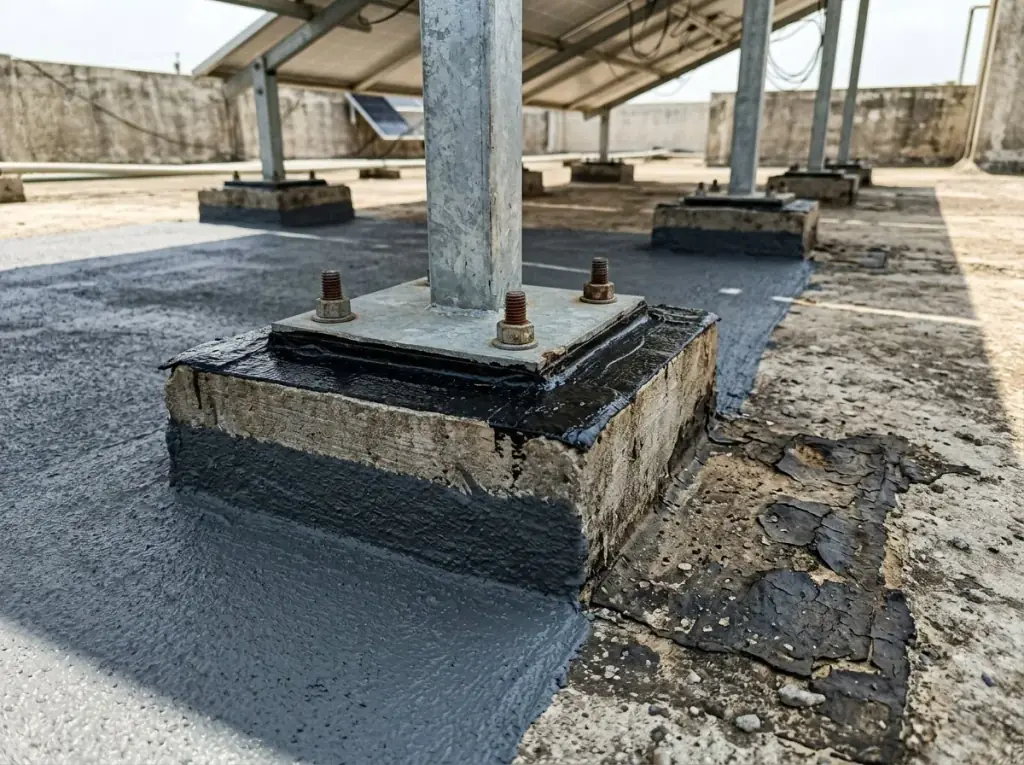
On roof waterproofing specifically
It is the most common and most bitter dispute. An array is designed to sit on the roof for twenty-five years. If the waterproofing beneath it is near the end of its life, it should be renewed before installation, and that is almost always outside an EPC scope.
Establish the roof’s condition and who is paying to remedy it before the contract is signed, not when a leak appears in the second monsoon and both parties reach for the paperwork.
What to do with this checklist
Take it into the tender or the quotation conversation and require every line to be marked. The eight high-risk lines are the ones to settle first. A contractor who marks the exclusions honestly and prices them separately is easier to deal with than one who leaves them ambiguous and raises them later.
Commercial terms
What the contract should say
Beyond scope, a solar EPC contract needs to define the payment structure, the programme and what happens if it slips, the performance the plant must achieve and what happens if it does not, the period during which the contractor must return to fix defects, and how variations and disputes are handled. Each of these is standard in construction contracting and each is frequently thin or absent in solar quotations.
Payment structure
Milestone-based, tied to delivered progress. Two protections worth insisting on:
An advance bank guarantee covering any mobilisation advance, so the money is recoverable if the contractor does not perform.
Retention held until the end of the defect liability period, or a performance bank guarantee in its place. Paying the final instalment at commissioning removes your only leverage on defects.
Programme and delay damages
A dated programme with key milestones, and liquidated damages for delay expressed as a rate per week with a cap.
Delays outside the contractor’s control, chiefly utility approvals, should be carved out explicitly, because holding a contractor to a date that depends on a third party is neither fair nor enforceable.
Defect liability period
The period after commissioning during which the contractor returns and rectifies defects at their own cost. Establish its length, what it covers, response times, and whether it includes module cleaning and routine maintenance.
A defect liability period is not the same thing as an operations and maintenance contract, and buyers frequently conflate them.
Variations and change orders
How additional work is instructed, priced and approved. Without a mechanism, every unforeseen item becomes a negotiation at the point of maximum leverage for whichever party is holding up the work.
Add insurance, statutory and safety compliance, and dispute resolution. The last is worth a paragraph even on a small contract, because its absence is only noticed when it is needed.
Four warranties, three durations, one common confusion
A quotation saying “25 year warranty” is telling you very little. These are separate obligations from separate parties.
Performance guarantees
Performance ratio, and how to make the guarantee mean something
A solar plant’s performance is usually guaranteed through a performance ratio, which expresses actual generation as a proportion of what the installed capacity should have produced given the solar radiation actually received. Because it normalises for weather, a performance ratio guarantee is meaningful in a way a promise of annual units is not, since the latter can be missed for reasons that have nothing to do with the plant.
Guarantee tester
Tick what the offered guarantee actually contains
Decoration
0 of 5
A performance guarantee without a stated value, a measurement method or a remedy is a sentence in a proposal, not an obligation.
The practical alternative on smaller projects
On a residential or small commercial system a full performance ratio regime is disproportionate. What works instead is a stated expected monthly generation figure, set at handover and accounting for seasonal variation, with monitoring configured so the owner can compare against it.
That is a benchmark rather than a contractual guarantee, and for a small system it is usually the more useful thing.
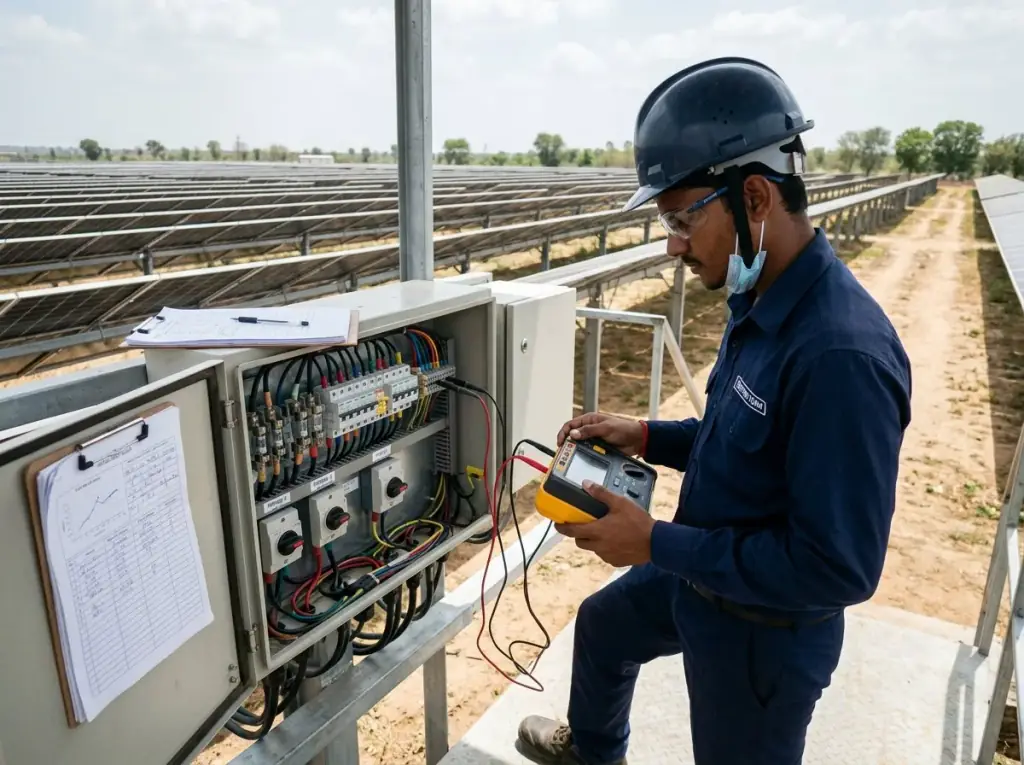
Ask what happens at commissioning
Insulation resistance testing, string-level open circuit voltage and operating current verification, earth continuity, and the results recorded rather than confirmed verbally. The absence of string-level testing from a commissioning scope is a genuine warning sign.
Evaluation
What to ask everyone bidding, including us
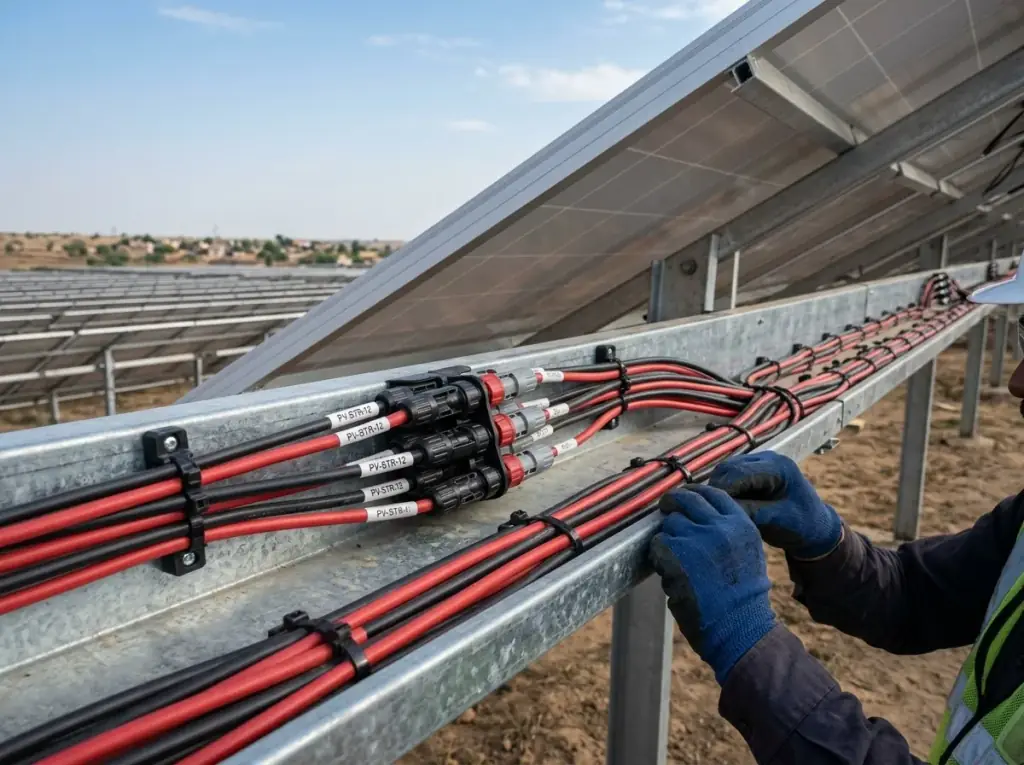
Solar EPC contractors differ far more than their quotations suggest, and the differences that matter are rarely visible in a headline price. What distinguishes them is who carries out the work, what is specified where it cannot be seen, how completely the scope is defined, and whether they will still exist to honour a workmanship warranty in year seven.
Answered so far
0 of 10
A contractor unwilling to answer any of the ten is answering it anyway.
Our position on this list
We publish it because we are content to be evaluated against it, and because a buyer who asks these questions of every bidder gets a better project regardless of who wins.
Turnkey
The word does less work than people think
Turnkey describes a contract under which the contractor delivers a complete working installation, and it is frequently used to imply that everything is covered. What it actually means is that everything within the defined scope is covered. Turnkey delivery of a scope with significant exclusions is still turnkey, and the exclusions are where the cost lands.
Commonly outside a turnkey solar scope, unless specifically included
None of these are unreasonable exclusions. Several are genuinely outside a solar contractor’s competence, and some depend on decisions only you can make. The problem is not that they are excluded, it is that they are frequently not mentioned until they are needed.
The fix costs nothing
Require the contract to contain an explicit exclusions list, not just an inclusions list.
A scope that says what is not included is worth more than one that says only what is, and a contractor who writes that list unprompted is one who has done this before.
Where we fit
How Blues Renewables works
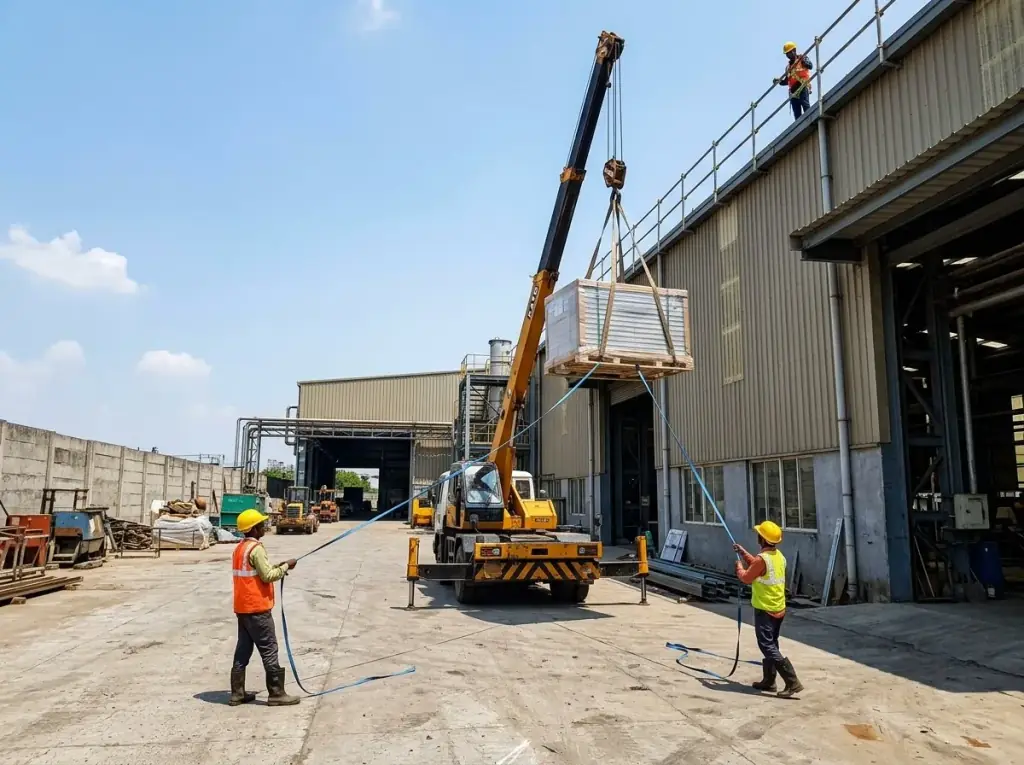
Blues Renewables delivers solar EPC across Tamil Nadu, covering rooftop and ground mounted installations for residential, commercial, institutional and industrial clients. We install with our own team rather than subcontracting, which means the person who surveyed the site is accountable for what happens on it, and we itemise scope and exclusions rather than presenting a lump sum and raising gaps later.
How we contract
- +Itemised quotation naming every component, brand and specification, so it can be compared line by line
- +Scope and exclusions stated explicitly, using the checklist above
- +Our own installation team, not subcontracted crews
- +Approvals handled, including utility application, net metering and subsidy filing, followed through to disbursal
- +Recorded commissioning with test results, string-level verification and a documentation handover
- +Two years of maintenance included from commissioning, with an AMC available afterwards
What we exclude, stated here rather than in the small print
- –Roof strengthening and waterproofing renewal where a roof needs work before an array can go on it
- –High tension interface and transformer works on larger installations
- –Statutory approvals beyond the utility application
- –Land use permissions on ground mount projects
Where any of these apply we tell you at the survey and price them separately, or point you to who should do them.

Put us through it
Get an itemised proposal
Send us twelve months of electricity bills and tell us about the site. We will survey properly, model the load, and come back with an itemised proposal setting out scope, exclusions, specification and price line by line. Compare it against anyone else using the checklist on this page. That is what it is for.
Handing a prospect the checklist and then filling it in completely, in front of them, does more than any claim about quality. That is the whole idea.
Solar EPC contracting, answered
What is a solar EPC contractor?
A contractor who takes single point responsibility for engineering, procurement and construction of a solar plant, delivering it complete rather than supplying parts of it. The value of the model is that one party owns the outcome, so design errors, supply delays and installation defects are theirs to resolve rather than yours to arbitrate between vendors.
What does EPC scope of work include?
Electrical and structural design, equipment procurement, civil and structural works, module and electrical installation, earthing, testing and commissioning. What varies between contracts, and where disputes originate, is the treatment of items such as roof strengthening, waterproofing renewal, the high tension interface, construction power, approvals liaison and access equipment. Each should be marked explicitly as included, client scope or excluded — the checklist above is built for exactly that.
What is the difference between EPC and supply and install?
Under EPC one party holds responsibility for the whole outcome within the defined scope. Under supply and install the responsibility is split, with a supplier accountable for equipment and an installer for workmanship, which leaves the buyer to determine which is at fault when something underperforms. EPC costs more because the contractor prices the risk they are carrying.
What causes most solar EPC disputes?
Scope gaps rather than equipment. Roof waterproofing, roof strengthening, the high tension interface, construction power and water, approvals liaison and modifications to existing switchgear are the items most commonly left unstated, and each is expensive enough to matter when it surfaces mid-project.
What is a performance ratio guarantee?
A guarantee expressing actual generation as a proportion of what the installed capacity should have produced given the solar radiation actually received. Because it normalises for weather it is more meaningful than a promise of annual units. To be enforceable it needs a stated value, a defined measurement method and period, an explicit exclusions list, and a remedy if it is not met.
Should I hold retention on a solar EPC contract?
Yes, or take a performance bank guarantee instead. Paying the final instalment at commissioning removes your only practical leverage if defects appear during the defect liability period. Retention is standard construction practice and a reasonable contractor will expect it.
Is a defect liability period the same as a maintenance contract?
No, and they are frequently conflated. A defect liability period obliges the contractor to return and rectify defects at their own cost for a defined period after commissioning. Maintenance covers routine activity such as cleaning, inspection and monitoring. Establish which is included, for how long, and what falls outside both.
What does turnkey actually mean?
That the contractor delivers a complete working installation within the defined scope. It does not mean everything is covered. Turnkey delivery of a scope with significant exclusions is still turnkey, which is why an explicit exclusions list is worth more than an inclusions list alone.
How do I compare two EPC quotations?
Not on the total. Compare the specification of what cannot be seen, meaning structure material and coating, fastener specification, cable sizing, protection devices and earthing, since that is where price differences usually hide. Then compare the scope line by line, the four warranty periods separately, and the commissioning scope.
Should I appoint an EPC contractor or manage it myself?
EPC suits buyers without in-house electrical and structural engineering capability, who want a fixed price and one accountable party. A split contract can work for an organisation with a competent projects or maintenance engineering function, a straightforward site and the appetite to manage interfaces. The EPC price includes the contractor’s allowance for the risk they carry, which is real and is priced in.