






Solar Panel Installation in Tiruvallur
Tiruvallur district runs from established suburbs at Avadi and Poonamallee out to the northern industrial belt at Gummidipoondi and Minjur. Plots are larger than inner Chennai, land is more often available, and the constraints are different at each end of the district.
Installing across Tamil Nadu since 2020
Two years free maintenance included
Subsidy and TANGEDCO paperwork filed by us
Free site survey and energy audit, no obligation
What changes where
Pick what applies to your site
Larger plot
Consumption rather than roof area sets the size, so the risk here is oversizing rather than undersizing.
Six of the things that change a design in Tiruvallur. We confirm which apply at the survey.
The short answer
Solar installation in Tiruvallur
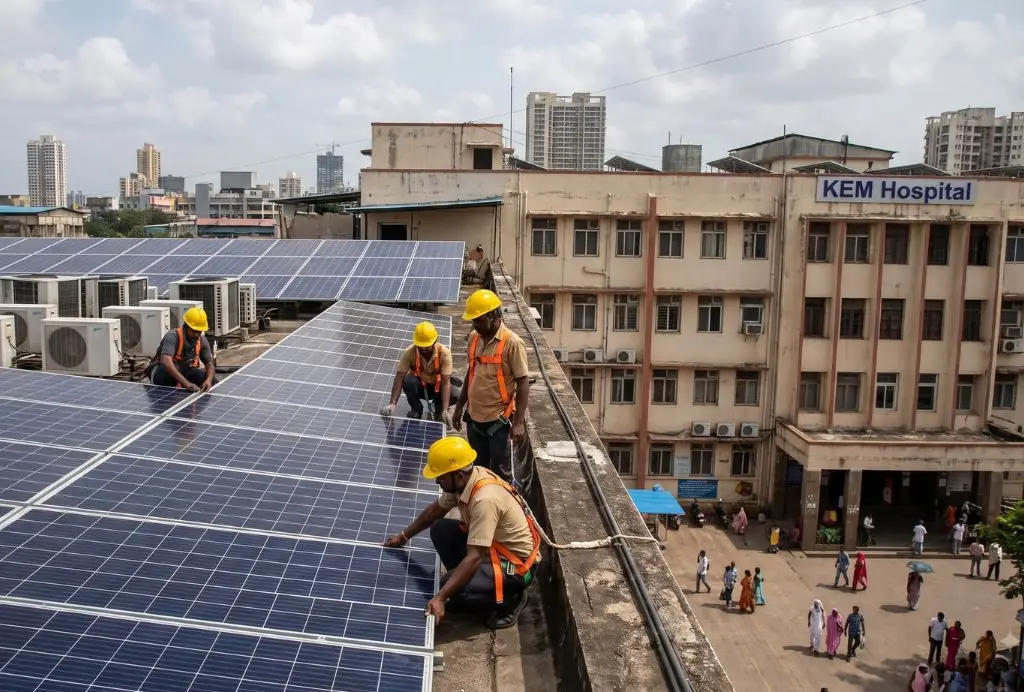
Blues Renewables installs solar across Tiruvallur district, covering Avadi, Poonamallee, Thirumazhisai, Thiruverkadu and the western suburbs, along with the northern industrial belt at Gummidipoondi and Minjur and the warehousing corridor through Red Hills and Puzhal. Larger plots here mean larger systems and frequently three-phase conversions, and properties with open land can consider ground-mounted arrays. Before the survey, you can check the solar panel price in Chennai for 3 kW to 10 kW systems and see how our solar panel installation in Chennai works, the same process we follow in Tiruvallur.
The local picture
Larger plots, available land, and longer approvals
Tiruvallur district differs from metropolitan Chennai in three practical ways. Plots are larger, so systems commonly run 4 kW and above and three-phase conversion is usual. Land is more often available alongside buildings, which makes ground-mounted arrays a genuine option rather than a theoretical one. And approval timelines through outer section offices run longer than in the metro.
What larger plots change
Consumption rather than roof area sets the size
For most households, which reverses the usual constraint and makes oversizing the risk rather than undersizing.
Surplus is worth less than you think
Credit still unused on 31 March lapses unpaid, so capacity beyond your consumption earns nothing.
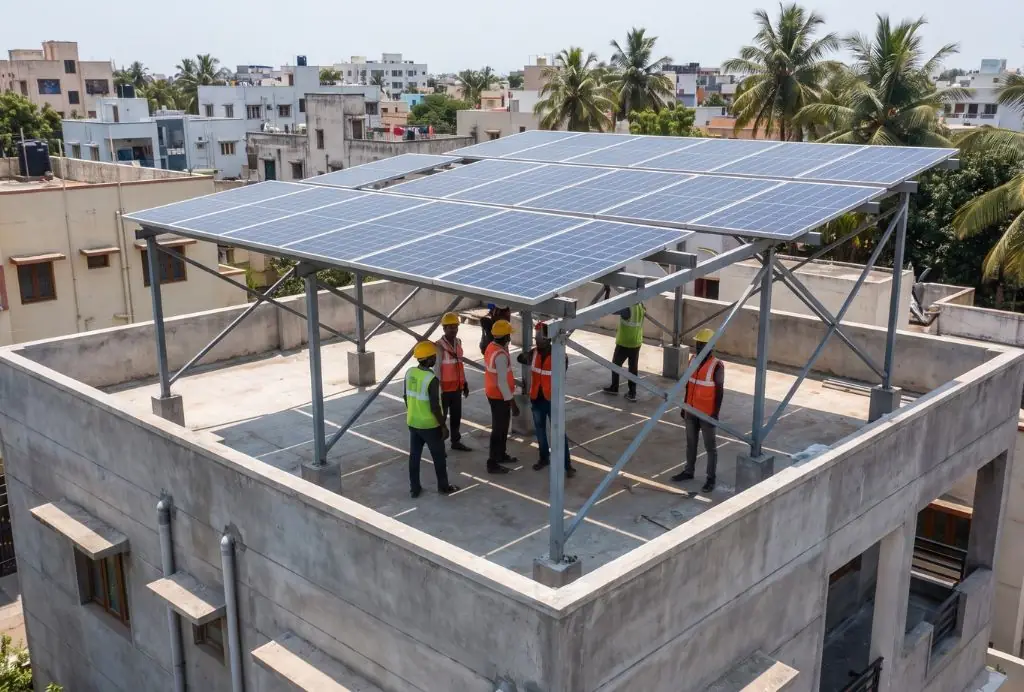
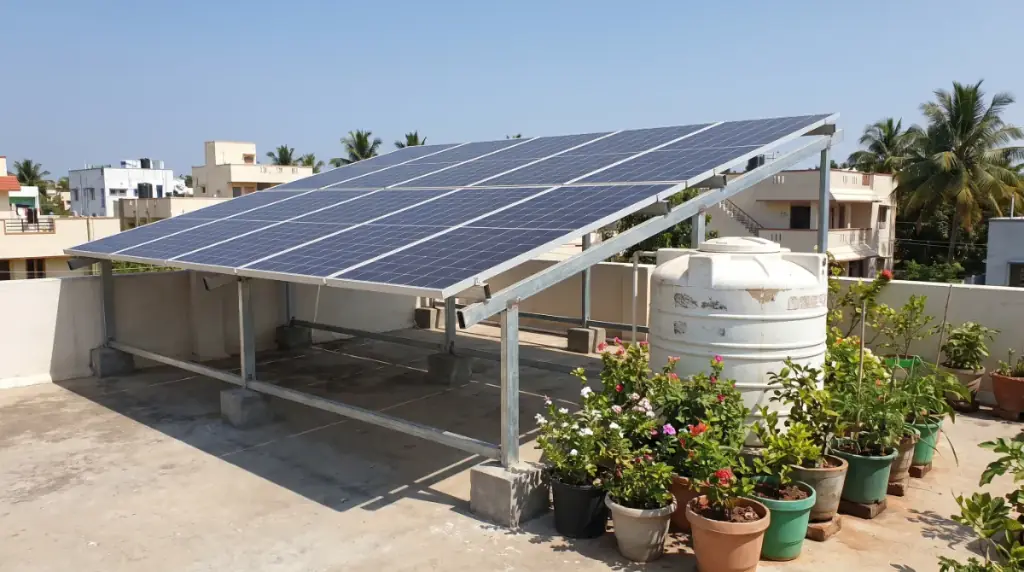
Elevated structures are practical
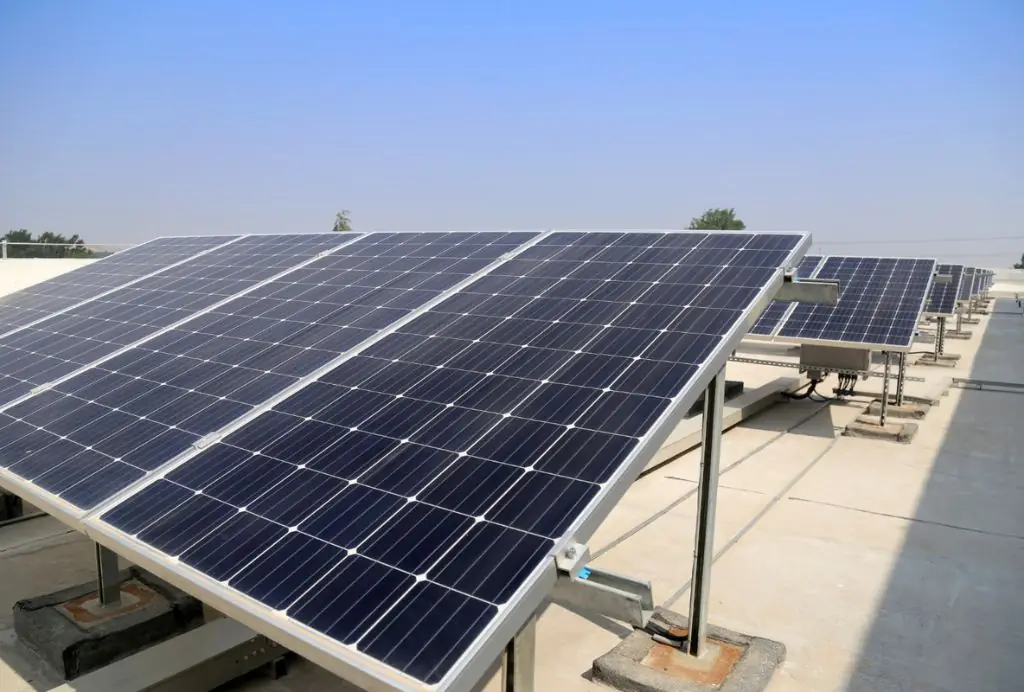
Since terraces are large enough to be genuinely used and raising an array does not overshadow a neighbour.
Three-phase conversion
Required above 4,000 watts of connected load and filed alongside the net metering application rather than after it.
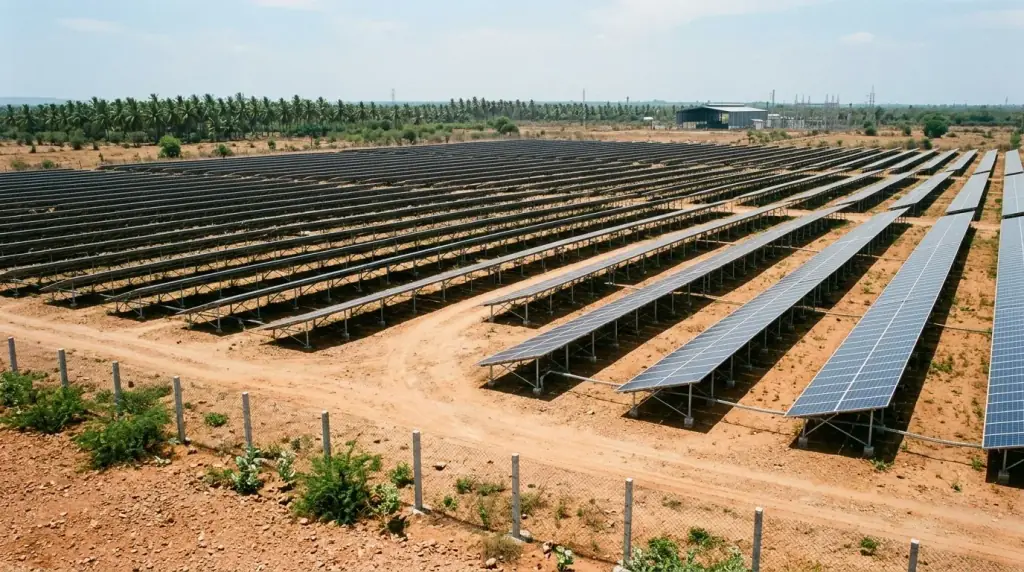
Where ground-mount is worth costing
Properties with open land
Around Poonamallee, Thirumazhisai and the outer belt frequently hold open land alongside the building.
Optimal tilt and orientation
A ground-mount array can be angled properly rather than following the roof, with far easier cleaning and maintenance access.
The trade-off
It costs more in foundations and civil work and occupies the land it sits on.
The northern industrial belt
Gummidipoondi and Minjur are a different problem
Coastal salt air combined with industrial atmosphere requires elevated corrosion specification, weak outer feeders mean voltage fluctuation can trip an inverter offline, and service distance should be agreed in writing rather than assumed.
Plan for it
Approvals take longer here
Outer section offices cover larger areas with more travel for inspection and metering, so expect eight to twelve weeks from application to a live system. Every application, including subsidy, net metering, load enhancement and phase conversion, is filed in parallel rather than sequentially.
Our work
What we do in Tiruvallur
Quick estimate
What size system does your bill suggest?
System size
5.5 kW
Indicative cost
₹2.90 L to ₹3.33 L
PM Surya Ghar subsidy
₹78,000
Monthly saving
₹5,400
Simple payback
3.5 yrs
Indicative only, at roughly 4.2 units per kW per day and a blended domestic tariff. The state rooftop calculator run by TNGECL uses about 1,600 units per kW a year for Thiruvallur, about 4.4 a day. Your roof, shading and sanctioned load set the real figure.
Get the real number →Homes on larger plots
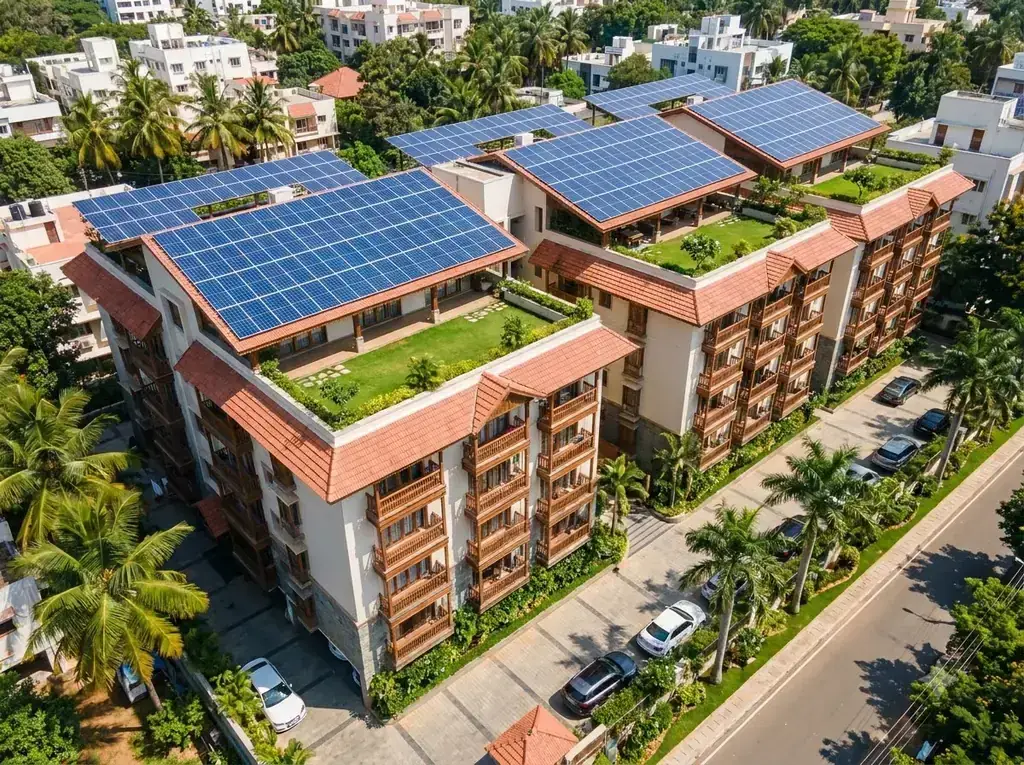
Avadi, Poonamallee, Thiruverkadu and the western suburbs. Typically 4 kW to 6 kW sized against consumption rather than roof area, with elevated structures practical.
Ground-mounted installations
Properties with open land, where optimal tilt and ground-level maintenance access outweigh the extra civil cost.
Industry and warehousing
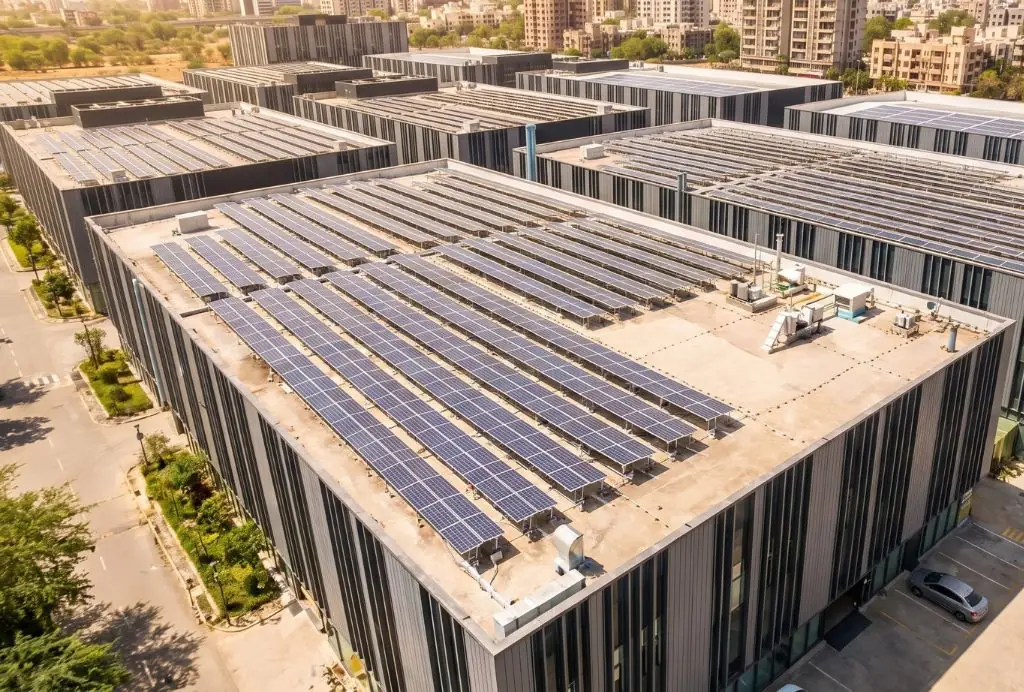
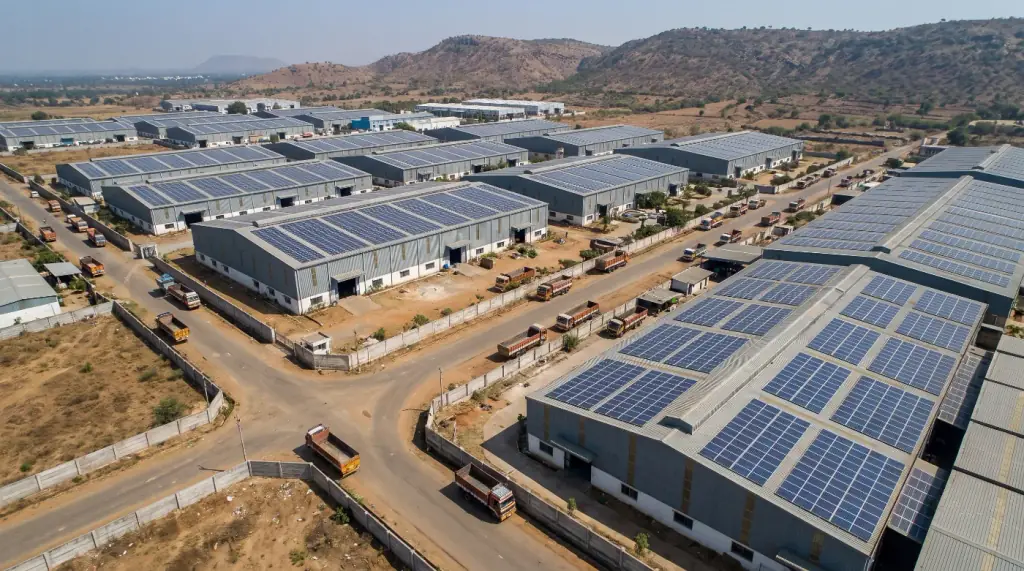
Gummidipoondi, Minjur, Thirumazhisai and the Red Hills and Puzhal corridor. Sheet roofs with skylights, HT connections, coastal corrosion in the north, and cable sizing on large sites.
Solar lighting for layouts
New developments across the district, where planning street lighting in before roads are finished avoids trenching entirely.
Choose your area
Areas we cover in Tiruvallur
10 areas in Tiruvallur
What we install
Services and guides
Free, no obligation
Book a free assessment in Tiruvallur
Send us your last twelve months of electricity bills. For a home we will come back with a system size, an itemised price and the subsidy applied. For a business or industrial site we will run a load profile analysis first, because that determines what solar can actually offset and your roof only constrains it.
Common questions
Solar in Tiruvallur, common questions
Which areas of Tiruvallur district do you cover?
Avadi, Poonamallee, Thirumazhisai, Thiruverkadu, Pattabiram, Thirumullaivoyal, Vanagaram and Iyyappanthangal in the west, along with the northern industrial belt at Gummidipoondi and Minjur and the warehousing corridor through Red Hills and Puzhal.
Should I install as much as my large roof allows?
Usually not. Surplus generation is credited under net metering but any credit still unused on 31 March lapses unpaid, so capacity beyond your consumption is bought at full price and earns nothing. The subsidy also stops rising at 3 kW.
Is ground-mounted solar worth considering here?
Where you have suitable open land, yes, and it is worth costing properly. A ground-mount array can be tilted and oriented optimally rather than following the roof angle, with far easier cleaning and maintenance access. It costs more due to foundations and civil work and occupies the land it sits on.
Are approvals slower in Tiruvallur?
Generally yes. Outer section offices cover larger areas with more travel for inspection and metering, so expect eight to twelve weeks rather than six to ten. We file the subsidy application, net metering application and any load or phase work in parallel to keep elapsed time down.
Does the northern industrial belt need special specification?
Yes. Gummidipoondi and Minjur combine coastal salt air with industrial atmosphere, which is more demanding than either alone. IEC 61701 salt mist certified modules and hot dip galvanised structures with appropriate coating thickness are the minimum, with shorter inspection intervals.
Will you service sites this far from Chennai?
Yes, and the arrangement should be agreed in writing at the outset, covering response times and whether visits are scheduled or on call. We would rather set expectations you can hold us to than promise same-day attendance we cannot sustain.