

Solar for Hotels and Lodges in Tamil Nadu
A hotel never really switches off. Air conditioning, lifts, pumps, laundry, kitchen and hot water run across the day and much of the night, all billed at commercial rates.
That continuous load is good news for solar, because a high share of daytime generation is consumed on site. The complication is the roof, which on most hotels is already doing three other jobs.
Get an itemised proposalWhat decides the answer here
- Hotels bill under LT-3 commercial, roughly ₹7 to ₹8.50 a unit, which is what each solar unit displaces.
- Daytime self-consumption is high, because air conditioning, laundry and kitchen all run through the hottest hours.
- The terrace is smaller than it looks. Tanks, AC plant, lift rooms and a terrace restaurant take most of it.
- Solar water heating and solar PV are different products, and a hotel usually wants both for different loads.
- Accelerated depreciation applies, not the residential subsidy.
Which loads solar actually reaches
Split the bill before sizing anything.
Daytime, which solar covers well
Public area and corridor air conditioning, the kitchen, laundry, water pumps, lifts and the office. On an occupied day this is the bulk of the load and it coincides with generation.
Night, which it does not
Guest room air conditioning through the night, corridor and facade lighting, and the kitchen for late service. A grid-connected array contributes nothing here; those units come from the grid, offset by the credit for daytime export.
Hot water, which is a different product
Hotels use a lot of hot water and a solar water heating system serves that load directly and far more cheaply per unit of heat than using PV electricity to make heat. The two are complementary, not alternatives, and a proposal that offers PV as the answer to a hot water bill is answering the wrong question.
The roof problem
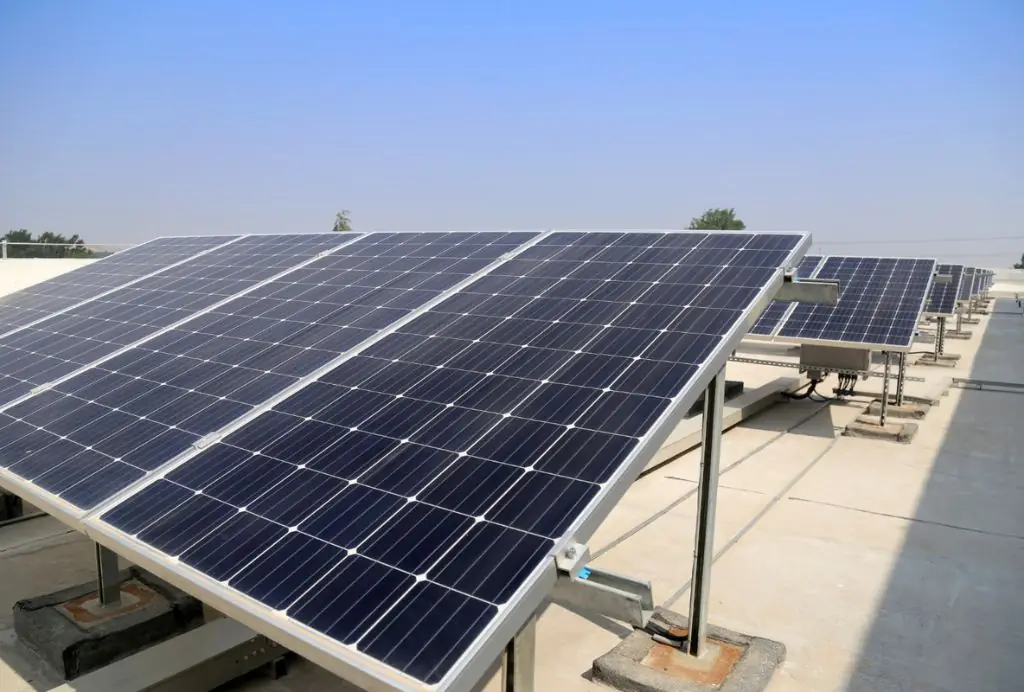
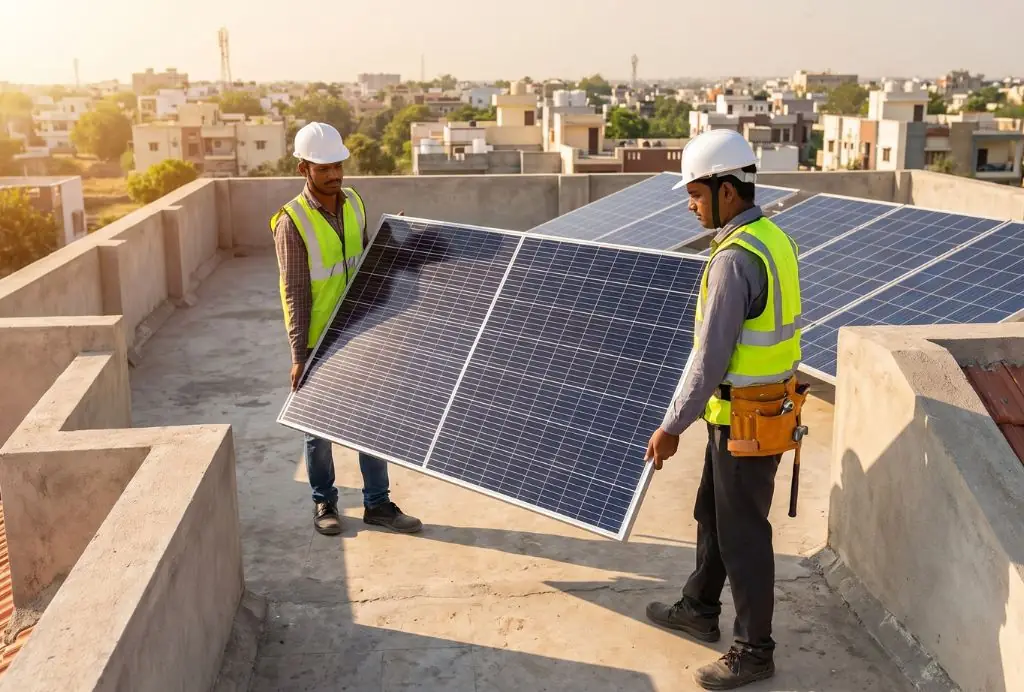
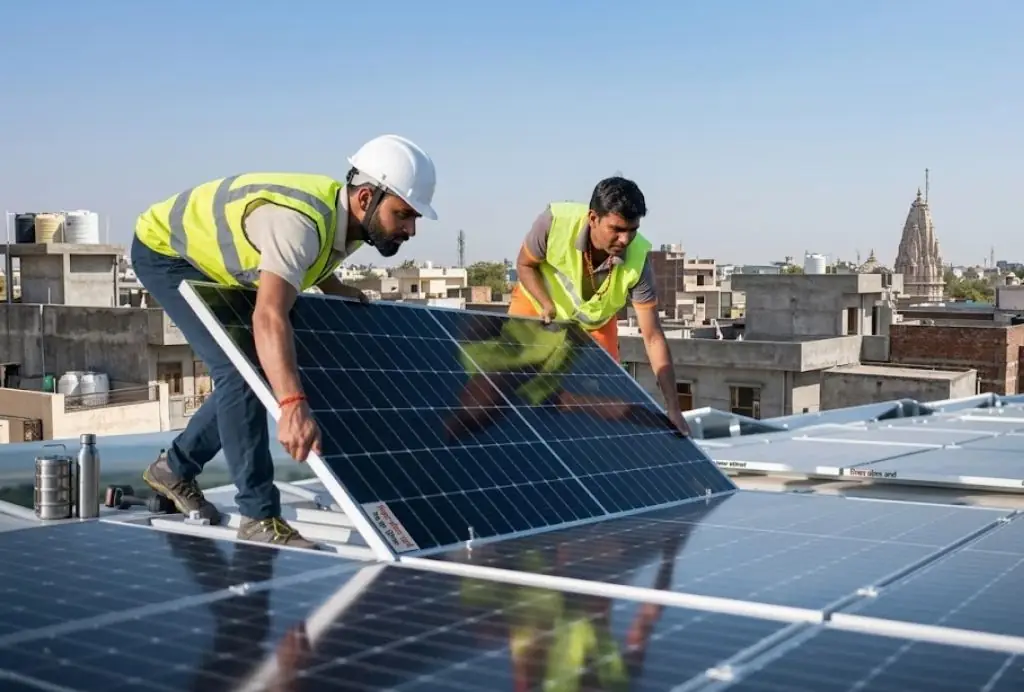
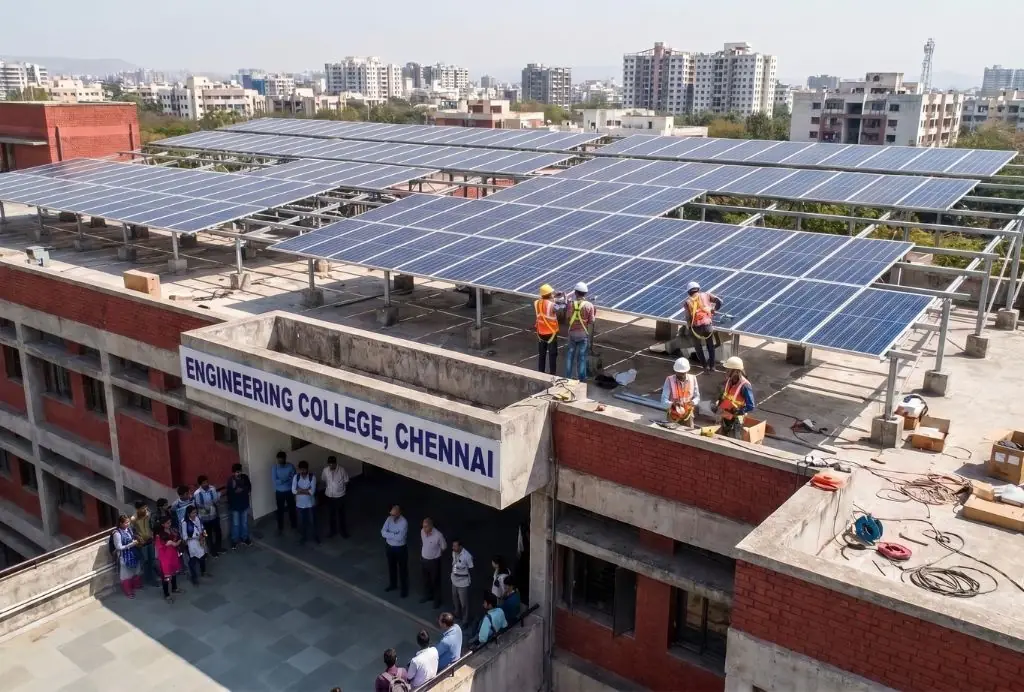
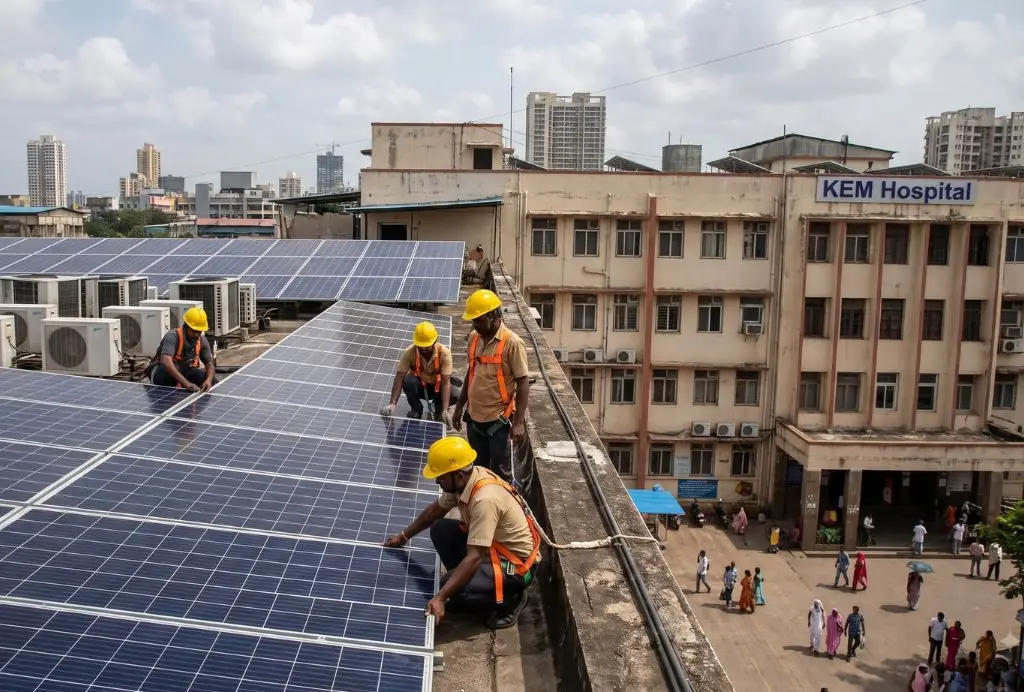
On paper a hotel terrace looks generous. In practice the usable area is what is left after everything else that lives up there.
- Overhead tanks and pump rooms, usually central and casting shadows well beyond their footprint.
- Air conditioning plant and chillers, which need access and clearance.
- Lift machine rooms and stair headrooms, which are tall enough to shade a long strip through the morning or evening.
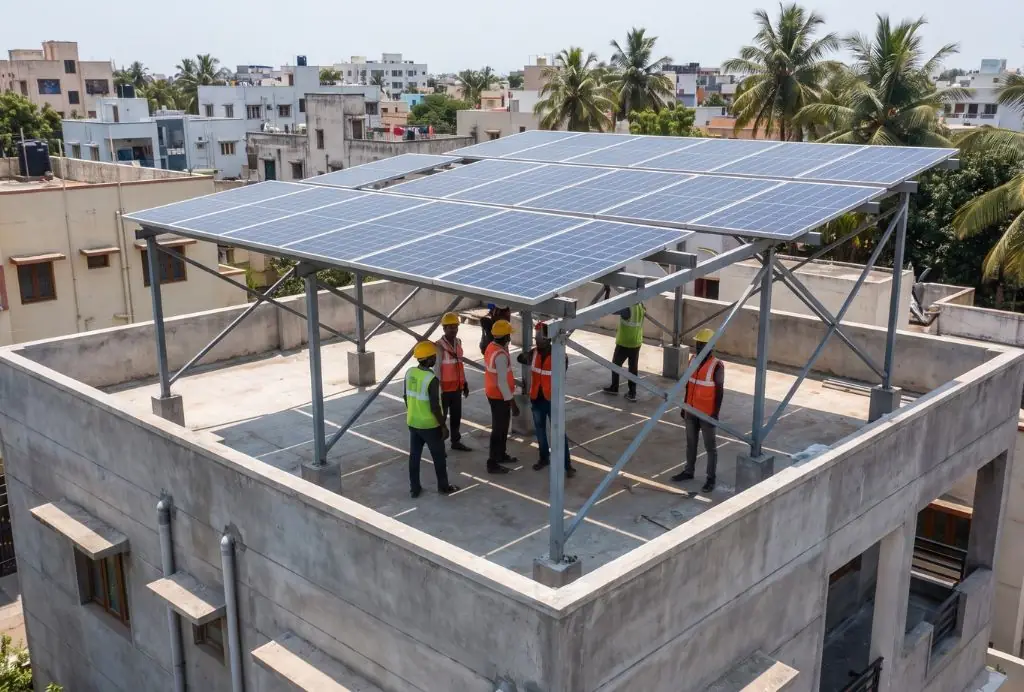
- A terrace restaurant or event space, which takes the area outright unless the array goes on an elevated frame above it.
An elevated structure recovers a great deal of this, at the cost of more steel. On a hotel it is often the only way to get a worthwhile system on the building.
The tax side, which is not the residential subsidy
The PM Surya Ghar subsidy does not apply here. It is a residential scheme, and any proposal that deducts it from a commercial quotation is deducting money the business will not receive.
What a business gets instead is accelerated depreciation. Solar power generating systems sit in a 40 percent depreciation block under Appendix I of the Income Tax Rules, claimed under Section 32, against an ordinary building at 10 percent and general plant and machinery at 15 percent.
The timing decides the first year. A system commissioned and put to use for 180 days or more in the financial year takes the full 40 percent; commissioned later and the first year is halved to 20 percent, with the balance carried forward. Our guide to how to calculate it works through the arithmetic on a real invoice.
GST on a turnkey installation works out near 8.9 percent under the 70:30 composite supply rule, with the module and system portion at 5 percent. That input is creditable for a GST-registered business, which residential buyers cannot do.
Frequently asked questions
Is solar worth it for a hotel?
Usually yes, because a hotel consumes a high share of daytime generation on site and pays a commercial tariff of roughly ₹7 to ₹8.50 a unit for every unit it displaces. The constraint is normally usable roof area rather than economics.
Will solar run the air conditioning at night?
No. A grid-connected array generates only in daylight, so night-time guest room air conditioning is supplied by the grid and offset by the credit for daytime export.
Should a hotel install solar panels or a solar water heater?
Both, for different loads. A solar water heater serves the hot water demand directly and is far cheaper per unit of heat than making heat from PV electricity. PV serves everything else.
How much roof does a hotel need for solar?
Roughly 80 to 100 sq ft of shade-free area per kW on a flat terrace including row spacing. The usable figure is normally much smaller than the terrace area once tanks, chillers, lift rooms and their shadows are taken out.
Can we still use the terrace after installing solar?
On an elevated structure, yes. The array sits on a frame high enough to walk and work under, which is how most hotels keep a terrace restaurant or service area in use.
Send a terrace photograph and twelve bills
A photograph of the terrace tells us more about a hotel installation than a drawing does, because it shows what is actually up there. Send that, twelve months of bills and your sanctioned load.
We will tell you the usable area after shading, what it supports, and whether an elevated structure is worth the extra. what rooftop solar costs sets out the cost band it will sit in.
Call +91 98841 07170Sources
Tamil Nadu Electricity Regulatory Commission tariff orders, for LT and HT consumer categories and energy charges
Blues Renewables generation records, Tamil Nadu rooftops, for the figure of about 4.8 units per kW per day
Income Tax Act 1961 Section 32 and Appendix I of the Income Tax Rules, for the 40 percent depreciation block and the 180-day rule
GST notifications on solar photovoltaic modules and solar power generating systems, effective 22 September 2025
TANGEDCO LT-3 commercial tariff category, covering hotels, lodges, shops and restaurants