


Solar for Petrol Pumps in Tamil Nadu
A petrol pump is an unusual electrical customer. The canopy lights burn from dusk to dawn, the dispensers and submersible pumps run whenever a vehicle arrives, and the office air conditioning runs through the hottest part of the day.
That means a forecourt generates in daylight and consumes heavily after dark, which puts net metering at the centre of the calculation rather than at the edge of it.
Get an itemised proposalWhat decides the answer here
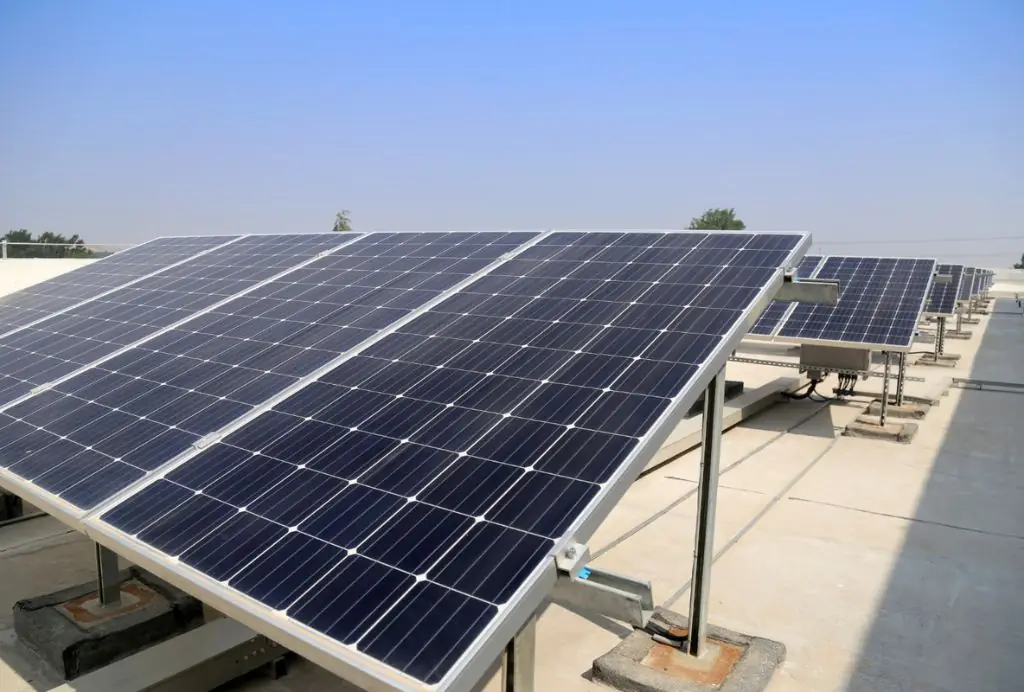
- 20 to 30 kWp is the usual size for a standard forecourt with a canopy, office and air compressor.
- Indicative installed cost ₹7.5 to ₹12 lakh, against annual savings commonly quoted at ₹1.5 to ₹3.5 lakh depending on tariff and consumption.
- The canopy is the obvious mount and the tricky one. It is a light structure carrying a large wind load, and it belongs to the oil company brand, not only to you.
- Night load means export by day and import by night. The net metering arrangement decides how much of that round trip you keep.
- Dealer approval from IOCL, HPCL or BPCL is needed before anything is fixed to the canopy.
Where the units actually go
- Canopy and forecourt lighting, running every night, often the single largest line.
- Dispensing units and submersible pumps, intermittent but frequent, with motor starting loads.
- Air compressor for the tyre inflation point.
- Office, sales room and any convenience store, including air conditioning and refrigeration.
- Signage and price display boards, which run long hours.
The daylight share of that is smaller than at a factory, which is the honest reason a pump does not achieve the self-consumption rates a three-shift industrial roof does. It is still worth doing, because the tariff avoided is a commercial one.
Mounting on a canopy, and when not to
The canopy is flat, unshaded, and already there. It is also a light steel structure designed to hold a roof sheet and some light fittings, not an array and its ballast in a cyclone.
- A structural check of the canopy purlins and columns comes before the design, not after it. If the canopy will not take it, the office block roof or a ground-mounted frame at the rear usually will.
- Non-penetrative clamp fixing suits most canopy profiles and avoids putting holes through a sheet that has to stay watertight over fuel dispensing.
- Oil company approval. The canopy carries brand livery and is covered by the dealership agreement. Get the approval in writing before the structure is ordered.
Net metering matters more here
Because the heavy load is at night, a pump exports a larger share of what it generates than most commercial sites do. Exported units are credited and set against imports, and capacity is capped at your sanctioned load, which is the constraint that most often decides the system size rather than roof area.
Check the sanctioned load before designing. A forecourt sanctioned at 25 kW cannot install 40 kW of solar, whatever the canopy would hold.
The tax side, which is not the residential subsidy
The PM Surya Ghar subsidy does not apply here. It is a residential scheme, and any proposal that deducts it from a commercial quotation is deducting money the business will not receive.
What a business gets instead is accelerated depreciation. Solar power generating systems sit in a 40 percent depreciation block under Appendix I of the Income Tax Rules, claimed under Section 32, against an ordinary building at 10 percent and general plant and machinery at 15 percent.
The timing decides the first year. A system commissioned and put to use for 180 days or more in the financial year takes the full 40 percent; commissioned later and the first year is halved to 20 percent, with the balance carried forward. Our guide to how to calculate it works through the arithmetic on a real invoice.
GST on a turnkey installation works out near 8.9 percent under the 70:30 composite supply rule, with the module and system portion at 5 percent. That input is creditable for a GST-registered business, which residential buyers cannot do.
Frequently asked questions
How much does solar cost for a petrol pump?
A typical 20 to 30 kWp system covering the canopy, office and forecourt load runs about ₹7.5 to ₹12 lakh installed, with reported annual savings of ₹1.5 to ₹3.5 lakh depending on tariff category and consumption.
Can solar panels be installed on the petrol pump canopy?
Usually yes, after a structural check. The canopy is designed for a roof sheet and light fittings, so the purlins and columns have to be verified for the array and its wind load first. Non-penetrative clamp fixing is normal on canopy profiles.
Do I need oil company permission to install solar at my pump?
Yes. The canopy is covered by the dealership agreement and carries the brand livery, so written approval from IOCL, HPCL or BPCL should be in hand before the structure is ordered.
Will solar power the pump at night?
Not without storage. A grid-connected system generates only in daylight, so the canopy lighting load after dark is met by the grid, offset by the credit for what you exported during the day.
Is a petrol pump eligible for the solar subsidy?
Not for PM Surya Ghar, which is residential. A dealership claims accelerated depreciation at 40 percent, and a GST-registered dealer can take input credit on the installation.
Start with the canopy drawing
Send us the canopy structural drawing, your sanctioned load and twelve months of bills. We will tell you what the canopy will carry, what the sanctioned load permits, and which of the two is the real constraint.
If the canopy will not take an array, we will say so rather than design around it. how to verify a solar company covers the registrations you can check on us first.
Call +91 98841 07170Sources
Tamil Nadu Electricity Regulatory Commission tariff orders, for LT and HT consumer categories and energy charges
Blues Renewables generation records, Tamil Nadu rooftops, for the figure of about 4.8 units per kW per day
Income Tax Act 1961 Section 32 and Appendix I of the Income Tax Rules, for the 40 percent depreciation block and the 180-day rule
GST notifications on solar photovoltaic modules and solar power generating systems, effective 22 September 2025
Published cost and saving ranges for 20 to 30 kWp petrol pump installations in India, 2026
IS 875 Part 3, wind loading, for coastal Tamil Nadu basic wind speed