




Solar for Dairies and Milk Chilling Centres in Tamil Nadu
Milk chilling is one of the better solar cases in Tamil Nadu and one of the least written about. A bulk milk cooler pulls down twice a day after collection and then holds temperature continuously, so the compressor runs through the daylight hours on a tariff that is anything but cheap.
The catch is not economics. It is that a chilling centre is a small building with a large load, so the roof runs out long before the demand does.
Get an itemised proposalWhat decides the answer here
- Chilling is a continuous compressor load, which is the demand profile rooftop solar matches best.
- Two collection peaks a day, morning and evening, with pull-down drawing hardest right after each.
- The roof is the constraint here, not the load. Chilling centres are small buildings.
- A power cut is a spoilage event, so the existing generator stays whatever solar you install.
- TNERC groups cold storage and ice manufacturing in its own tariff treatment, so check which category your connection sits in before modelling anything.
The load, and why it suits solar
A bulk milk cooler does two different things and the distinction matters for sizing.
Pull-down
Immediately after collection, the compressor works at full capacity to bring milk from ambient down to storage temperature within the time the standard allows. This is the heaviest draw of the day and it happens twice.
Holding
Between collections the compressor cycles to hold temperature. Lighter, but effectively continuous, and it runs right through the middle of the day when the roof is producing most.
Add the milk pumps, the agitator, the wash system with its hot water, and lighting, and you have a load that is both substantial and predictable. Very little of a chilling centre's generation would ever be exported, which is what makes the return good.
The roof runs out first
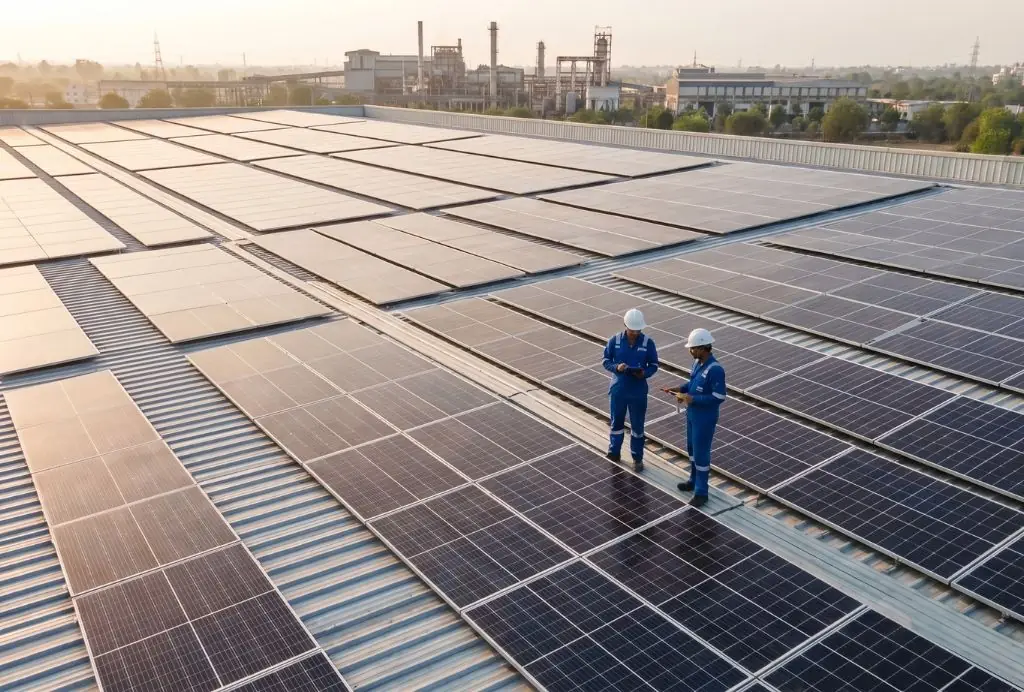
This is the opposite of the warehouse problem. A village chilling centre handling a few thousand litres may have a connected load of 30 to 60 kW in a building whose roof supports perhaps 15 to 25 kW.
- Expect solar to cover part of the load, not all of it. That is still a good outcome when every unit avoids a commercial or industrial tariff.
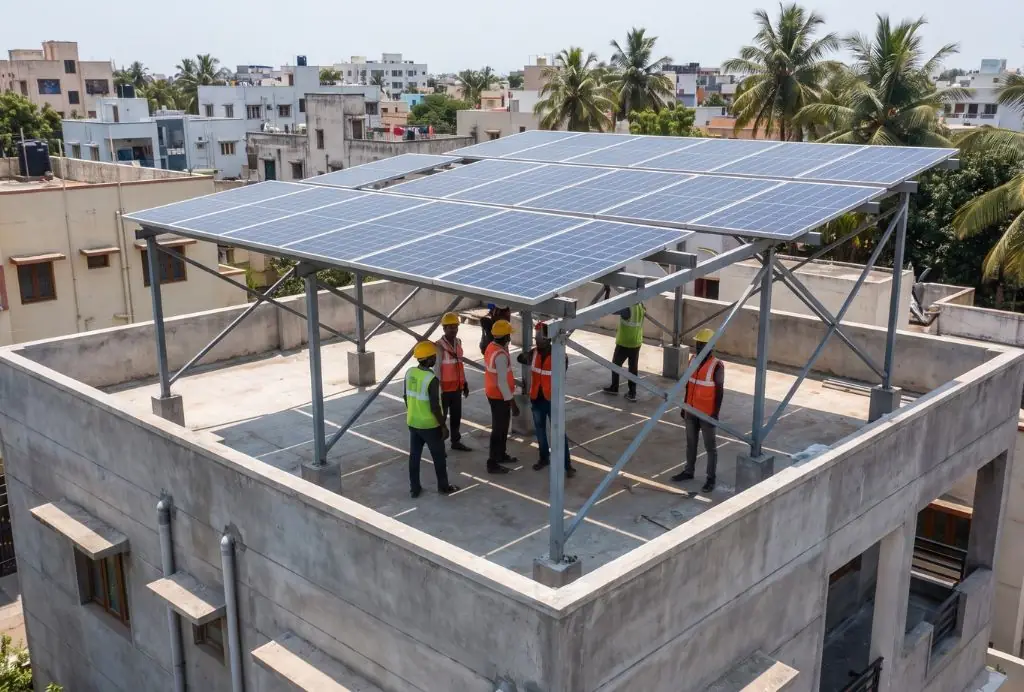
- Look beyond the main roof. The shed over the reception dock, the generator room, the store, and a ground-mounted frame on unused land at the rear all add capacity.
- Shading from the tank platform and the chimney takes out more of a small roof, proportionally, than it would on a large one.
Outages, and what solar does not do
Milk that misses its temperature window is rejected. Every chilling centre already runs a generator and every one of them will keep it.
A grid-connected array disconnects when the grid fails. That is a safety requirement, not a product limitation, and no installer can configure around it on a standard on-grid system. If you want the array to carry load through an outage you are into storage, and TANGEDCO hybrid inverter rules covers what Tamil Nadu permits on a grid-connected system.
Treat the three as separate decisions. Solar cuts the bill. The generator covers the outage. Storage is worth costing only against the specific risk you are trying to remove.
The tax side, which is not the residential subsidy
The PM Surya Ghar subsidy does not apply here. It is a residential scheme, and any proposal that deducts it from a commercial quotation is deducting money the business will not receive.
What a business gets instead is accelerated depreciation. Solar power generating systems sit in a 40 percent depreciation block under Appendix I of the Income Tax Rules, claimed under Section 32, against an ordinary building at 10 percent and general plant and machinery at 15 percent.
The timing decides the first year. A system commissioned and put to use for 180 days or more in the financial year takes the full 40 percent; commissioned later and the first year is halved to 20 percent, with the balance carried forward. Our guide to how to calculate it works through the arithmetic on a real invoice.
GST on a turnkey installation works out near 8.9 percent under the 70:30 composite supply rule, with the module and system portion at 5 percent. That input is creditable for a GST-registered business, which residential buyers cannot do.
Frequently asked questions
Is solar worth it for a milk chilling centre?
It is one of the better cases. Chilling is a continuous daytime compressor load on a commercial or industrial tariff, so almost every generated unit is consumed on site at the full tariff rather than exported at a lower credit.
Will solar cover the whole load of a chilling centre?
Usually not. These are small buildings with large loads, so the roof typically supports a fraction of the connected load. That fraction is still worth having because of the tariff it displaces.
Will solar keep the cooler running during a power cut?
No. A grid-connected array shuts down when the grid does, which is a safety requirement. The generator stays. Battery storage is a separate decision with specific rules in Tamil Nadu.
What tariff does a milk chilling centre pay?
It depends on the connection category and connected load. TNERC treats cold storage and ice manufacturing units within its own tariff provisions, so confirm which category your connection sits in before modelling savings.
Can a dairy claim a solar subsidy?
PM Surya Ghar is residential and does not apply. A dairy or chilling centre operating as a business claims accelerated depreciation at 40 percent and takes GST input credit on the installation.
Send the connected load and a roof photograph
For a chilling centre the useful information is the connected load, the tariff category on the bill, and a photograph showing the roof and any land at the rear. Roof area is the limiting factor and it is best assessed from a picture.
We will tell you what fraction of the load the site can actually cover, and we will not size beyond what the roof and the sanctioned load allow.
Call +91 98841 07170Sources
Tamil Nadu Electricity Regulatory Commission tariff orders, for LT and HT consumer categories and energy charges
Blues Renewables generation records, Tamil Nadu rooftops, for the figure of about 4.8 units per kW per day
Income Tax Act 1961 Section 32 and Appendix I of the Income Tax Rules, for the 40 percent depreciation block and the 180-day rule
GST notifications on solar photovoltaic modules and solar power generating systems, effective 22 September 2025
Tamil Nadu Electricity Regulatory Commission tariff orders, for the treatment of cold storage and ice manufacturing units