

Solar Panel Installation in Namakkal
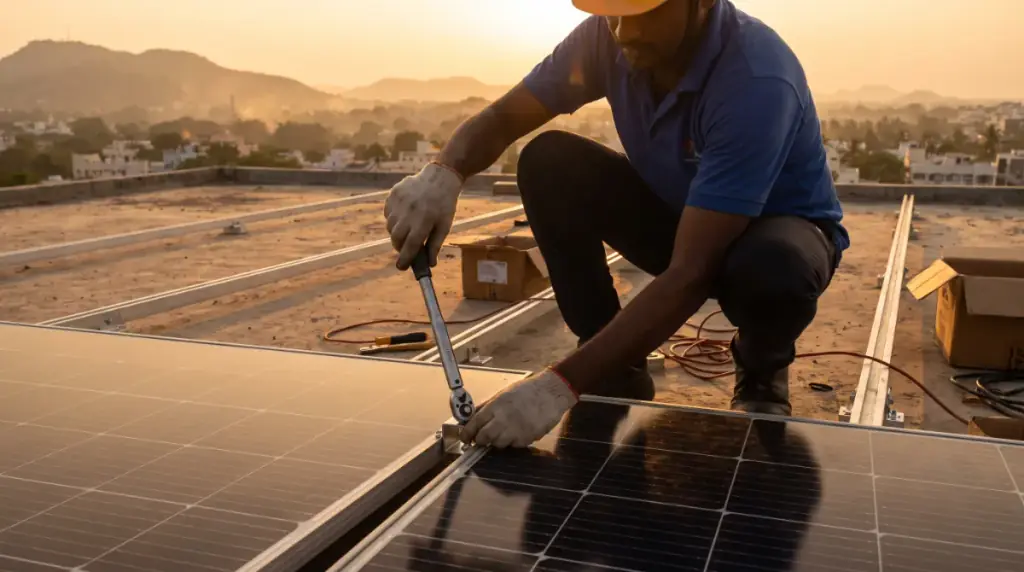
Poultry sheds have a load pattern that suits solar better than almost any other agricultural or industrial operation in Tamil Nadu. Ventilation and cooling run hardest on hot afternoons, which is exactly when a rooftop array generates most. That coincidence is unusual and it is worth understanding before anyone quotes.
Installing across Tamil Nadu since 2020
Two years free maintenance included
Subsidy and TANGEDCO paperwork filed by us
Free site survey and energy audit, no obligation
What changes where
Pick what applies to your site
Poultry shed
Ventilation and cooling peak on hot afternoons, which is exactly when the array generates most.
Six of the things that change a design in Namakkal. We confirm which apply at the survey.
The short answer
Solar installation in Namakkal
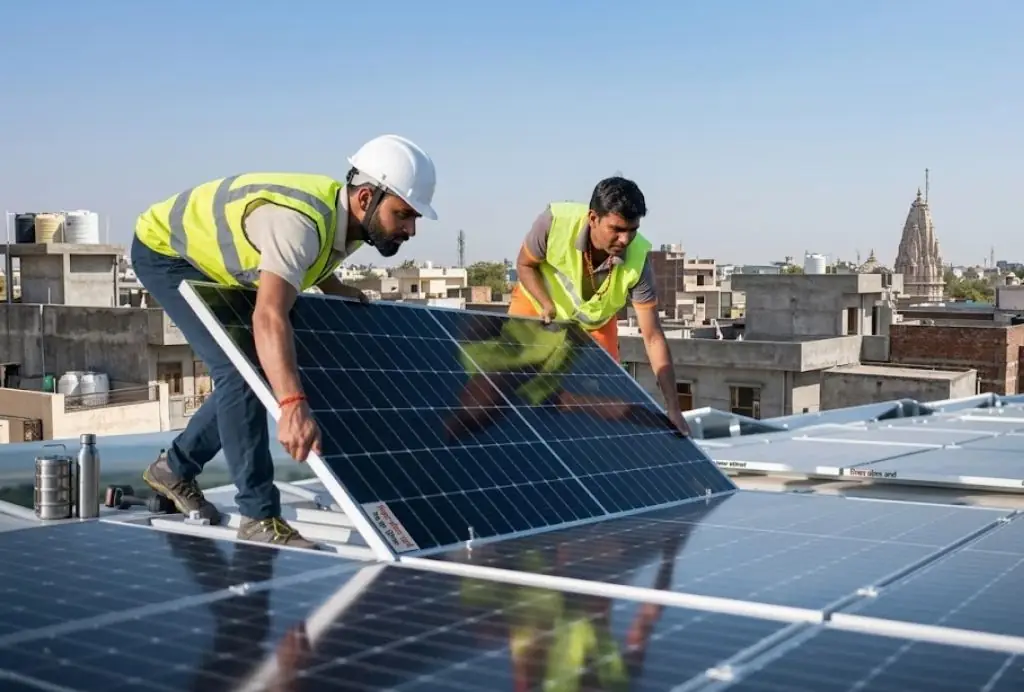
Blues Renewables delivers solar EPC and solar lighting for the Namakkal poultry belt and the surrounding transport and processing industry. Poultry sheds, hatcheries and feed mills carry ventilation and cooling loads that peak with ambient temperature, coinciding closely with peak solar generation, which makes self-consumption unusually high and the case unusually strong. For a residential benchmark, the solar panel price in Chennai lists installed costs from 3 kW to 10 kW, and our solar panel installation in Chennai page shows the survey-first process we also bring to Namakkal.
The local picture
Why poultry sheds and solar fit together
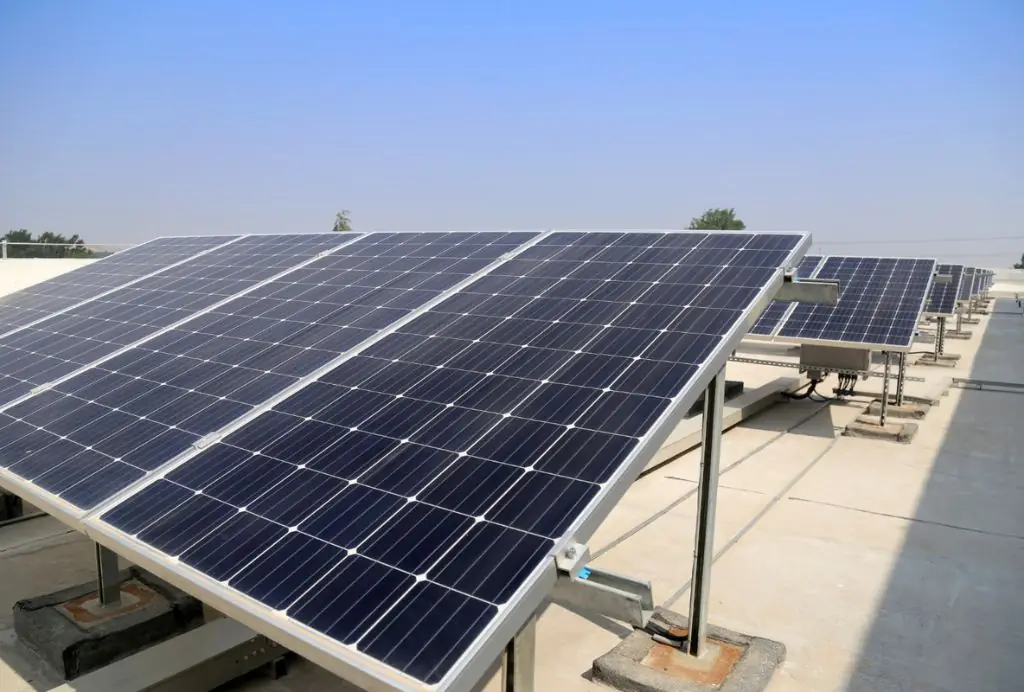
Environmentally controlled poultry sheds run ventilation fans and evaporative cooling systems whose load rises with ambient temperature. That load therefore peaks in the middle of hot days, which is precisely when a rooftop solar array generates most. Because non-domestic consumers are generally on net feed-in rather than one-for-one net metering, a unit consumed on site is worth considerably more than a unit exported, and this coincidence of load and generation is genuinely valuable.
What makes the sector suit solar
Load follows the sun
Ventilation and cooling demand rises with heat and daylight, so a high proportion of generation is consumed on site rather than exported.
Large shed roofs
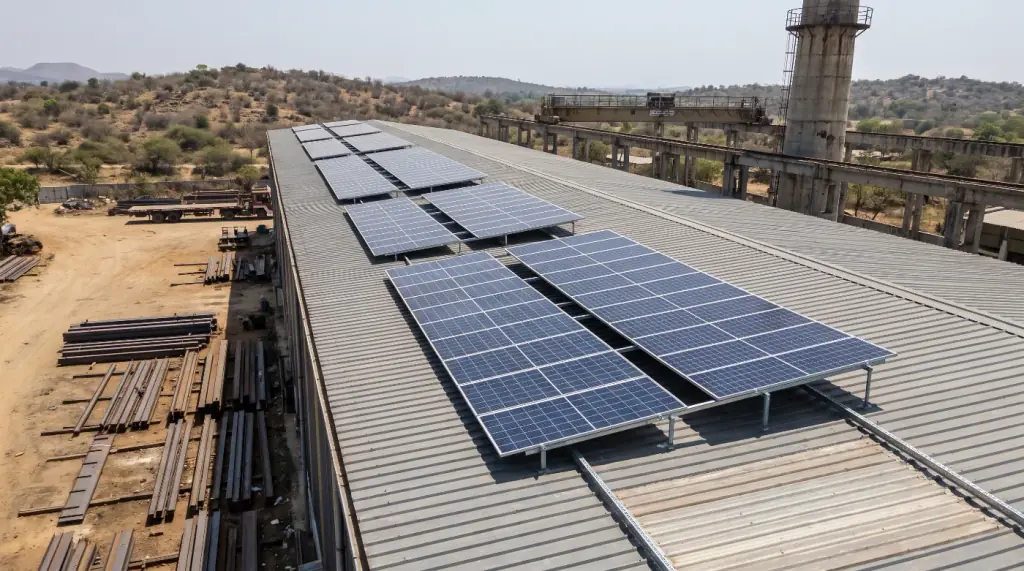
Poultry sheds present substantial roof area, often across multiple structures on one holding.
Land is frequently available
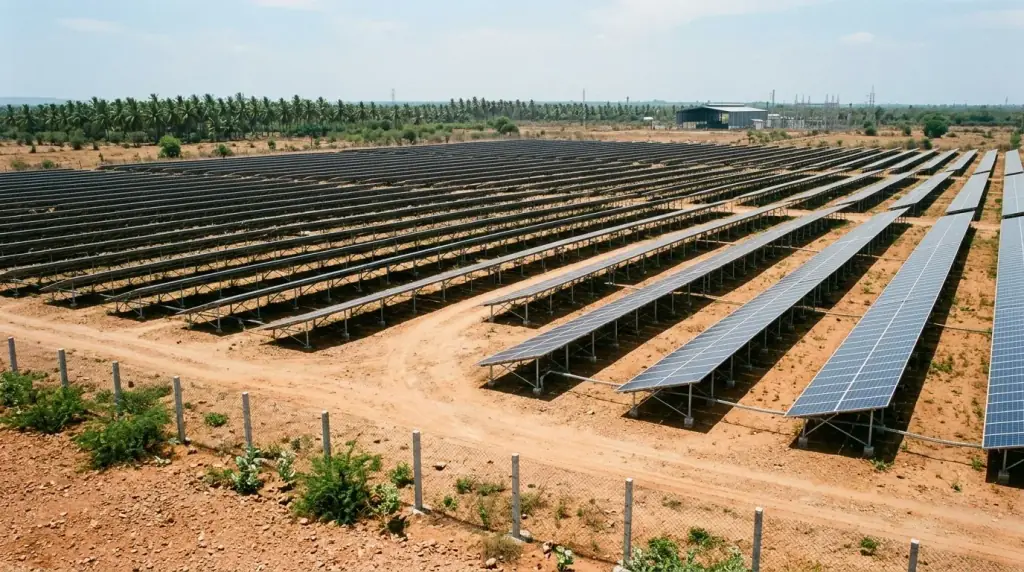
Which makes ground-mount a genuine option where roof structure is unsuitable.
Continuous operations
Hatcheries and feed mills add steady load that improves overall self-consumption.
What needs careful handling
Shed roof structure
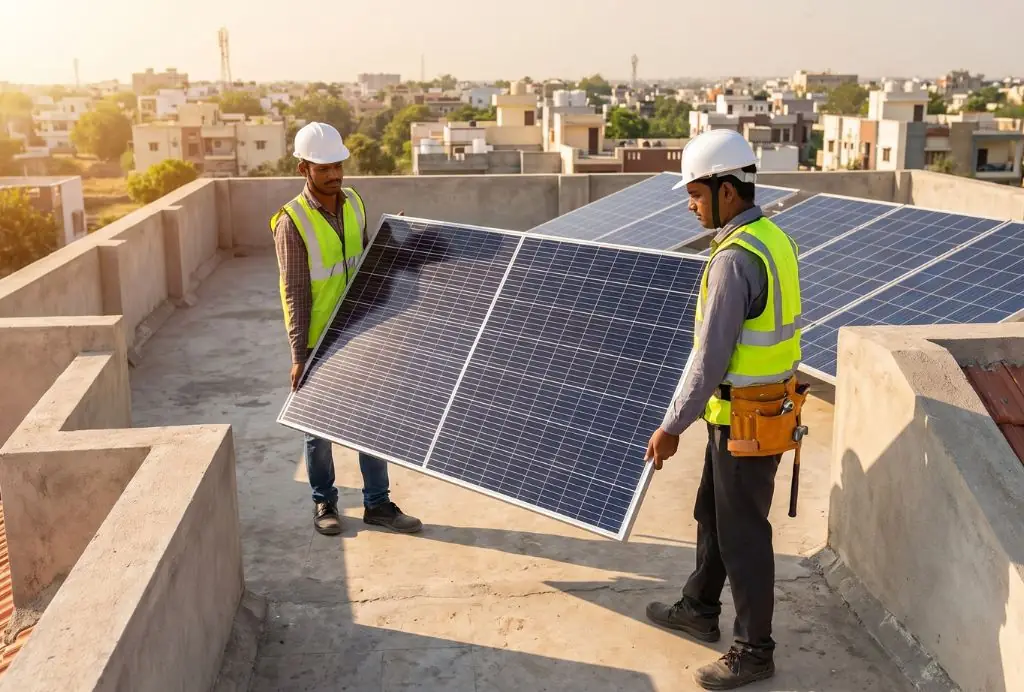
Poultry sheds are lightweight structures designed for their own loads, and purlin spacing, section and overall frame capacity need assessing before any array is fixed. This is the most important technical question in the sector and the one most often skipped.
Ventilation outlets and inlets
Must not be obstructed or shaded in a way that affects airflow through the shed. Bird welfare and shed performance come before array area.
Dust and feather debris
Soil panels faster than in most environments, so cleaning frequency needs to match the site.
Biosecurity
Access to a working farm is controlled for good reason, and installation and maintenance scheduling must work within your protocols rather than around them. We will follow whatever your protocol requires.
Multiple sheds, multiple connections
A holding with several structures may have more than one service connection, and the system serves the one it is connected to. That should be mapped before design.
Say it plainly
A grid-tied system does not keep ventilation running
Ventilation failure in a controlled shed has immediate consequences, so this matters more here than almost anywhere. A grid-tied solar system shuts down during an outage by design and does not provide backup. It sits alongside your existing generator arrangements rather than replacing or reducing them. Anyone suggesting otherwise has misunderstood the product.
Our work
What we do in Namakkal
Quick estimate
What size system does your bill suggest?
System size
5.5 kW
Indicative cost
₹2.90 L to ₹3.33 L
PM Surya Ghar subsidy
₹78,000
Monthly saving
₹5,400
Simple payback
3.5 yrs
Indicative only, at roughly 4.2 units per kW per day and a blended domestic tariff. The state rooftop calculator run by TNGECL uses about 1,700 units per kW a year for Namakkal, about 4.7 a day. Your roof, shading and sanctioned load set the real figure.
Get the real number →Layer and broiler sheds
Ventilation and cooling load peaking with generation, large roof areas, and structural assessment of lightweight shed frames as the first technical question.
Hatcheries and feed mills
Continuous and process loads that improve overall self-consumption alongside shed ventilation.
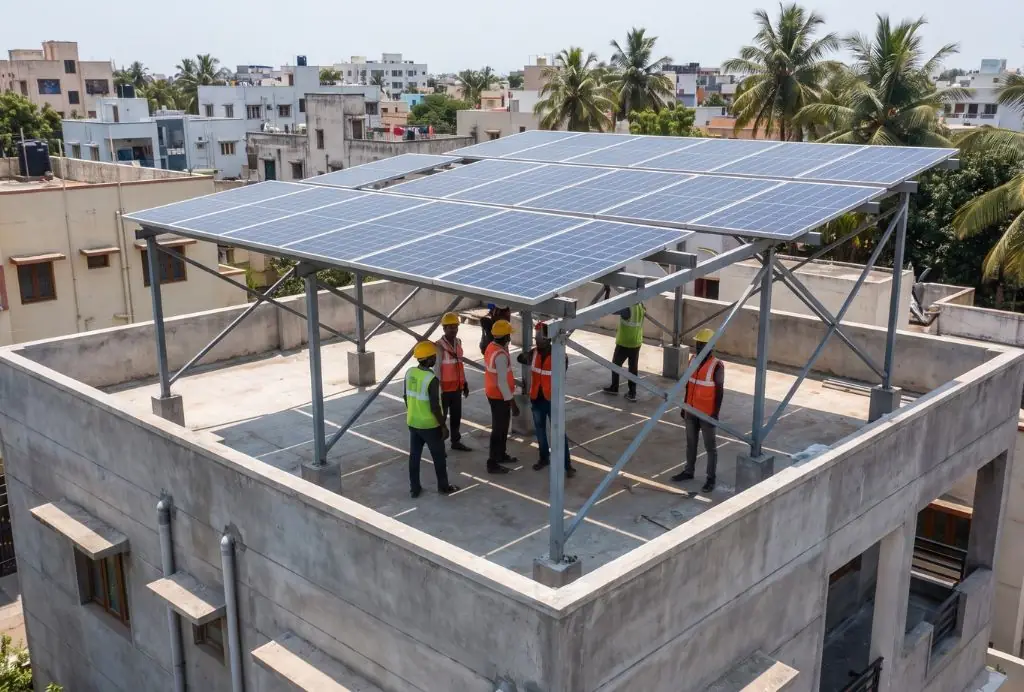
Ground-mounted installations
Where shed roof structure is unsuitable or land is available, with optimal tilt and ground-level maintenance access.
Transport and lorry body building
Day-weighted workshop loads suiting solar well, on standard industrial roofs.
Solar street and farm lighting
Farm roads, perimeters, sheds and campuses. Standalone poles with no cabling or meter, projects from 50 units.
What we install
Services and guides
Looking for a different district? See everywhere we work across Tamil Nadu.
Free, no obligation
Book a free assessment in Namakkal
Send us your last twelve months of electricity bills. For a farm or business we will run a load profile analysis first, because that determines what solar can actually offset and your roof only constrains it.
Common questions
Solar in Namakkal, common questions
Why does solar suit poultry farms particularly well?
Because ventilation and evaporative cooling load rises with ambient temperature, so it peaks in the middle of hot days when the array generates most. Since non-domestic consumers are generally on net feed-in, a unit consumed on site is worth considerably more than one exported, and that coincidence of load and generation is unusually valuable.
Can a poultry shed roof carry solar panels?
It has to be assessed rather than assumed. Sheds are lightweight structures designed for their own loads, so purlin spacing, section and overall frame capacity need checking before any array is fixed. This is the most important technical question in the sector and the one most often skipped. Where the structure is unsuitable, ground-mount is the alternative.
Will solar keep the ventilation running during a power cut?
No. A grid-tied system shuts down during a grid outage as a mandatory safety function and does not provide backup. Your existing generator arrangements continue to cover ventilation continuity, and solar does not replace or allow them to be reduced. Anyone suggesting otherwise has misunderstood the product.
How does installation work around biosecurity?
Within your protocols rather than around them. Access to a working farm is controlled for good reason, and installation and maintenance scheduling follows whatever your biosecurity procedure requires. That should be established at the survey so the programme reflects it rather than colliding with it.
Does dust and feather debris affect the panels?
It soils them faster than in most environments, which reduces output progressively. Cleaning frequency needs to match the site rather than follow a standard schedule, and the array layout should preserve access routes so cleaning is practical rather than theoretical.
Our farm has several sheds. How is that handled?
By mapping the service connections first. A system offsets consumption on the connection it serves, so a holding with multiple connections across several sheds may be several projects rather than one. Where the load and the roof do not sit on the same connection, that needs resolving before design.