



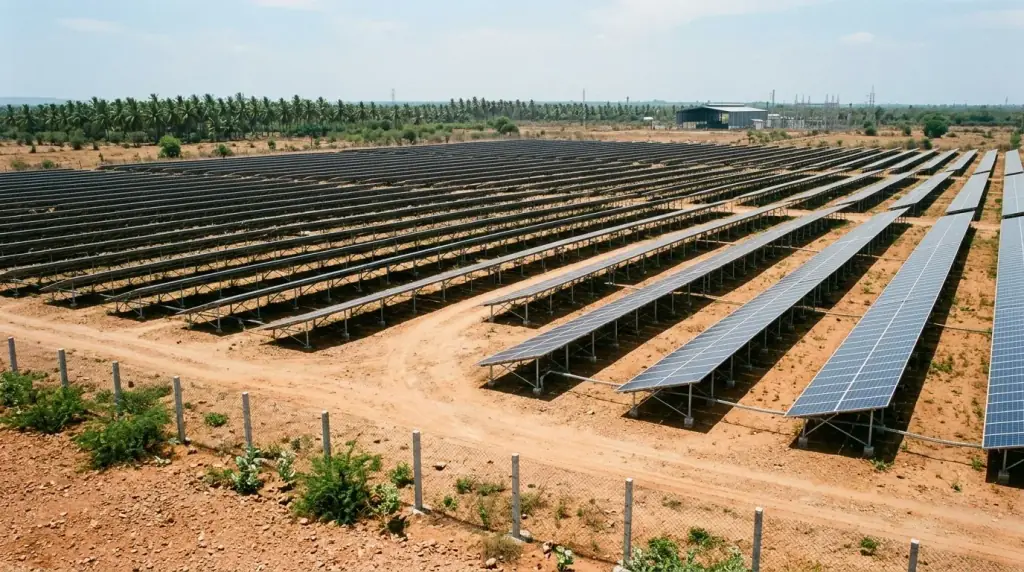
Solar Panel Installation in Kanchipuram
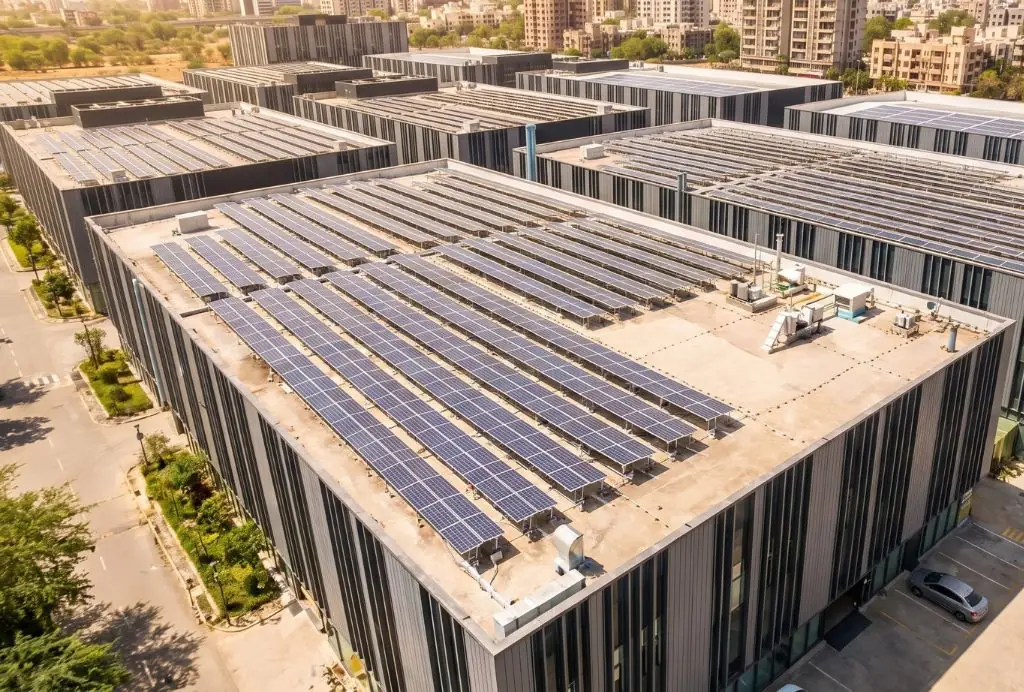
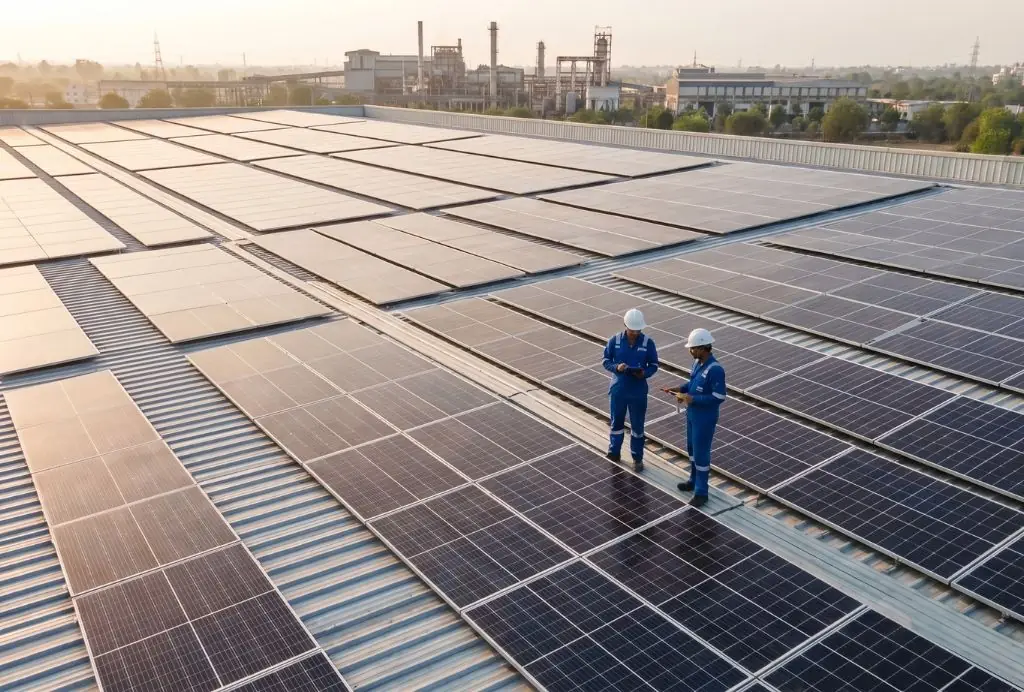
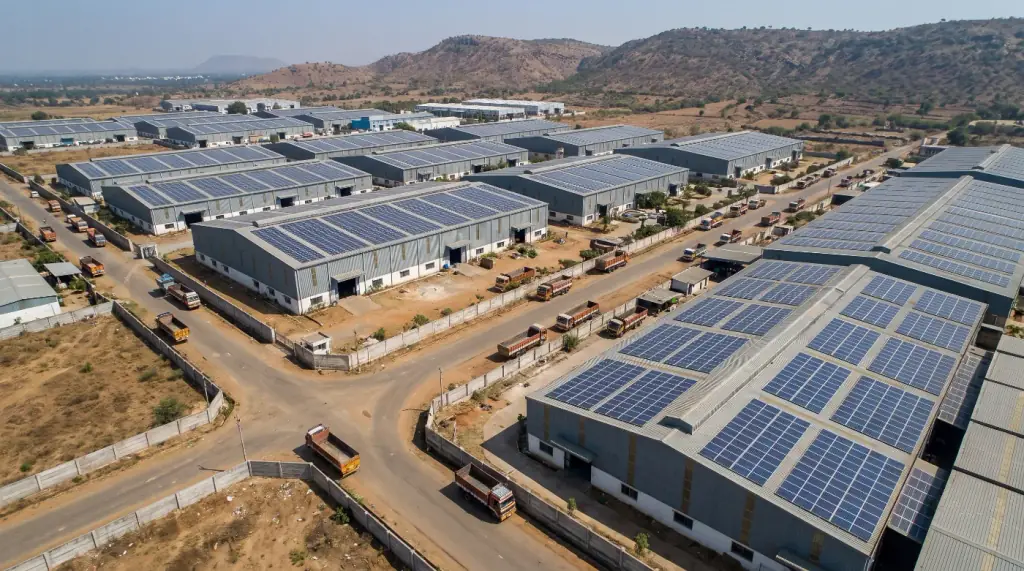
Kanchipuram district is an anchor-plant belt. Large manufacturing operations with substantial sheet roofs and HT connections, surrounded by an ecosystem of tier two and tier three suppliers in much smaller units. The solar case is strong for both, and it is a different case for each.
Installing across Tamil Nadu since 2020
Two years free maintenance included
Subsidy and TANGEDCO paperwork filed by us
Free site survey and energy audit, no obligation
What changes where
Pick what applies to your site
Anchor plant
Rooftop offsets a portion, ground mount extends it where land allows, and we say plainly when your load needs more.
Six of the things that change a design in Kanchipuram. We confirm which apply at the survey.
The short answer
Solar installation in Kanchipuram
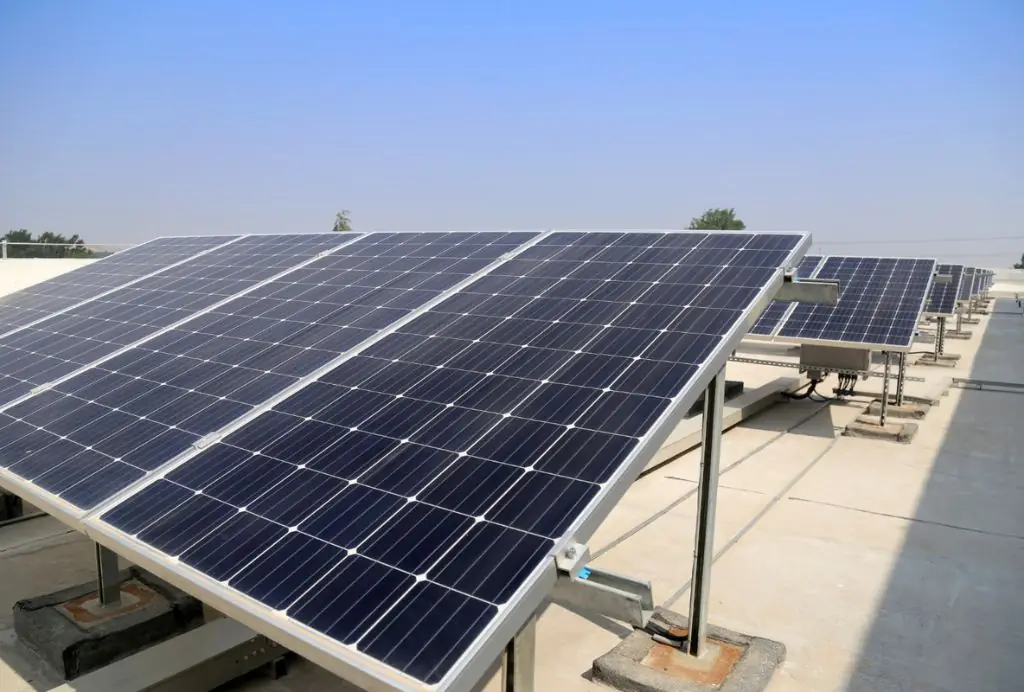
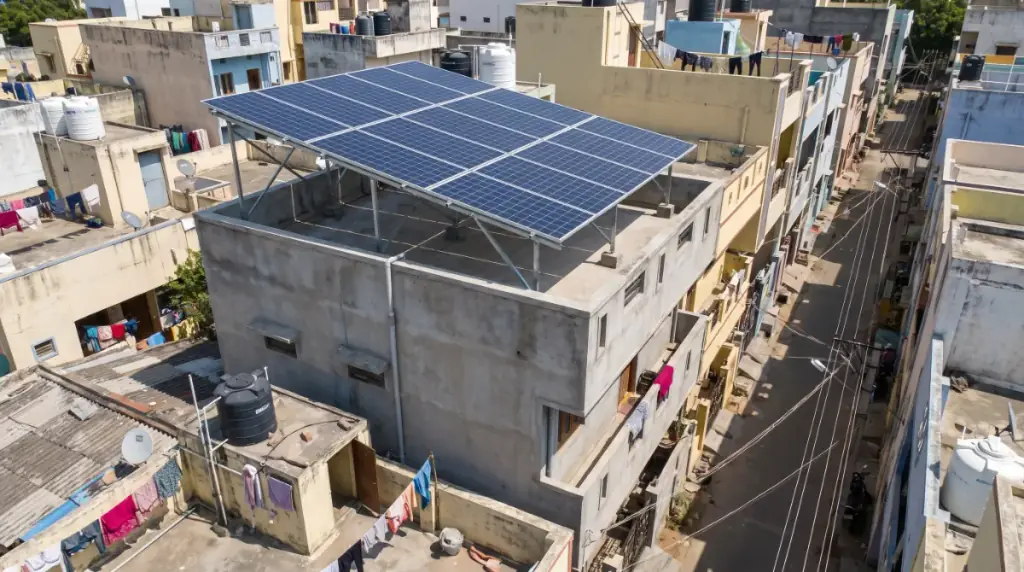
Blues Renewables delivers rooftop and ground-mount solar EPC across the Kanchipuram industrial belt, including Sriperumbudur, Oragadam, Irungattukottai, Sunguvarchatram and Padappai. Manufacturing sites here are typically HT consumers with large sheet roofs, where solar reduces the energy charge on daytime consumption rather than the demand charge, and every project begins with a load profile analysis rather than a roof measurement. Before the survey, you can check the solar panel price in Chennai for 3 kW to 10 kW systems and see how our solar panel installation in Chennai works, the same process we follow in Kanchipuram.
The local picture
Why the answer differs by site
Industrial solar in the Kanchipuram belt divides along two lines: the scale of the operation and whether the site has land as well as roof. Anchor plants have contract demand exceeding what any rooftop can serve, so rooftop offsets a portion and ground-mount extends it where land allows. Ancillary units have smaller sheds and tighter margins, where the funding structure often matters more than the hardware.
Three principles that apply across the whole belt
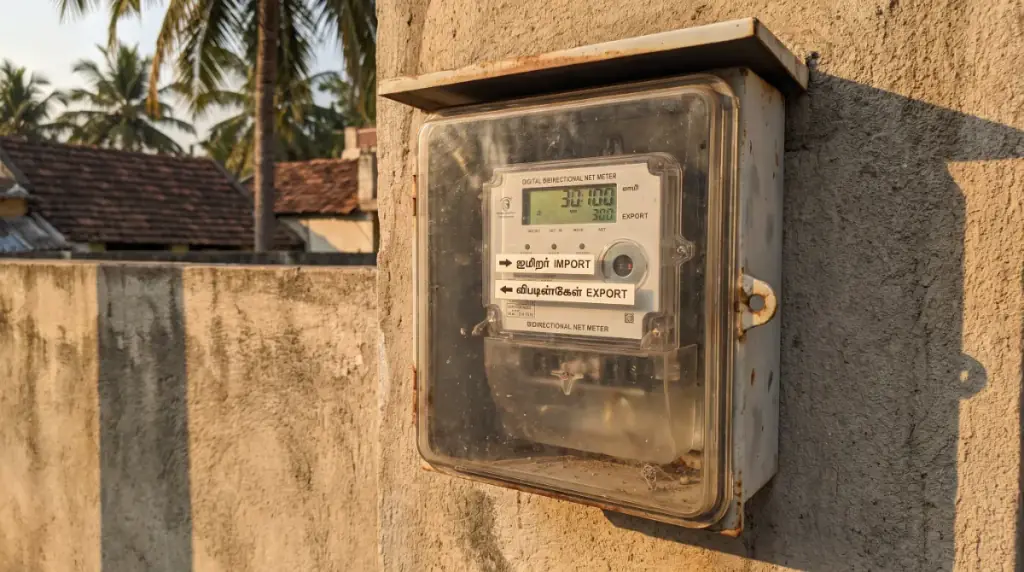
Non-domestic consumers are generally on net feed-in
Not one-for-one net metering, so exported units earn well below the tariff paid on imports. Size to daytime self-consumption, not to available space.
Solar reduces the energy charge, not the demand charge
Demand charges are levied on contract or recorded maximum demand and can peak at a shift change or on a cloudy afternoon.
Accelerated depreciation only helps a business with taxable profit
To offset. For a unit carrying losses, an OPEX or RESCO structure usually compares better than ownership.
Real, and growing
The supplier requirement factor
Automotive and electronics manufacturers supplying export markets and large OEM customers are increasingly asked to document renewable energy use as part of supplier sustainability programmes. On-site generation is among the simplest reductions to evidence, backed by metered data rather than estimates.
Beyond the site
Where demand exceeds what site generation can serve
Captive and group captive structures become relevant, involving wheeling charges, banking arrangements and regulatory approvals that need proper legal and financial advice rather than a solar vendor’s summary. We will tell you when your load calls for that.
Our work
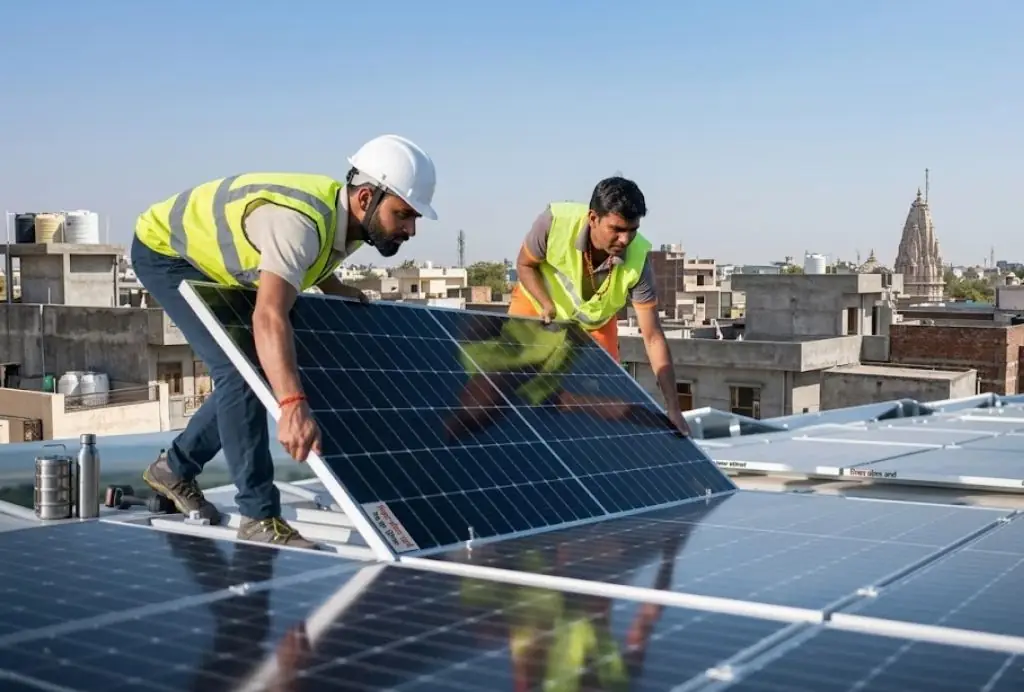
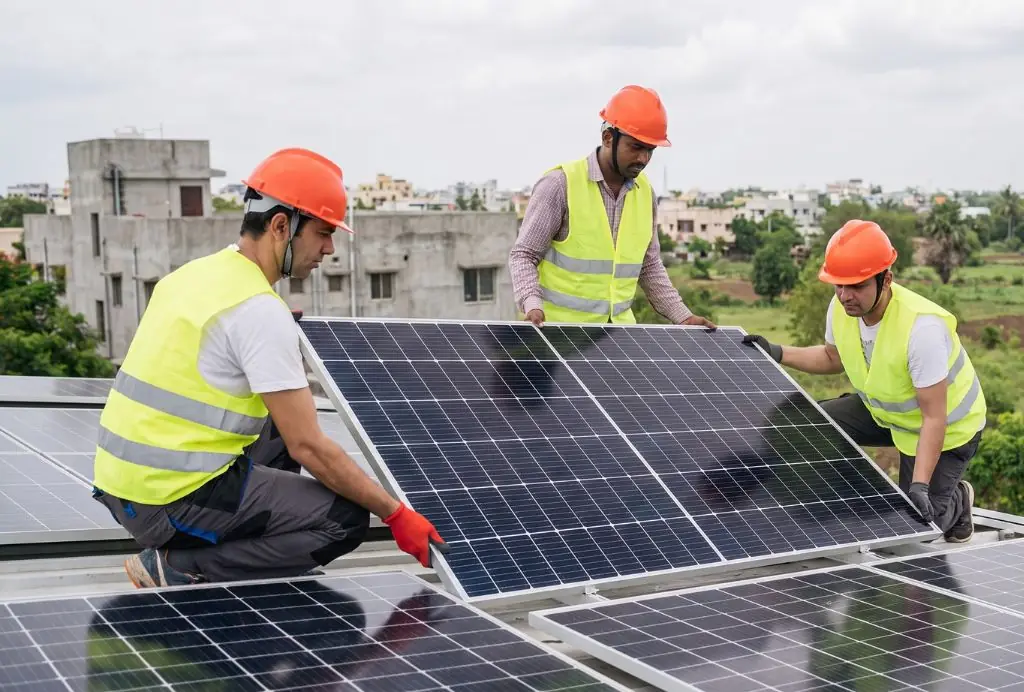
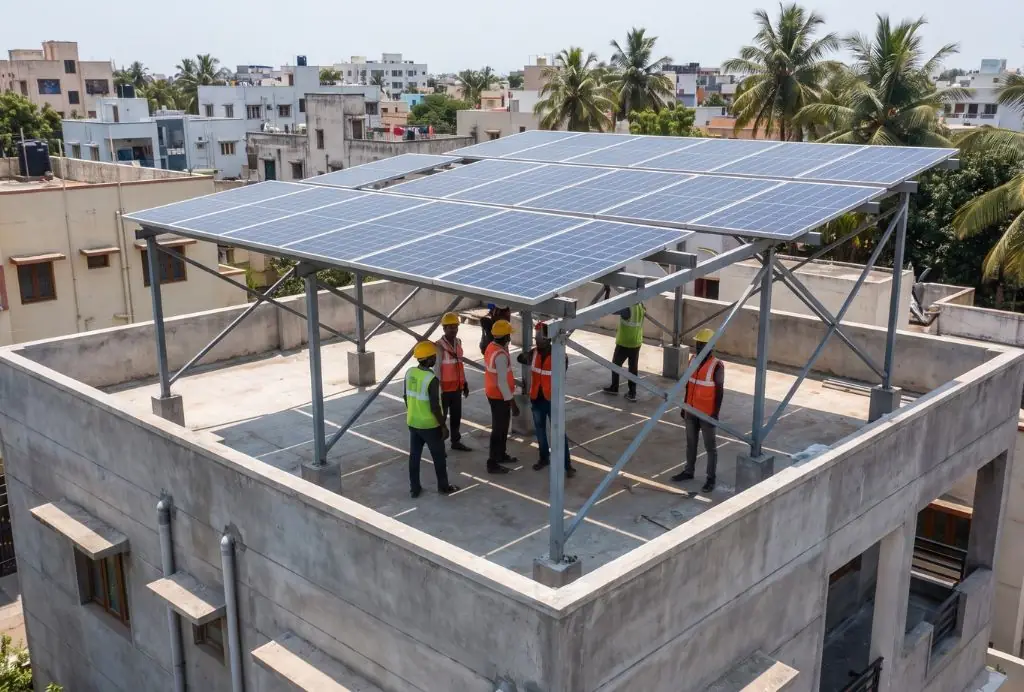
What we do in Kanchipuram
Quick estimate
What size system does your bill suggest?
System size
5.5 kW
Indicative cost
₹2.90 L to ₹3.33 L
PM Surya Ghar subsidy
₹78,000
Monthly saving
₹5,400
Simple payback
3.5 yrs
Indicative only, at roughly 4.2 units per kW per day and a blended domestic tariff. The state rooftop calculator run by TNGECL uses about 1,600 units per kW a year for Kancheepuram, about 4.4 a day. Your roof, shading and sanctioned load set the real figure.
Get the real number →Anchor manufacturing plants
Large sheet roofs, HT connections and substantial contract demand. Rooftop plus ground-mount where land allows, with installation planned around production and shutdown windows.
Ancillary and tier two suppliers
Smaller sheds where the funding structure matters more than the hardware, and where OPEX frequently compares better than ownership.
Warehousing and logistics
Large roof relative to load, so correct sizing matters more here than anywhere. Sizing to the roof rather than the load produces surplus that earns a feed-in rate well below what you pay on imports.
Residential and layouts
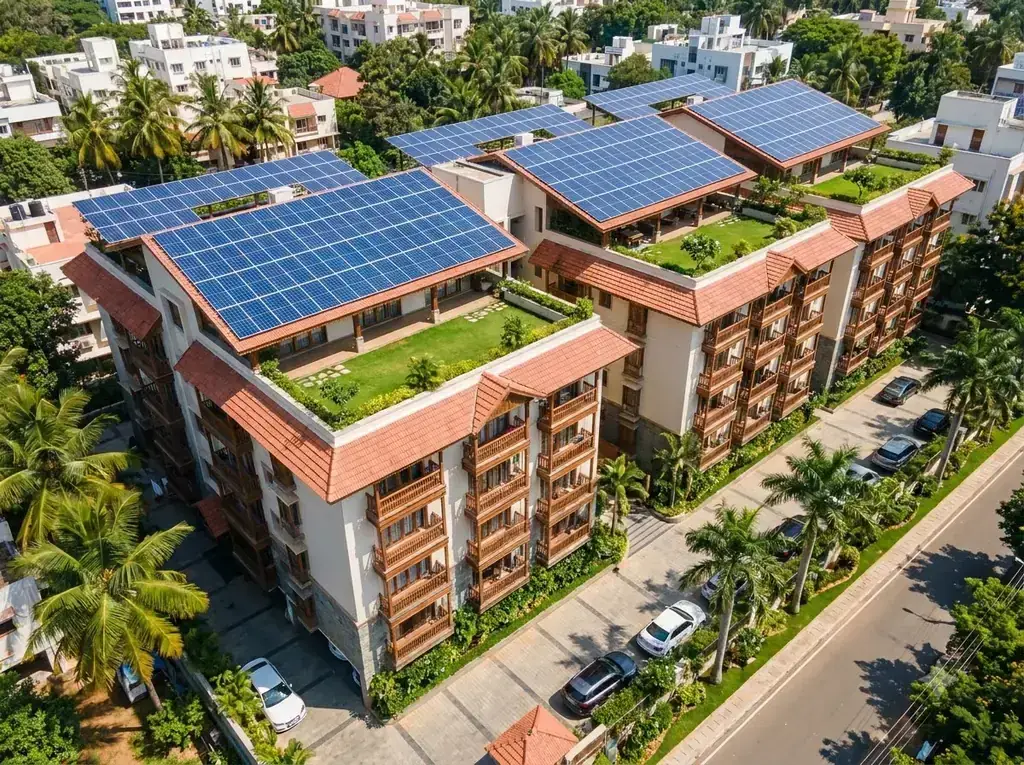
Kundrathur and the surrounding towns, where households typically install 3 kW to 6 kW with the standard PM Surya Ghar route.
Choose your area
Areas we cover in Kanchipuram
7 areas in Kanchipuram
What we install
Services and guides
Free, no obligation
Book a free assessment in Kanchipuram
Send us your last twelve months of electricity bills. For a home we will come back with a system size, an itemised price and the subsidy applied. For a business or industrial site we will run a load profile analysis first, because that determines what solar can actually offset and your roof only constrains it.
Common questions
Solar in Kanchipuram, common questions
Can rooftop solar cover a factory’s full load in Kanchipuram?
Rarely. Contract demand at anchor plants here usually exceeds what any rooftop can serve, so rooftop offsets a portion. Where the site has vacant land, ground mount extends generation considerably further. If demand exceeds what site generation can serve, captive or open access structures are the honest answer.
Do industrial consumers get net metering in Tamil Nadu?
Non-domestic consumers are generally on net feed-in rather than one-for-one net metering, meaning exported units earn a rate below the tariff paid on imports. That is why an industrial system should be sized to daytime self-consumption rather than to available roof or land.
Will solar reduce our demand charges?
No. Demand charges are levied on contract or recorded maximum demand, which can peak at night, at a shift change or on a cloudy afternoon. Solar reduces the energy charge on units generated during daylight hours, which on an HT connection is still a substantial saving but is not the whole bill.
Can I install solar on a SIPCOT allotted plot?
Usually, but check your allotment conditions first. Plots are typically held on long lease rather than owned, and allotment terms frequently govern permanent structures and alterations. A rooftop array is a 25-year structure, so establishing your position comes before any technical assessment.
What tax benefits apply to industrial solar?
Accelerated depreciation of up to 40% on the asset in the first year plus GST input tax credit for registered businesses. The depreciation benefit requires taxable profit to offset, which is why an OPEX or RESCO structure often suits units carrying losses better than ownership.
Do supplier sustainability requirements affect solar decisions here?
Increasingly. Automotive and electronics manufacturers supplying export markets and large OEM customers are being asked to document renewable energy use as part of supplier programmes, and on-site generation is straightforward evidence backed by metered data. For some units that requirement now weighs as heavily as the electricity saving.