


Solar Panel Installation in Tamil Nadu
Tamil Nadu generates more renewable power than almost any state in India, and it has the tariff structure, the industrial base and the solar resource to justify it. What varies enormously across the state is what a solar project actually looks like: a Chennai rooftop, a Tirupur dyeing unit, a Namakkal poultry shed and a panchayat street lighting scheme are four completely different problems.
Installing across Tamil Nadu since 2020
Two years free maintenance included
Subsidy and TANGEDCO paperwork filed by us
Free site survey and energy audit, no obligation
What changes where
Pick what applies to your site
Home
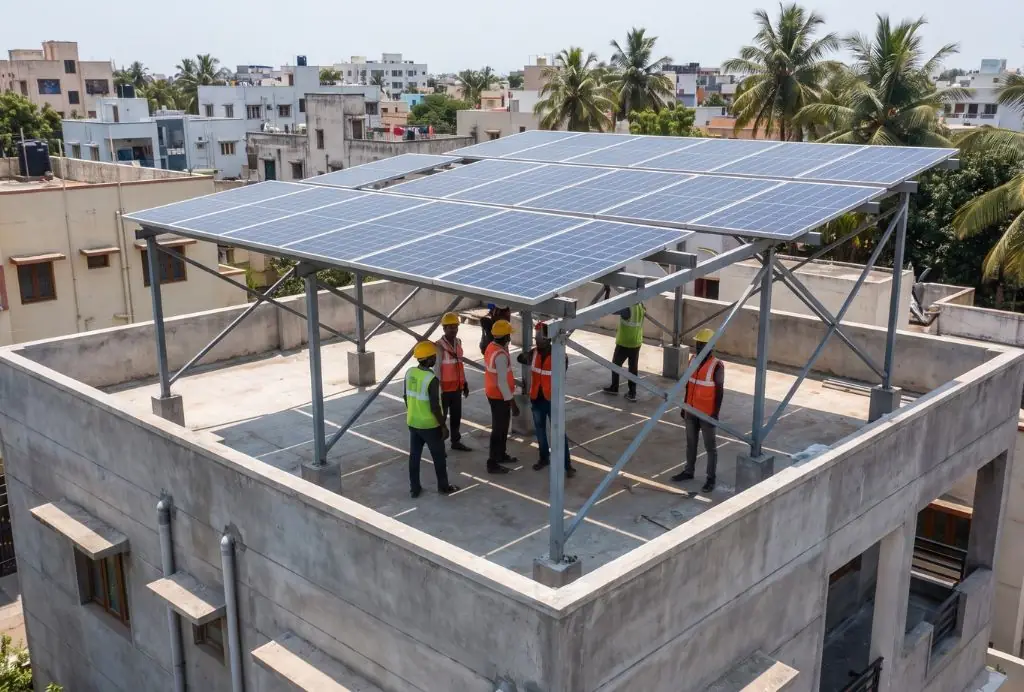
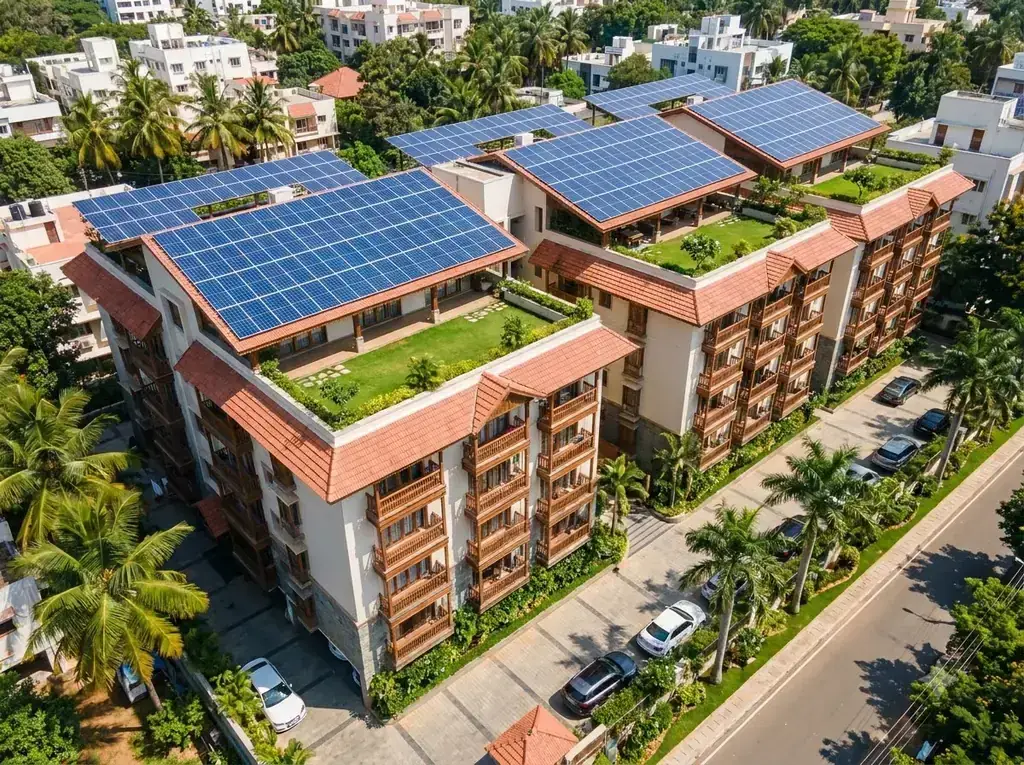
3 kW to 10 kW sized against twelve months of consumption, with PM Surya Ghar up to ₹78,000 filed and followed through.
Six of the things that change a design in Tamil Nadu. We confirm which apply at the survey.
The short answer
Solar installation in Tamil Nadu
Blues Renewables is a solar EPC and solar lighting contractor working across Tamil Nadu since 2020. We install rooftop solar for homes, apartments and businesses across Chennai and the metropolitan districts, deliver commercial and industrial solar EPC across the state’s manufacturing belts, and supply solar street, pillar and wall lighting projects in every district. TANGEDCO is the single distribution utility statewide, and households claim up to ₹78,000 under PM Surya Ghar.
The local picture
What is different about solar in Tamil Nadu
Solar in Tamil Nadu operates under TNERC regulations and is implemented through a single state distribution utility, which simplifies matters considerably compared with states running several licensees. Three features distinguish the state: a separate solar generation meter is required above 10 kW alongside the bi-directional net meter, the domestic tariff is telescopic and billed bi-monthly with a free-unit allowance, and since 21 September 2026 a state top-up of up to ₹22,000 sits on top of the central PM Surya Ghar scheme, for homes registered on its portal on or after 5 August 2026.
The regulatory and tariff picture
One distribution utility statewide
Every net metering application, feasibility assessment, inspection and meter installation goes through your local section office of the same organisation, wherever in the state you are.
One net meter, and a second above 10 kW
A bi-directional net meter records import and export and determines your bill. A separate solar generation meter, which records total array output, is mandatory only above 10 kW.
Net metering for domestic consumers up to sanctioned load
With one-for-one credit. Non-domestic categories are generally on net feed-in, where exports earn a rate below the retail tariff.
A telescopic bi-monthly domestic tariff
With a free-unit allowance that changes at the 500 unit threshold, which determines what each generated unit is actually worth to a household.
State top-up live from 21 Sept 2026
Since 21 September 2026, Tamil Nadu adds a state top-up of up to ₹22,000 for homes registered on the PM Surya Ghar portal on or after 5 August 2026, taking the combined subsidy to ₹1,00,000.
DCR compliance is mandatory
For subsidised and net-metered systems, meaning modules built from cells on ALMM List-II.
The solar resource
Roughly 5.3 to 5.8 peak sun hours a day
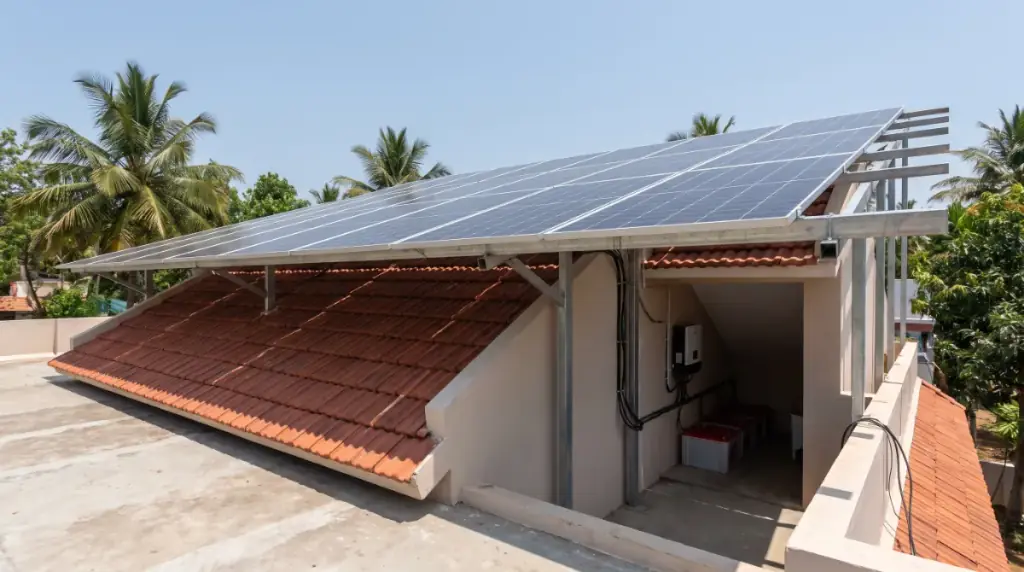
A kilowatt of rooftop capacity typically generates around 1,500 to 1,650 units a year across the state, with the southern and western districts generally stronger than the coastal north. Coastal and cyclone conditions affect the entire eastern seaboard from Chennai to Kanyakumari: those districts sit in a high basic wind speed zone under IS 875 Part 3 with a cyclone importance factor applied, and salt-laden air requires IEC 61701 salt mist certified modules with hot dip galvanised or aluminium structures.
What makes Tamil Nadu unusual
The industrial picture
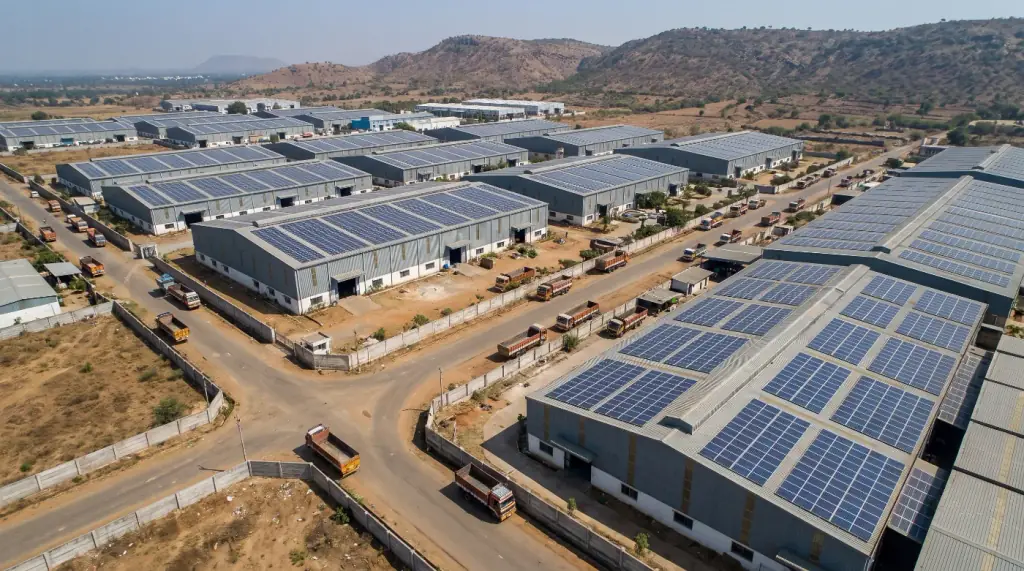
The state’s manufacturing base spans automotive around Chennai and Hosur, textiles and knitwear through Coimbatore, Tirupur and Erode, engineering at Tiruchirappalli, metals at Salem, poultry at Namakkal and port industry at Thoothukudi and Ennore. Each has a different load profile, and load profile rather than roof area is what determines an industrial solar system.
Our work
What we do in Tamil Nadu
Quick estimate
What size system does your bill suggest?
System size
5.5 kW
Indicative cost
₹2.90 L to ₹3.33 L
PM Surya Ghar subsidy
₹78,000
Monthly saving
₹5,400
Simple payback
3.5 yrs
Indicative only, at roughly 4.2 units per kW per day and a blended domestic tariff. Your roof, shading and sanctioned load set the real figure.
Get the real number →Rooftop solar for homes and housing societies
Chennai and the metropolitan districts. Systems from 3 kW to 10 kW, PM Surya Ghar subsidy filed and followed, TANGEDCO net metering handled end to end, and two years of free maintenance.
Commercial and industrial solar EPC
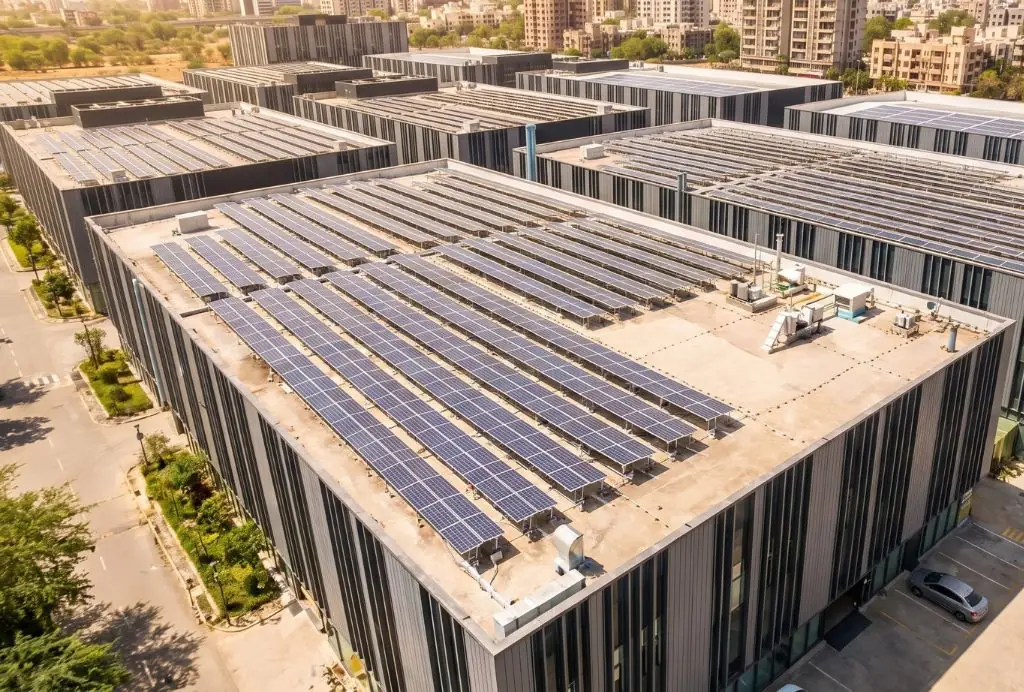
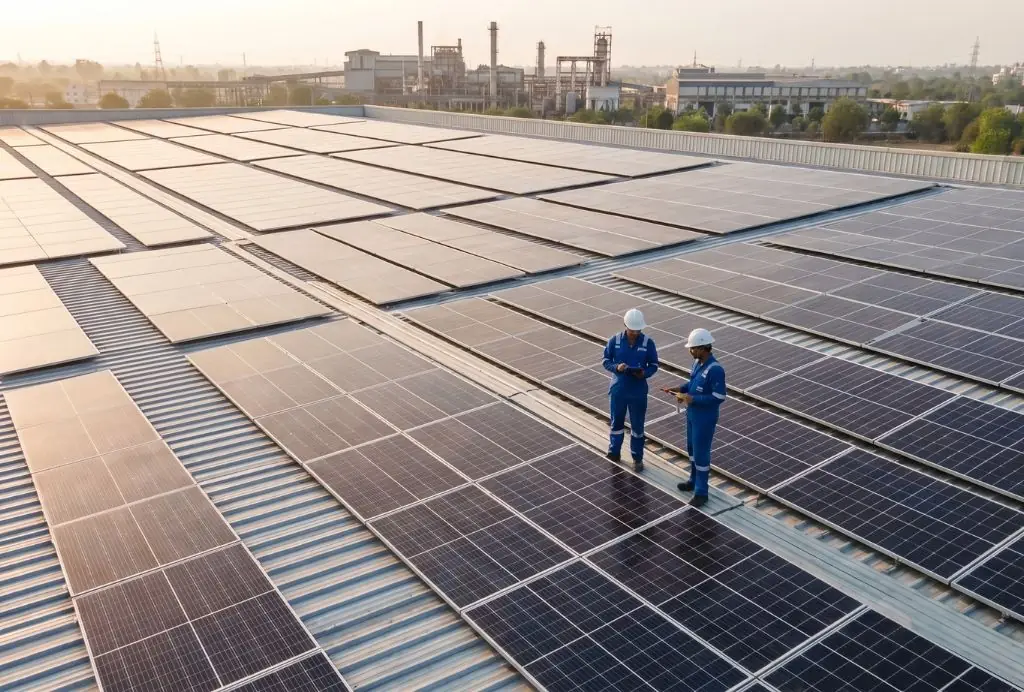
Across the state’s manufacturing belts. Energy audit first, then rooftop or ground-mount sized to daytime self-consumption, with accelerated depreciation and GST input credit where the entity can use them, and CAPEX or OPEX structures.
Solar street, pillar and wall lighting
Every district in Tamil Nadu, for panchayats, local bodies, gated communities, industrial estates, campuses and developers. 100W to 400W street lights on GI powder-coated poles. Projects from 50 units.
Energy audits, approvals and maintenance
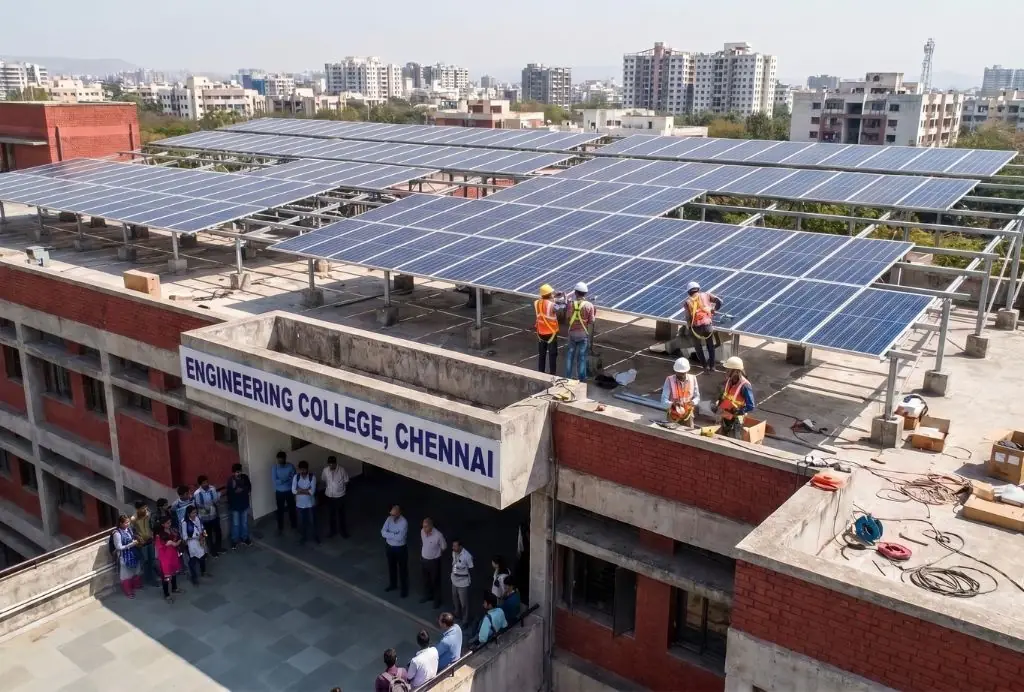
Twelve months of consumption analysed before any design, subsidy and net metering applications filed and followed through the section office, and two years of maintenance from commissioning.
Where we work in Tamil Nadu
Districts and cities
What we install
Services and guides
Free, no obligation
Book a free assessment in Tamil Nadu
Send us your last twelve months of electricity bills. For a home we will come back with a system size, an itemised price and the subsidy applied. For a business or industrial site we will run a load profile analysis first, because that determines what solar can actually offset and your roof only constrains it.
Common questions
Solar in Tamil Nadu, common questions
Do you install solar across all of Tamil Nadu?
Rooftop residential installation is concentrated in Chennai and the surrounding metropolitan districts of Chengalpattu, Kanchipuram and Tiruvallur. Commercial and industrial solar EPC is delivered across the state’s manufacturing belts, and solar street, pillar and wall lighting projects are delivered in every district from 50 units upward.
What solar subsidy is available in Tamil Nadu?
Households claim up to ₹78,000 under PM Surya Ghar, with ₹30,000 at 1 kW, ₹60,000 at 2 kW and ₹78,000 for 3 kW and above. Housing societies claim ₹18,000 per kW on common-area systems up to 500 kW. Businesses receive no subsidy but can claim accelerated depreciation of up to 40% in the first year plus GST input credit.
Is there a Tamil Nadu state solar subsidy?
Yes. Since 21 September 2026, Tamil Nadu adds a state top-up of ₹5,000 for 1 kW, ₹10,000 for 2 kW and ₹22,000 for 3 kW and above on top of the central PM Surya Ghar subsidy of up to ₹78,000, so the combined maximum is ₹1,00,000. It covers homes registered on the PM Surya Ghar portal on or after 5 August 2026, TEDA pays it directly with no separate application, and it is limited to the first one lakh consumers, with ₹50 crore allocated this year.
Which distribution company handles solar in Tamil Nadu?
A single state distribution utility serves the whole of Tamil Nadu, so there is no question about which company handles your connection. Net metering applications, feasibility approval, inspection and metering all go through your local section office.
How much does one kW of solar generate in Tamil Nadu?
Roughly 1,500 to 1,650 units a year depending on the district, based on approximately 5.3 to 5.8 peak sun hours daily. The southern and western districts generally have a stronger resource than the coastal north, and output peaks in the clear months and dips through the northeast monsoon.
Do I need two meters for solar in Tamil Nadu?
A bi-directional net meter records import and export and determines your bill. A separate solar generation meter, which records total output from the array, is required only above 10 kW; up to 10 kW TNPDCL takes generation as the lower of 21% CUF or the inverter reading.