






Specification · reviewed August 2026
Solar Power Plant Components
Last reviewed August 2026 · what each part does, how it is specified, what it costs, what to check
A MW-scale plant is nine components: modules, mounting structure, DC cabling and combiner boxes, inverters, AC cabling, a step-up transformer, the switchyard with protection and metering, earthing and lightning protection, and monitoring with a weather station. Modules are 43 per cent of the cost. The items that decide whether the plant performs are the cheap ones.
Brand decides who answers a warranty claim. Installation decides the performance ratio. Cable sizing, torque, crimping and earthing are worth more generation than any upgrade on the module datasheet.
Baseline on this page
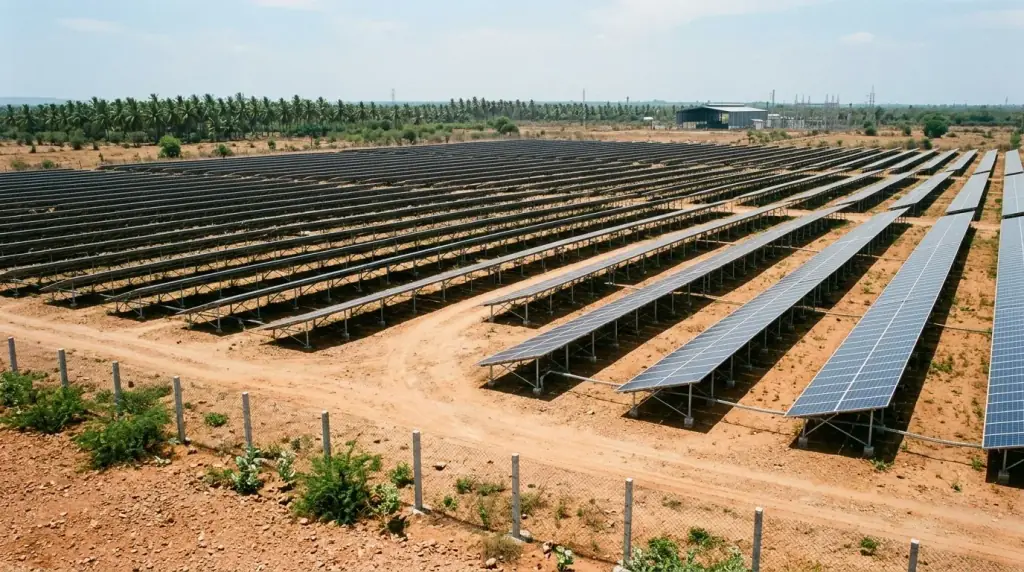
A 1 MW ground-mount plant at ₹4.05 crore: 1,000 kWp of modules, fixed tilt, one central inverter station, one step-up transformer, 11 kV injection. Prices are August 2026 and exclude GST.
Read alongside
The component stack
Nine components, and where the money goes
Shares are for a 1 MW fixed-tilt ground-mount plant. They hold within a point or two from 1 MW to 100 MW, which is why a quotation that deviates sharply from them is worth questioning line by line.
| Component | Share | Price band | What to check |
|---|---|---|---|
| Modules | 43% | ₹17–19 a watt | Temperature coefficient, warranty terms, bankability of the manufacturer, DCR or non-DCR, and that the serial numbers delivered match the datasheet supplied. |
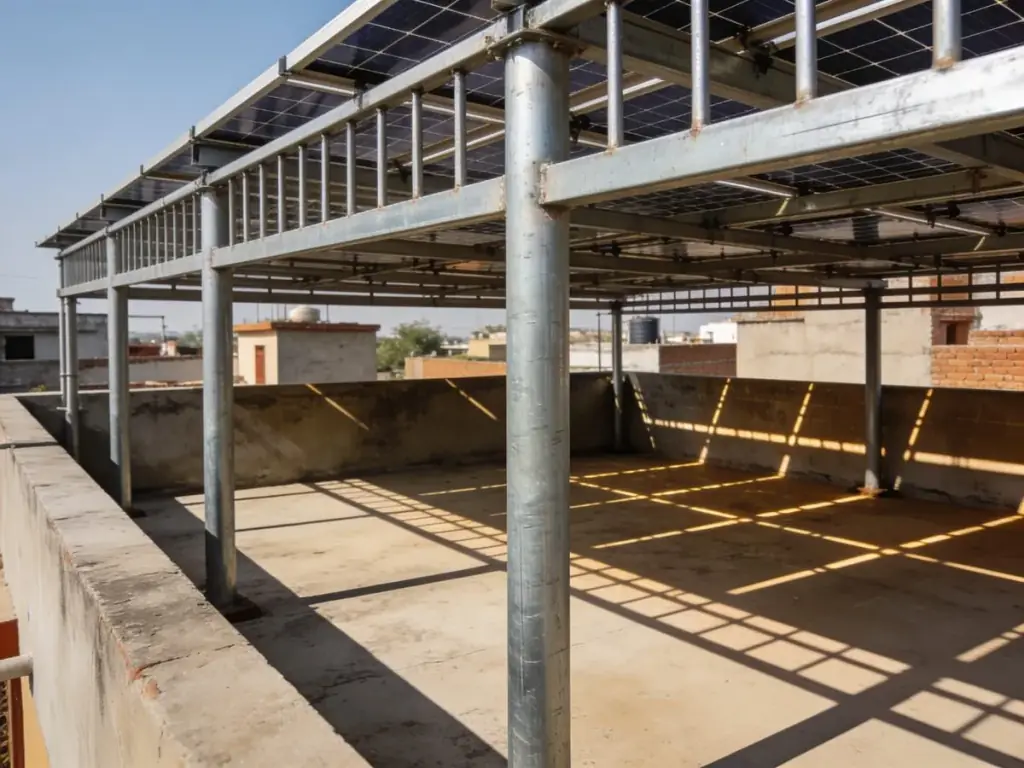
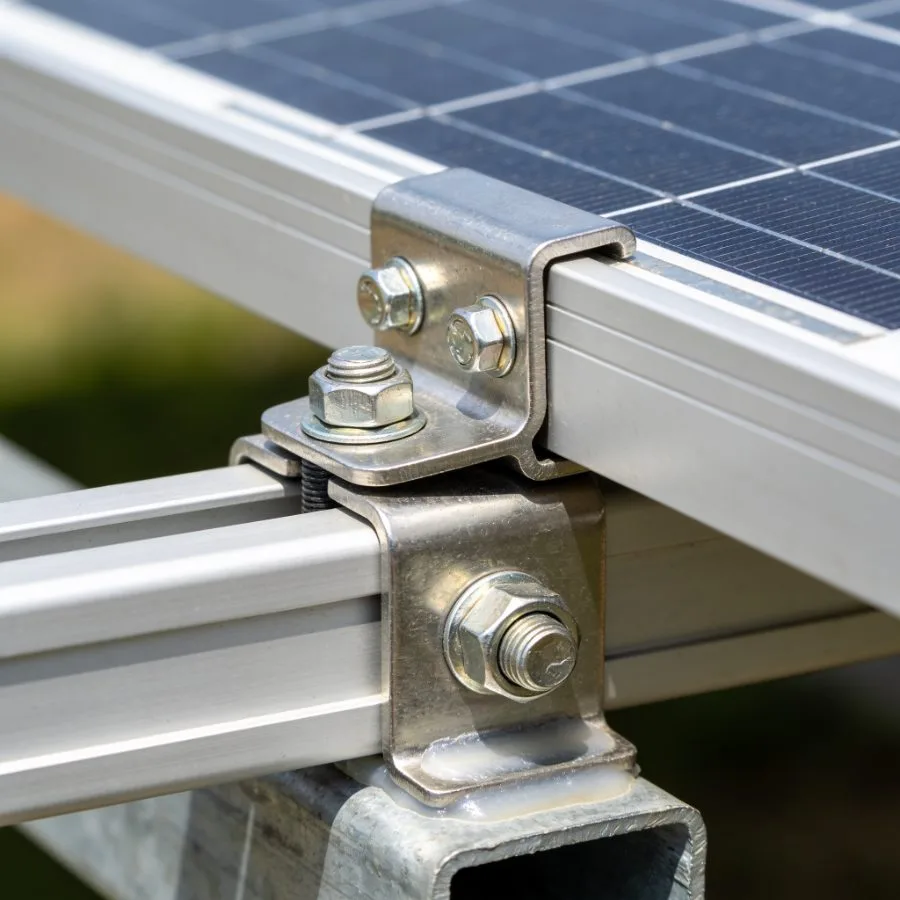
| Mounting structure | 12% | ₹4.20–5.00 a watt | Galvanisation thickness in microns, pile depth against the soil report, wind load design, and whether the tilt matches the latitude. |
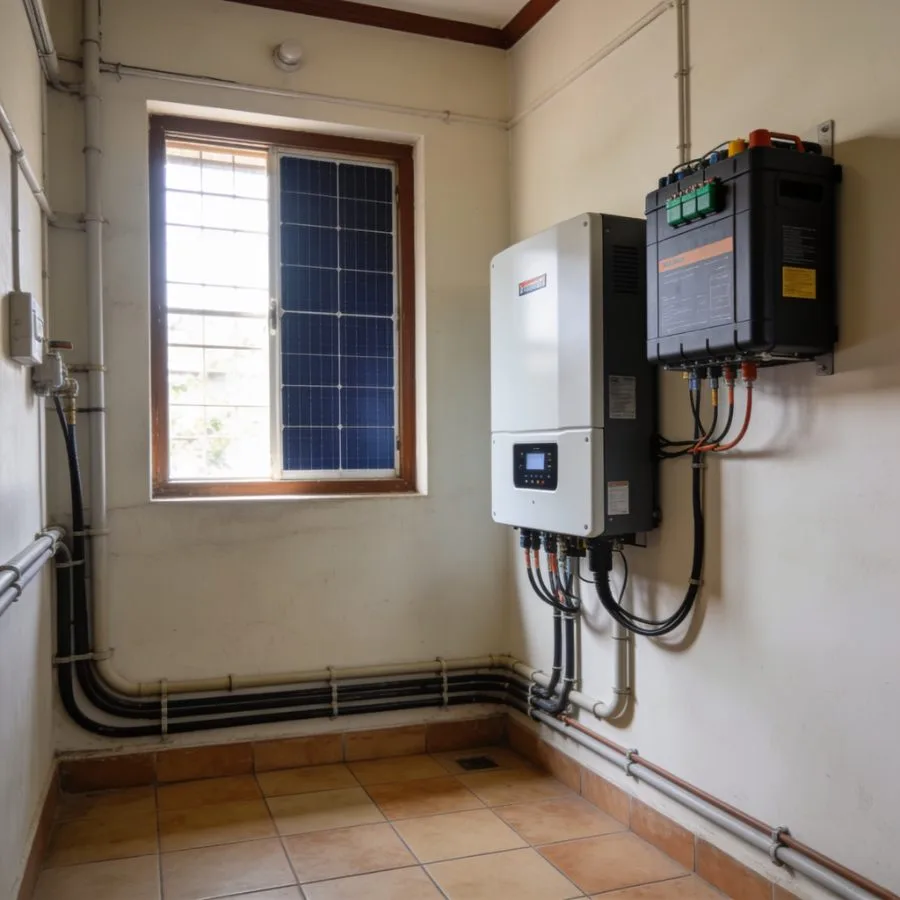
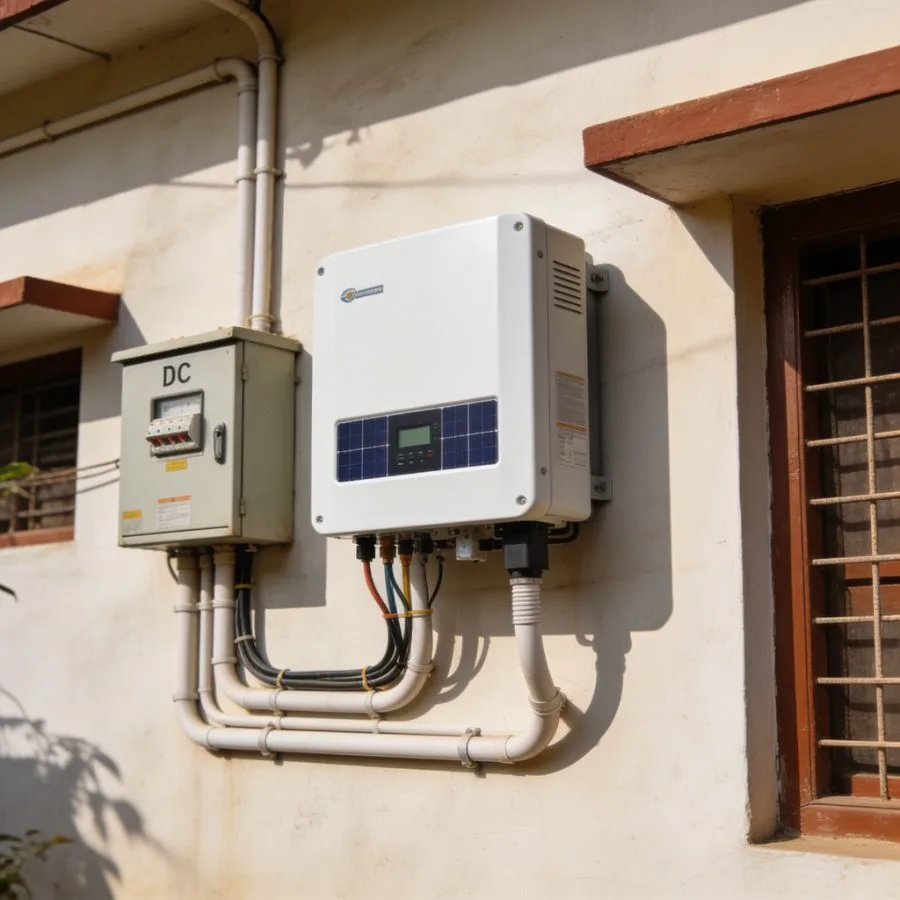
| Inverter station | 8% | ₹2.20–3.00 a watt of AC, units alone | The 8 per cent is the whole station: inverter units plus AC combiners, protection, station cabling and the enclosure. On a 1 MW plant the units are ₹18 to ₹26 lakh of it. Check the DC to AC ratio, the efficiency curve at part load, the derating temperature and service availability in your district. |
| DC cabling and combiner boxes | 5% | ₹1.60–2.20 a watt | Cable cross-section against voltage drop, UV rated insulation, connector brand, fusing and surge protection at both ends. |
| Civil works and foundations | 7% | ₹2.40–3.20 a watt | Foundation design against the geotechnical report, drainage, road width for a crane, and boundary construction. |
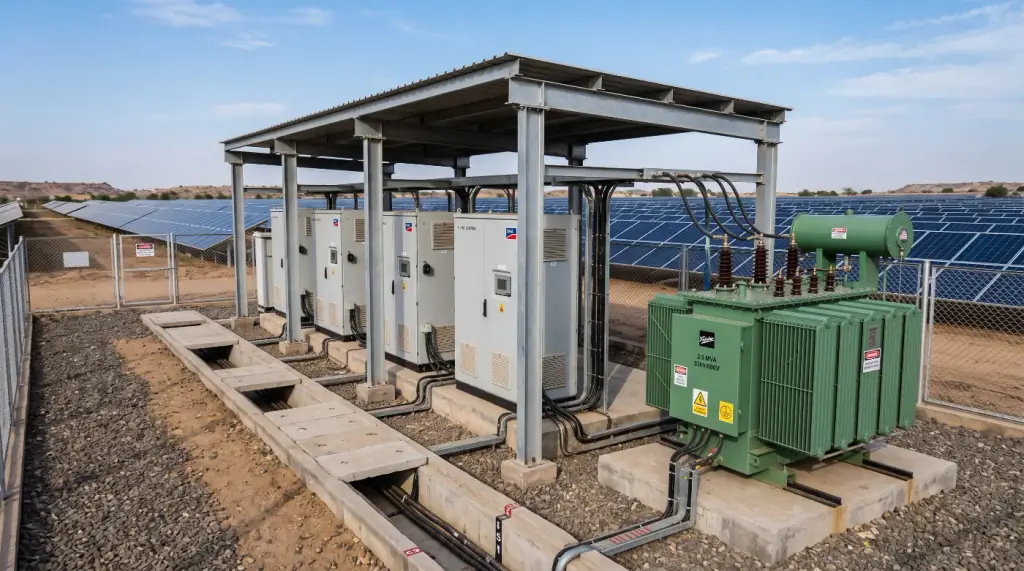
| Step-up transformer | 5% | ₹700–950 a kVA | Rating with 10 to 15 per cent headroom, no-load and load losses, vector group, tap range, and oil test reports. |
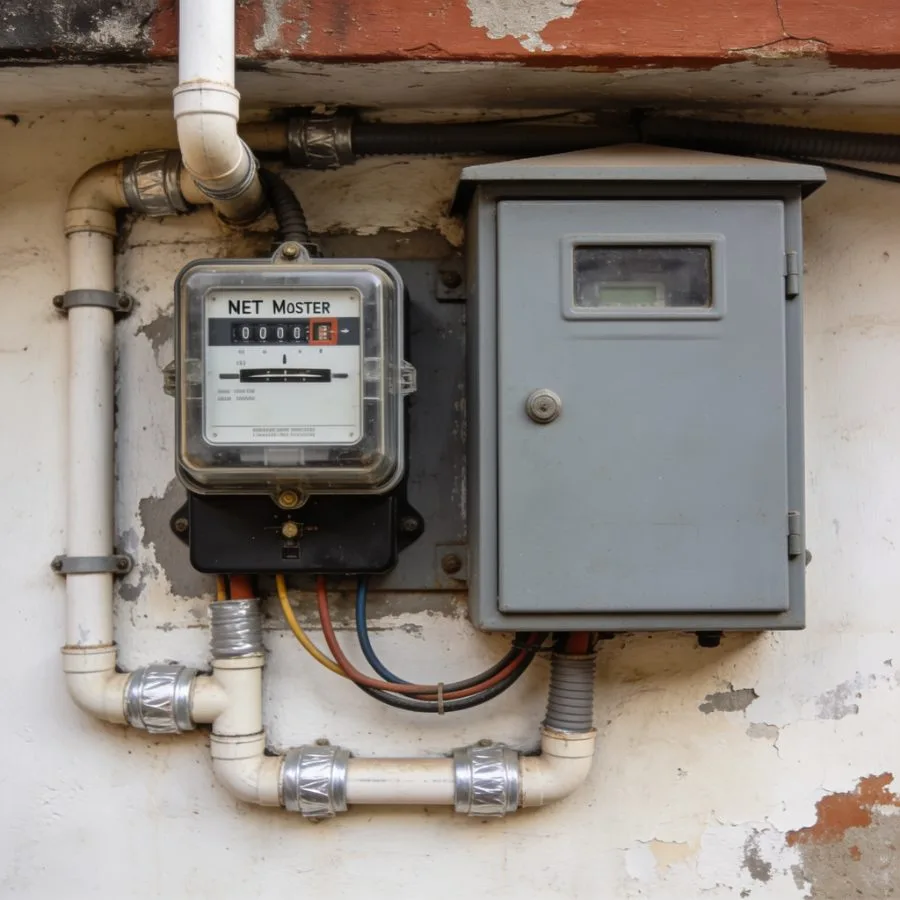
| Switchyard, protection, metering | 6% | ₹30–60 lakh at 11 kV | Relay scheme and settings, CT and PT accuracy class, breaker rating, and metering that matches what the DISCOM will accept. |
| Earthing and lightning protection | 2% | ₹60–90 lakh per 10 MW | Earth resistance measured and recorded, continuity across structures, and lightning protection zone coverage across the array. |
| Monitoring, SCADA, weather station | 2% | ₹8–14 lakh | String level monitoring, a pyranometer, and data you can export. Without irradiation measurement you cannot compute performance ratio. |
The pattern in weak quotations
The three lines most often cut to win a price are DC cable cross-section, earthing scope and monitoring. Together they are under nine per cent of capex and they determine whether you can measure and maintain the plant for 25 years. A quotation ten per cent below the market band has usually saved the money here.
Sizing tool
Inverter and transformer sizing, worked through
Two decisions that quotations state without explaining: how much inverter capacity for a given DC array, and what transformer rating that implies. Set the array and the ratio and see both, with the standard ratings you would actually buy.
Modules
Forty-three per cent of the cost, and the least interesting decision
Module choice matters far less than the industry implies, as long as you avoid the genuine failure modes. Three things on the datasheet are worth reading; the rest is marketing.
Temperature coefficient
The number that decides how much output you lose on a 42-degree afternoon, which in Tamil Nadu is most of the year. Minus 0.29 per cent per degree against minus 0.35 is worth about one and a half per cent of annual generation.
Warranty, and who honours it
A 30-year performance warranty is only as good as the manufacturer behind it. Ask what the degradation curve guarantees in year twenty-five, and who administers a claim in India.
DCR or non-DCR
A scheme eligibility question, not a quality one. DCR is mandatory for PM-KUSUM and most government tenders and costs ₹3 to ₹4 a watt more. Outside those schemes there is no reason to pay it.
Bifacial, sometimes
Glass-glass bifacial modules gain three to eight per cent from reflected light, and only where the ground is genuinely reflective and the structure is high enough. On dark soil at low tilt the gain does not appear.
Wattage is a cost lever
620 Wp against 550 Wp means about 200 fewer modules per MW, so less structure, fewer clamps and less labour. Generation per kWp is identical. It is a capex decision, not a yield one.
Check what arrives
Serial numbers, flash test reports and batch consistency against what was quoted. Mixing batches within a string costs generation through mismatch for the life of the plant.
Inverters
Central or string, decided on the site rather than the spec sheet
Both work. The choice is about plot shape, service access and how you want failures to behave, and it is worth ₹10 to ₹15 lakh either way on a 1 MW plant.
Central inverters
One or two large units in a station. Cheaper per watt, simpler to monitor, and easier to maintain in one place. A failure takes out a large block of the plant, so spares holding and a contracted response time matter more than the brand. The default for compact sites above 1 MW.
String inverters
Eight to ten smaller units distributed across the array. Thirty to forty per cent more expensive installed, and a failure costs only that string block. Better on irregular or sloping plots, and easier to replace with locally available stock. The default below 500 kW and on fragmented sites.
Efficiency at part load
Peak efficiency is quoted at full load, which almost never happens. The weighted efficiency across the operating range is what determines annual yield.
Derating temperature
Every inverter derates above a stated ambient temperature. In an enclosed inverter room in May, an inverter that derates at 45 degrees will lose output in the hours that matter most.
Service, in your district
A three-week wait for a board costs a 1 MW plant about 60,000 units. Ask where the nearest service engineer and the nearest spare are physically located, and get it in the contract.
Transformer and switchyard
Sized once, and expensive to get wrong
The transformer and switchyard are eleven per cent of capex and the part of the plant a DISCOM inspects most closely. Sizing is arithmetic; the specification is where mistakes hide.
| Plant DC | Inverter AC | Transformer | Notes |
|---|---|---|---|
| 1,000 kWp | ~830 kVA | 1,000 kVA | 11 kV injection in most states. One oil-filled unit, being the next standard rating above 830 kVA plus headroom. |
| 2,000 kWp | ~1,650 kVA | 2,000 kVA | 33 kV injection at this size in most distribution codes, which changes the metering and protection scope. |
| 5,000 kWp | ~4,150 kVA | 5,000 kVA | Often two units of 2,500 kVA for redundancy and easier transport to site. |
| 10,000 kWp | ~8,300 kVA | 2 × 5,000 kVA | Two inverter blocks with their own transformers, feeding one 33 kV or 110 kV switchyard. |
Losses are a 25-year cost
No-load losses run every hour of every year. A cheaper transformer with higher losses can cost more over the life of the plant than the difference in purchase price.
Vector group and tap range
Has to match the network and allow for voltage variation at the injection point. Getting this wrong is discovered at charging, which is the most expensive moment to discover anything.
Test reports, before dispatch
Routine tests, oil BDV, and a factory acceptance test where the size justifies it. Ask for the reports as a condition of payment rather than after delivery.
Metering the DISCOM accepts
CT and PT accuracy class, meter make and communication protocol have to match the utility specification. A non-compliant meter delays charging by weeks.
Balance of system
The cheap items that decide the performance ratio
Under twelve per cent of capex between them, and collectively responsible for more lost generation than any component choice on the datasheet.
DC cable cross-section
Sized for voltage drop, not just for current. A cable one size down saves lakhs at construction and loses one to two per cent of generation every year for 25 years.
Connectors and crimping
The most common cause of hotspots and DC arcing. Same-brand male and female connectors, correctly crimped with the right tool, checked with thermography at commissioning.
Earthing and continuity
Measured earth resistance recorded per pit, continuity across every structure row, and a documented test report. Retrofitting earthing across an energised array is unpleasant and expensive.
Lightning protection
Zone coverage calculated across the array rather than a few masts placed by eye. Surge protection at both DC and AC ends, and replaceable cartridges someone actually stocks.
Monitoring and the pyranometer
String level monitoring so a dead string is a report rather than an inspection, and irradiation measurement so performance ratio can be calculated at all. This is the line most often cut, and cutting it makes the plant unmeasurable.
Torque and mechanical completion
Module clamp torque logged per row, structure bolts checked, and a signed punch list. Unglamorous, and it is what distinguishes a plant that holds its performance ratio from one that drifts.
Spares
The shelf that pays for itself in one failure
A 1 MW plant loses about 4,270 units a day when it is down. Three weeks waiting for a part is 60,000 units and about ₹2 to ₹4.7 lakh depending on the tariff. The spares below cost a fraction of that.
| Spare | Quantity | Why |
|---|---|---|
| Modules, same batch | 2–5 | Breakage happens. A replacement from a different batch mismatches the string for the life of the plant. |
| DC fuses and holders | 1 set per combiner | A blown fuse takes a string offline and is invisible without string monitoring. |
| Surge protection cartridges | 2 sets | Consumed by lightning activity, which in Tamil Nadu is a seasonal certainty. |
| DC and AC connectors | 20–30 pairs | Damaged during maintenance, and the wrong brand as a substitute causes hotspots. |
| Inverter fan set or power module | 1 | The most common central inverter failure, and the one with the longest lead time. |
| String monitoring card | 1 | Cheap, and without it a fault becomes invisible until the monthly reconciliation. |
| Module clamps and hardware | 1 box | Consumed at every cleaning and inspection cycle. |
Put it in the O&M contract
Specify the spares list, who holds it, where it is stored and who replenishes it after use. A response time guarantee without a spares holding requirement is a promise to order a part quickly.
Where we fit, and where we do not
We specify and install this equipment. We do not sell it
Blues Renewables works at MW scale as a subcontract EPC and balance-of-system contractor inside other developer projects, and as a turnkey contractor at the rooftop and ground-mount sizes we have built. We are not a distributor and we hold no brand agency, so we have no reason to steer you toward any manufacturer.
What a specification read covers
- Whether the bill of quantities has the cable sizes, earthing scope and monitoring a 25-year plant needs.
- Whether the inverter sizing and DC to AC ratio suit your tariff and your generation profile.
- Whether the transformer rating and vector group match the injection point.
- What the quotation has left out, which is usually earthing, monitoring or spares.
What we will tell you to get elsewhere
- Equipment supply, brand recommendations or distribution.
- Manufacturer warranty administration or claims.
- Type testing, certification or independent equipment inspection.
- Detailed engineering for a plant we are not building.
Send the bill of quantities
A quotation with a proper bill of quantities can be read in an hour, and the gaps are usually in the same three places. We will tell you what is missing and what it will cost you in generation rather than in rupees.
The quickest tell in a MW-scale quotation: if the DC cable schedule, the earthing scope and the monitoring specification are not itemised, the price is not comparable to anything.
Components and specification, answered
What are the main components of a solar power plant?
Modules, mounting structure, DC cabling and combiner boxes, inverters, AC cabling, a step-up transformer, the switchyard with protection and metering, the earthing and lightning protection system, and monitoring with a weather station. On a ₹4 crore 1 MW plant, modules are about 43 per cent of the cost, the structure 12, the inverter station 8, cabling 8, civil works 7, and the transformer and evacuation 11. The inverter station line covers the units plus AC combiners, protection and the enclosure, not the units alone.
How many solar panels are needed for a 1 MW plant?
Between 1,600 and 1,820 modules, depending on wattage. At 620 Wp it is about 1,613 modules for 1,000 kWp; at 550 Wp about 1,819. Higher-wattage modules mean fewer mounting points, less structure and less labour per kilowatt-peak, which is why the market has moved to 580 to 630 Wp for ground-mount plants. Generation per kWp is the same either way.
What does a 1 MW solar inverter cost?
A 1 MW array at a DC to AC ratio of 1.20 to 1.25 needs about 800 to 875 kVA of inverter rather than 1,100, and a central unit of that rating costs ₹18 to ₹26 lakh in 2026, or ₹2.20 to ₹3.00 a watt of AC capacity for the unit itself. Add the AC combiners, protection, station cabling and enclosure and the whole inverter station reaches about 8 per cent of project cost. String inverters for the same plant, typically seven or eight units of 125 kW, cost ₹30 to ₹42 lakh installed including the additional AC combiner and cabling. Central is cheaper and concentrates the risk; string costs more and fails in smaller pieces.
How do I size the step-up transformer?
Take the inverter AC output, add 10 to 15 per cent headroom, and round up to the next standard rating. A 1 MW plant with 900 kVA of inverter output takes a 1,000 or 1,250 kVA transformer; a 5 MW plant with 4,500 kVA takes 5,000 kVA, often as two units for redundancy and easier transport. Oversizing wastes money on no-load losses; undersizing clips output on the best generation days of the year.
What is a DC to AC ratio and what should it be?
It is the DC module capacity divided by the inverter AC capacity. In India 1.2 to 1.3 is normal: modules rarely produce their nameplate output, so slightly undersizing the inverter captures more energy per rupee spent. Above about 1.35 you start clipping the peak of clear March days, which is acceptable if the tariff is flat and wasteful if it is not.
Which module type should a ground-mount plant use?
N-type TOPCon modules of 580 to 630 Wp are the mainstream ground-mount choice in 2026, with bifacial glass-glass construction where the ground is reflective enough to justify it. What matters more than the technology label is the temperature coefficient, the warranty terms, whether the manufacturer will still exist in year fifteen, and whether the modules are DCR or non-DCR, which is a scheme eligibility question rather than a quality one.
What spares should a plant hold?
Fuses and surge protection devices, a spare string monitoring card, DC and AC connectors, at least one spare inverter power module or fan set for a central inverter, module clamps, and two to five spare modules from the same batch. A central inverter waiting three weeks for a board costs a 1 MW plant about 60,000 units. Spares are the cheapest generation insurance available and are routinely omitted from the O&M scope.
Does component brand matter more than installation?
No, and it is not close. A tier-one module badly installed with undersized cable, poor earthing and no string monitoring will underperform a mid-tier module installed properly. Cable sizing, torque control, connector crimping, earthing continuity and commissioning testing decide the performance ratio. Brand decides whether a warranty claim in year twelve has anyone to receive it.