


Solar Panel Installation in Erode
Erode’s textile economy runs on a very large number of small and medium units rather than a handful of large ones. That changes the solar question from a technical one to a financial one, because the deciding factor for a small unit is usually whether it can use the tax benefit at all.
Installing across Tamil Nadu since 2020
Two years free maintenance included
Subsidy and TANGEDCO paperwork filed by us
Free site survey and energy audit, no obligation
What changes where
Pick what applies to your site
Powerloom
Shift pattern determines coverage, and the tax position usually determines whether you should own the system.
Six of the things that change a design in Erode. We confirm which apply at the survey.
The short answer
Solar installation in Erode
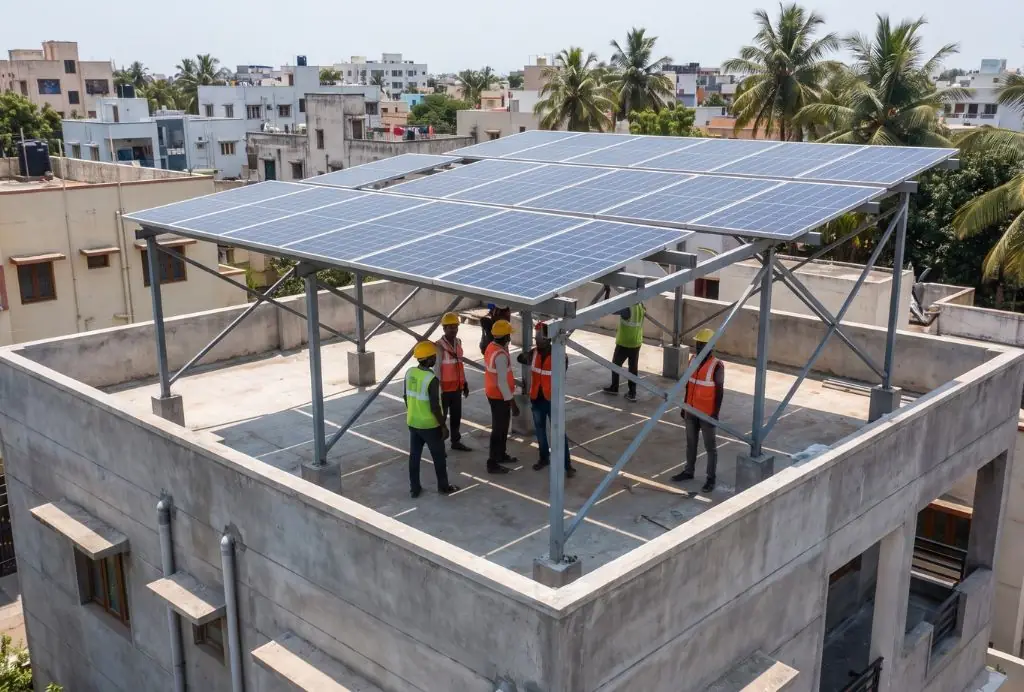
Blues Renewables delivers commercial and industrial solar EPC and solar lighting across Erode district. The region’s powerloom clusters, textile processing units, dyeing houses and trading operations are predominantly small and medium enterprises, where the funding structure frequently matters more than the hardware, and we set out both CAPEX and OPEX honestly before recommending either. For a residential benchmark, the solar panel price in Chennai lists installed costs from 3 kW to 10 kW, and our solar panel installation in Chennai page shows the survey-first process we also bring to Erode.
The local picture
Why the tax position decides it for a small unit
Most solar proposals to industrial buyers are built around accelerated depreciation, which allows up to 40% of the asset value to be written down in the first year. That benefit is only worth something to a business with taxable profit to offset. A small powerloom or processing unit running at thin margins, or carrying forward losses, gains nothing from it, and a proposal presenting it as central to the payback is describing something the unit cannot use.
On the technical side, the cluster’s characteristics
Shift pattern determines coverage
A single day shift consumes most of what the array generates. A two shift operation has substantial load outside generating hours that solar cannot serve.
Weekly closures matter
A unit closed one day a week exports a full day of generation at feed-in rates rather than offsetting consumption, and over a year that is a meaningful share of output earning a fraction of its value.
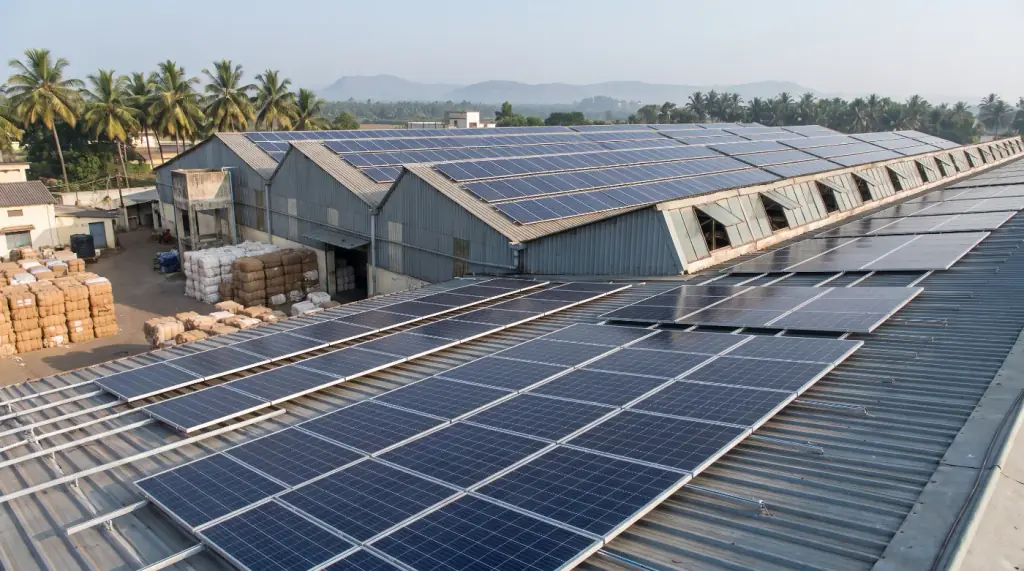
Sheet roofs on older sheds
Need remaining life assessed against a twenty-five year array before anything is fixed to them.
Many units are leased
Which raises roof ownership before roof area. Landlord participation or an OPEX arrangement usually fits a leased shed better than ownership.
Put this to your accountant first
Can we actually use accelerated depreciation this year and next?
And can we claim GST input credit on the installation. If either answer is no, model OPEX properly rather than treating it as the fallback. Non-domestic consumers are also generally on net feed-in, so exported units earn well below the tariff paid on imports: size to daytime self-consumption, not to available roof.
Our work
What we do in Erode
Quick estimate
What size system does your bill suggest?
System size
5.5 kW
Indicative cost
₹2.90 L to ₹3.33 L
PM Surya Ghar subsidy
₹78,000
Monthly saving
₹5,400
Simple payback
3.5 yrs
Indicative only, at roughly 4.2 units per kW per day and a blended domestic tariff. The state rooftop calculator run by TNGECL uses about 1,720 units per kW a year for Erode, about 4.7 a day. Your roof, shading and sanctioned load set the real figure.
Get the real number →Powerloom and textile units
Predominantly small and medium enterprises, where shift pattern determines coverage and the tax position determines the structure.
Processing and dyeing houses
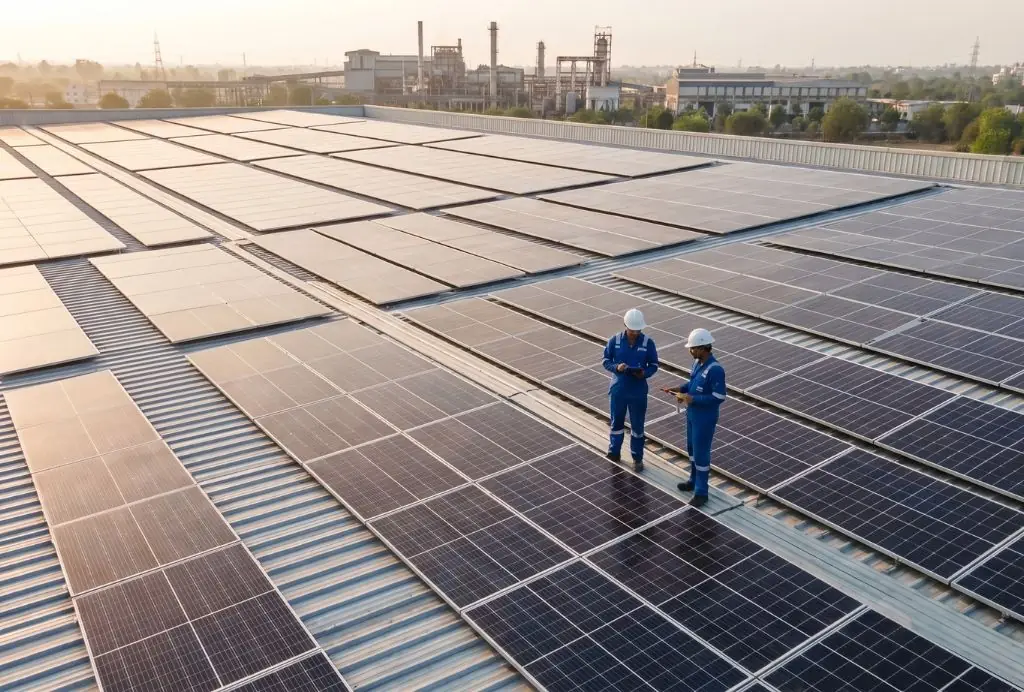
Heavier process loads, often multi shift, sized to the daytime portion with an honest statement of what that represents.
Trading and warehousing
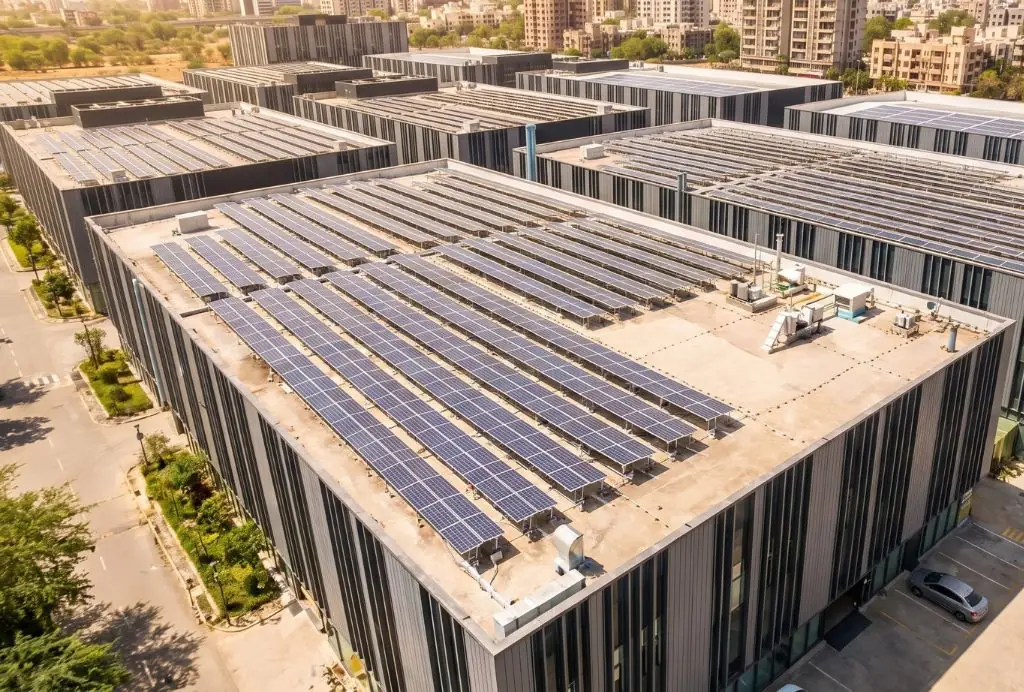
Large roofs with modest loads, so sizing to consumption rather than to available area is what makes the case work.
Commercial and institutional
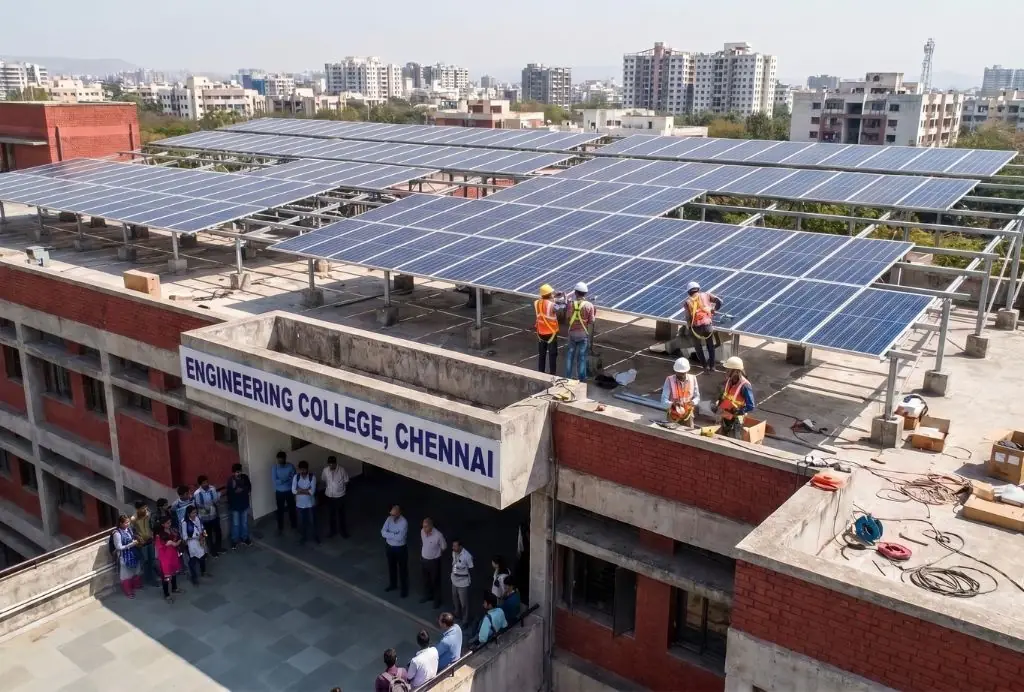
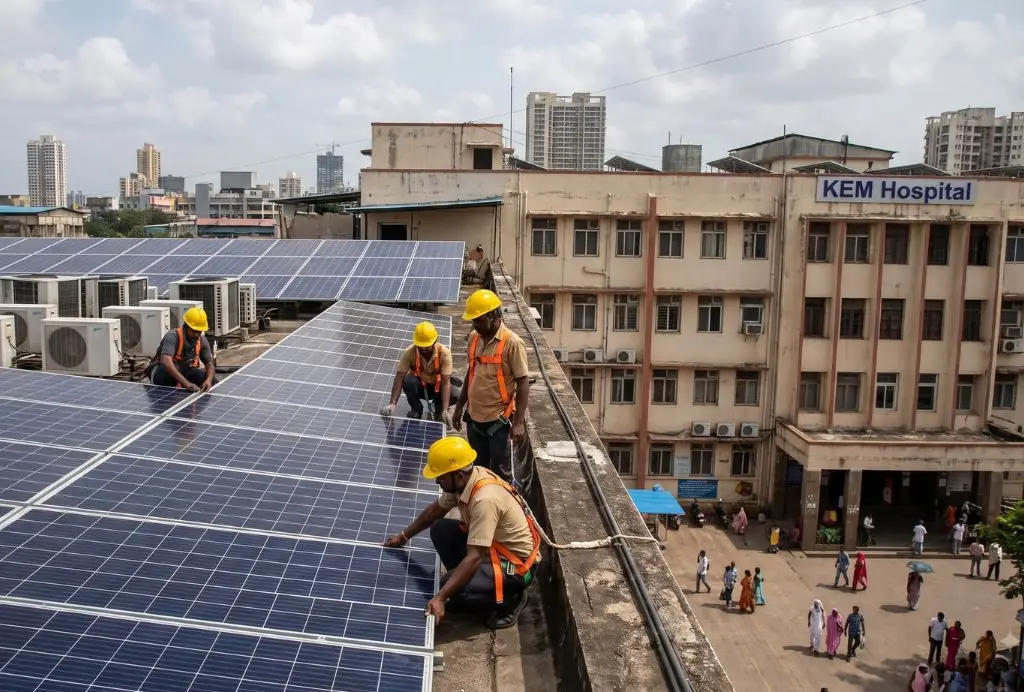
Offices, colleges and hospitals, where daytime load matches generation.
Solar street and area lighting
Panchayats, industrial estates and campuses across the district. Projects from 50 units.
What we install
Services and guides
Looking for a different district? See everywhere we work across Tamil Nadu.
Free, no obligation
Book a free assessment in Erode
Send us your last twelve months of electricity bills. For a business or industrial site we will run a load profile analysis first, because that determines what solar can actually offset and your roof only constrains it.
Common questions
Solar in Erode, common questions
Can a small powerloom unit benefit from accelerated depreciation?
Only with taxable profit to offset. Depreciation is a deduction against taxable income, so a unit running at thin margins or carrying forward losses gains nothing from it. If a proposal presents 40% first-year depreciation as central to the payback and your unit cannot use it, the payback figure in front of you is wrong.
Should a small unit use CAPEX or OPEX?
It depends on the tax position more than the capital. Where accelerated depreciation is usable and capital is available, ownership delivers the larger lifetime saving. Where it is not, an OPEX or RESCO arrangement with no upfront cost and payment per unit consumed often compares better. Ask your accountant before evaluating any proposal.
Does our shift pattern affect the savings?
Considerably. Solar generates for roughly five effective hours around midday, so a single day shift consumes most of the generation on site while a two shift operation has substantial load outside those hours. Weekly closures matter too, since a full day of generation exports at feed-in rates rather than offsetting consumption.
We lease our shed. Can we still install solar?
Only with the property owner’s written agreement, and the lease term needs weighing against a twenty-five year asset. Landlord participation, where the owner invests and the benefit passes through the rent, or an OPEX arrangement where a developer owns the system, usually fits a leased unit better than ownership.
How much of our bill will solar cover?
The daytime portion of the energy charge, and how much depends on shift pattern, operating days and the split between energy and demand charges on your bill. A twelve month load profile analysis gives the honest figure, which is why we start there rather than with a roof measurement.
Do you supply solar street lighting in Erode district?
Yes, across the district for panchayats, local bodies, industrial estates, campuses and gated communities. Street lights from 100W to 400W on GI powder-coated poles, needing no cabling, meter or connection application. Projects start from 50 units.