



Capacity page · 2026 pricing
10 MW Solar Power Plant Cost in India
Last reviewed August 2026 · capex, land, mounting, evacuation · every assumption stated
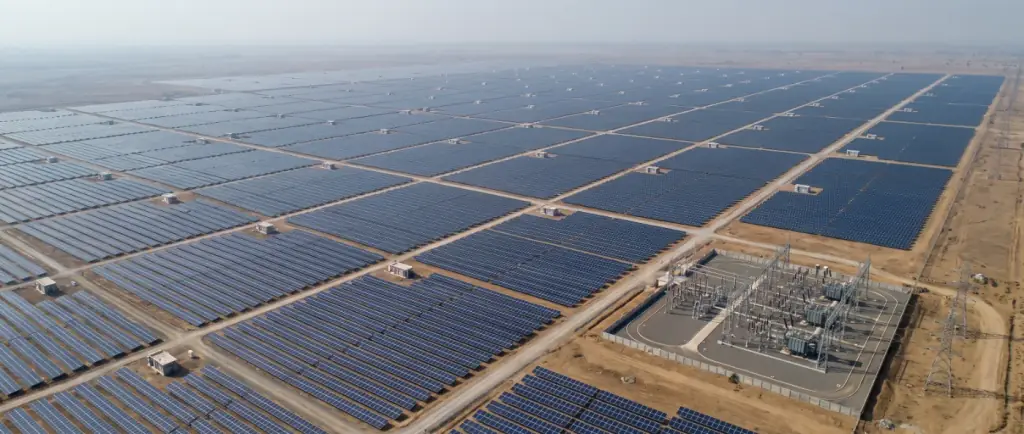
A 10 MW solar power plant costs ₹35 to ₹38 crore turnkey in 2026, excluding land. That is about ₹3.60 crore per MW, eleven per cent below a standalone 1 MW plant. It needs 40 to 50 acres, generates about 1.66 crore units a year in Tamil Nadu, and sits at the point where the network decides whether you connect at 33 kV or 110 kV.
Ten megawatts is where procurement decisions start to outweigh design ones. Mounting technology, package split and module logistics move the return more than any further optimisation of the layout.
Baseline on this page
10,000 kWp of non-DCR modules, fixed tilt, level terrain, one kilometre to a 33 kV substation with a spare bay, land excluded, 18.9–19.6% CUF, O&M at ₹55 lakh a year, degradation 0.5% a year.
Read alongside
Get a free feasibility read for your 10 MW site
Send the site, the substation and what you have been quoted. We reply in writing on land, bay availability and whether the capex sits inside the ₹35 to ₹38 crore band.
Cost breakdown
₹36 crore, line by line
Baseline plant: 10,000 kWp of non-DCR modules on fixed tilt, level terrain, one kilometre to a 33 kV substation with a spare bay, land excluded, GST treated separately. The midpoint of the band is ₹36 crore, which is ₹36 a watt.
| Line item | Cost | Share | What moves it |
|---|---|---|---|
| Modules, 10,000 kWp | ₹15.5 cr | 43% | Cell origin and the delivery schedule. Ten megawatts is 180 to 220 containers arriving against a piling programme. |
| Inverters | ₹2.9 cr | 8% | Central inverters in two or three blocks. String is defensible only on a fragmented site. |
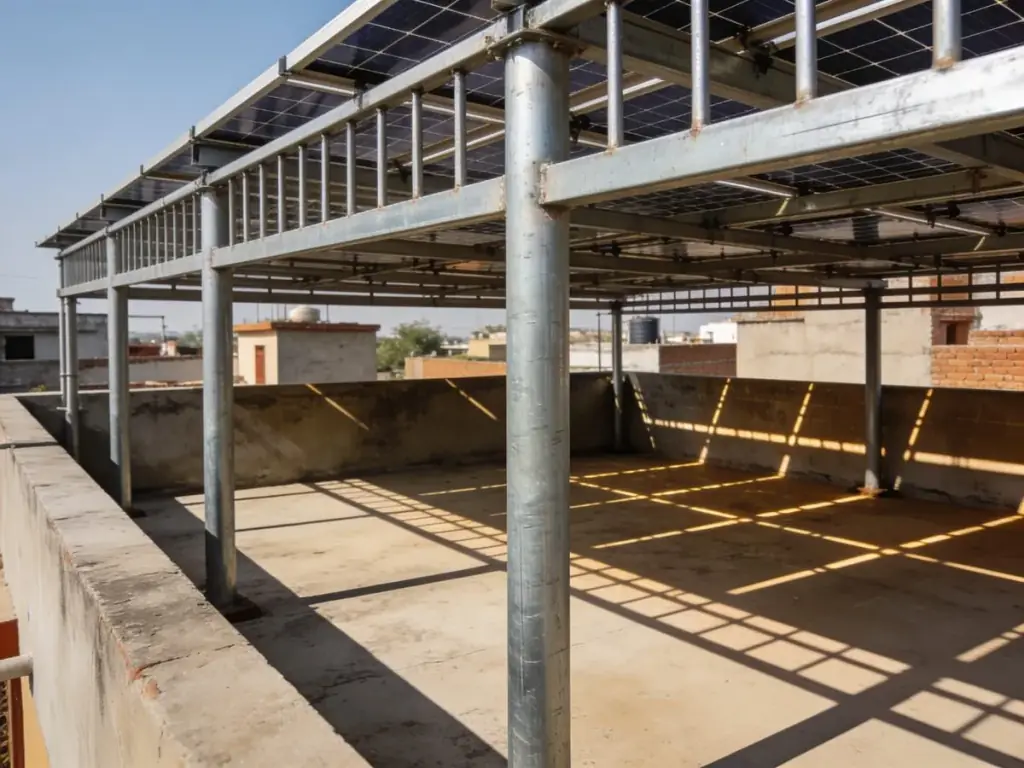
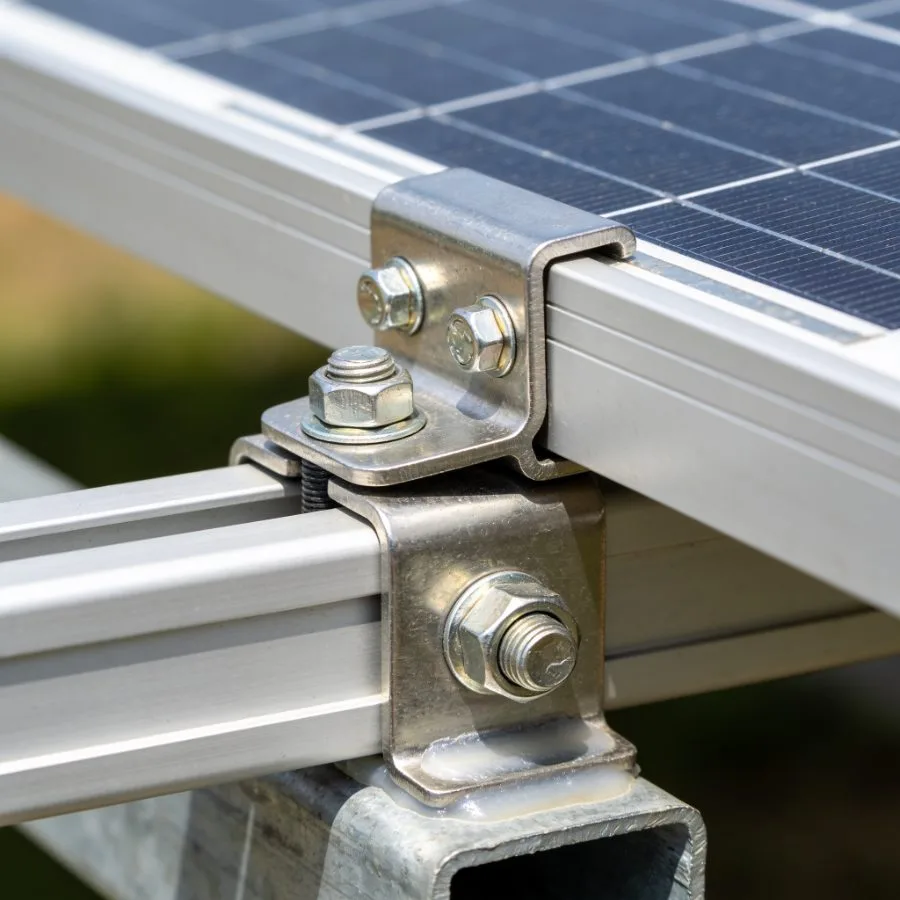
| Mounting structure | ₹4.3 cr | 12% | Galvanisation, pile depth and tilt type, all decided after the geotechnical report. |
| DC and AC cabling, junction boxes | ₹2.9 cr | 8% | Block layout and plot shape. Long thin sites add copper and losses. |
| Civil works, roads, drains, boundary | ₹2.5 cr | 7% | Rock, black cotton soil or a flood-prone site can take this past ₹4.5 crore. |
| Transformers, switchyard, line | ₹4.0 cr | 11% | Injection voltage and bay availability. At 110 kV this line alone reaches ₹6 crore or more. |
| SCADA, monitoring, weather, CCTV | ₹50 lakh | 1% | Nearly flat from 5 MW to 25 MW. Bought once. |
| Approvals, DPR, connectivity, inspectorate | ₹75 lakh | 2% | Fixed cost, and the main source of the per-MW saving against smaller plants. |
| Contractor margin, insurance, contingency | ₹2.65 cr | 7% | Scope clarity, delay risk allocation, and whether the performance guarantee has teeth. |
| Turnkey total | ₹36 cr | ₹36/W | Band ₹35 cr to ₹38 cr on competent quotations |
Land, GST, financing and interest during construction sit outside this table. At 10 MW, interest during construction is typically ₹1.5 to ₹2.5 crore and belongs in the project cost a lender sees, not in the EPC price.
Mounting comparison
Fixed tilt, seasonal tilt or trackers, decided properly
This is the one genuinely open technology decision at 10 MW. More generation costs more capex and much more land, and whether it pays depends on land price and tariff. Set both and see which structure wins on levelised cost.
Trackers also change the generation profile, pushing output later into the afternoon. Where your tariff or your load peaks after 3pm that is worth more than the extra units, and it does not appear in a levelised cost comparison at all.
Evacuation
Ten megawatts is the 33 kV ceiling in most networks
A 33 kV feeder can usually carry about 10 MW of injection. Whether yours can depends on what is already connected to it, which is a question only the DISCOM can answer and only in writing.
At 33 kV, if the network has room
A dedicated bay, a 33 kV switchyard, metering and protection. About ₹4 crore for the package with a short line, plus ₹14 lakh a kilometre. Faster approval, and the normal case where the substation is not already loaded.
At 110 kV, if it does not
A 110 kV bay, higher-rated transformers, a full protection scheme and CT and PT class accuracy at 110 kV. ₹6 crore or more for the package, ₹38 lakh a kilometre of line, and several months longer to approve.
The letter that decides the project
Apply for connectivity and ask three questions in writing: what spare transformation capacity the substation has, how much of it is already committed to other applicants, and at what voltage the DISCOM will accept 10 MW. The answers change the capex by crores and the timeline by quarters, and they are free to obtain. Price an evacuation package with the estimator on the 5 MW page.
Land
Forty to fifty acres, from twenty owners
At 10 MW the land is a transaction programme, not a purchase. Extent is the easy part; the count of survey numbers, the owners behind them and whether the parcel is contiguous decide the cost and the schedule.
Fixed tilt, 40 to 50 acres
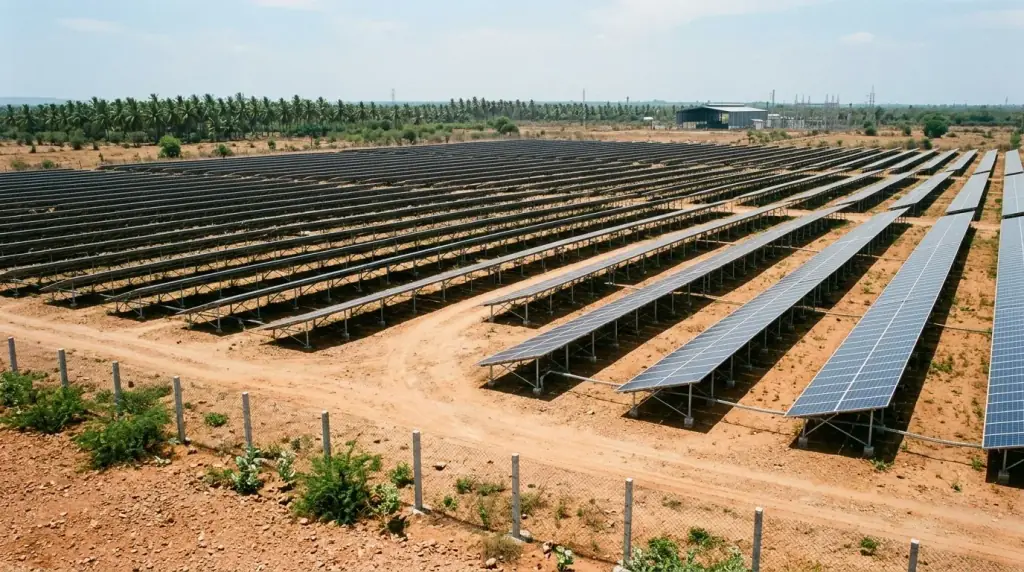
The default. About a third under module, the rest row spacing, roads wide enough for a crane, three inverter stations, the switchyard and setbacks.
Trackers, 62 to 78 acres
Fifty-five per cent more land for 15 to 20 per cent more generation. Where land is ₹40 lakh an acre that trade is usually a loss.
Fifteen to thirty survey numbers
Each one a title chain, an encumbrance certificate and a family to verify. Budget for an aggregator and for one holdout who has to be designed around.
Contiguity beats price
A compact fifty acres beats a scattered seventy. Gaps force cable runs, awkward road layouts and lost rows, and none of that appears in the land price.
Lease, usually
₹25,000 to ₹60,000 an acre a year on a registered 25 to 30 year lease with escalation. ₹15 to ₹20 crore of purchase against a ₹36 crore plant changes the return more than any equipment choice.
Classification and conversion
Confirm before any advance whether the classification supports a solar plant, and what conversion would cost and take. This is the most common reason a site fails after money has been spent.
Generation
1.66 crore units a year, and where they go
A 10 MW plant generates about 1.66 to 1.72 crore units a year in Tamil Nadu at 18.9 to 19.6 per cent capacity utilisation, roughly 45,600 to 47,100 units on an average day. That is more than most industrial consumers use, which is why the offtake structure comes before the equipment.
| State | CUF | Year one | Against Tamil Nadu |
|---|---|---|---|
| Tamil Nadu | 19.0% | 1.66 crore units | — |
| Maharashtra | 19.2% | 1.68 crore units | +1% |
| Karnataka | 19.4% | 1.70 crore units | +2% |
| Andhra Pradesh | 19.8% | 1.73 crore units | +4% |
| Gujarat | 20.4% | 1.79 crore units | +8% |
| Rajasthan | 20.8% | 1.82 crore units | +10% |
Degradation is not a footnote at this size
At 0.5 per cent a year, year twenty-five delivers about 1.46 crore units against 1.66 in year one. Over the term that is roughly 2.0 crore units less than a flat model assumes, which at ₹3.20 a unit is ₹6 crore of revenue that does not exist. Any 25-year projection using the first-year figure throughout is wrong by about that much.
Offtake
Three realistic buyers, and one that usually is not
Ten megawatts is beyond almost any single consumer. In practice the power goes to a DISCOM, to a group of open access consumers, or into a group captive structure. All figures below are the same ₹36 crore plant and O&M at ₹55 lakh a year.
DISCOM tender or feed-in
₹3.20 a unit
Net a year after O&M
₹4.76 cr
Simple payback
7.6 years
Bankable and predictable, and dependent on 70 to 75 per cent debt at a rate below the project return. Most 10 MW plants in India are built this way.
Open access, several consumers
₹5.40 a unit
Net a year after O&M
₹8.4 cr
Simple payback
4.3 years
The best risk-adjusted home for 10 MW, and the most administratively demanding. Several consumers means several contracts, several credit assessments and one charge stack to model.
A single industrial consumer
₹7.80 a unit
Net a year after O&M
₹12.4 cr
Simple payback
2.9 years
Only if one site genuinely consumes 1.66 crore units a year in daytime hours. Very few do. Surplus is exported at the export rate, which changes this column completely.
Group captive, the practical route at this size
Consumers hold at least 26 per cent of the equity and consume at least 51 per cent of the generation, which buys exemption from cross-subsidy surcharge. Both tests must hold every year, so a consumer whose production drops can take the exemption down with it for everyone. Build the charge stack before signing anything.
Procurement
At 10 MW the schedule is a logistics problem
Two hundred containers of modules and structure have to arrive in the right order against a piling programme, on roads that may not take a forty-foot trailer. This is where 10 MW projects lose months, not in engineering.
Module delivery in blocks
Order and receive in three or four tranches matched to construction blocks, not all at once. Storing 10 MW of modules on site is a security, warranty and insurance problem.
Access before mobilisation
Check that the approach road takes a trailer and that turning radii work. Building 400 metres of approach road is cheap; discovering you need it in month eight is not.
Split packages or single EPC
Splitting saves two to four per cent and hands you every interface dispute. At 10 MW a single turnkey contract with one performance guarantee is what most lenders will want to see.
Performance ratio, not peak watts
Guarantee a PR of 78 to 80 per cent measured over the first year, with liquidated damages. That is the only clause that protects you from a plant built to price.
O&M bought with the EPC
Five years, with cleaning frequency, spares holding, response times and minimum availability written in. ₹55 lakh a year at this size buys real service, so specify it.
As-built documentation
Single line diagram, cable schedules, string mapping, earthing layout and protection settings. In year twelve, with the contractor gone, this is the difference between a repair and a survey.
How to appoint and evaluate an EPC contractor · what each component does and how it is specified
Timeline
Ten months to build, eighteen to twenty-four to commission
Construction takes nine to twelve months. Land aggregation and the evacuation scheme set the commissioning date, and both start long before any contractor is appointed.
Land and diligence Months 0–7
Aggregation across fifteen to thirty survey numbers, title chains, encumbrance certificates, registered leases, survey, geotechnical investigation and the DPR.
Connectivity and finance Months 4–13
Connectivity application, voltage determination, evacuation scheme sanction, way leave, inspectorate, offtake contracts and financial close.
Construction Months 12–22
Piling, structure, 200 containers of modules and structure, DC and AC cabling, three inverter stations, transformers, switchyard and the line.
Testing and COD Months 22–24
Protection testing, charging permission, synchronisation, the performance ratio test, and reconciliation of the first month against the DPR.
Where we fit, and where we do not
We are a subcontract EPC at 10 MW, not the principal contractor
Blues Renewables works at MW scale as a subcontract EPC and balance-of-system contractor inside other developer projects, and as a turnkey contractor at the rooftop and ground-mount sizes we have built. We do not own plants, bid tenders or hold power purchase agreements. At 10 MW we work inside someone else scope, and we will say so plainly.
What we can take on at 10 MW
- Balance-of-system packages inside a principal EPC scope: structure, DC, AC, earthing and testing.
- A feasibility read on the site, the substation position and the quotations you are holding.
- Comparing EPC bids line by line and identifying which one has priced evacuation and civil works honestly.
- O&M scope definition so the contract you sign is measurable.
What we will tell you to get elsewhere
- Principal EPC responsibility at 10 MW with a single-point performance guarantee.
- A bankable DPR, a financial model and a lender engineer to certify the technical package.
- Land aggregation across thirty survey numbers, title diligence and conversion filings.
- Tender bidding, open access registration and the DISCOM interface.
Send us the site, the substation and the bids
District, extent, number of survey numbers, the nearest substation and what you have been quoted. We will come back in writing on the land position, bay availability, a defensible generation figure, and whether the capex sits inside the band on this page.
At 10 MW the two questions worth answering before anything else are what voltage the DISCOM will accept and how many owners stand behind the fifty acres. Both are free to ask and both can end a project.
10 MW solar plants, answered
How much does a 10 MW solar power plant cost in India?
A 10 MW solar power plant costs ₹35 to ₹38 crore turnkey in 2026, excluding land. That is ₹3.50 to ₹3.80 crore per MW, or ₹35 to ₹38 a watt, for fixed-tilt non-DCR modules on level terrain with a 33 kV or 110 kV injection point nearby. DCR modules add ₹3.5 crore, single-axis trackers about ₹6 crore, and a long evacuation line can add several crore more.
How much land is required for a 10 MW solar power plant?
Forty to fifty acres on fixed tilt, 48 to 60 on seasonal tilt and 62 to 78 with single-axis trackers. At this size the land has to be assembled and it is normal to be dealing with fifteen to thirty survey numbers and eight to twenty owners. Contiguity matters more than price: a compact fifty acres beats a scattered seventy on cable cost, road layout and how much capacity actually fits.
How many units does a 10 MW solar plant generate?
About 1.66 to 1.72 crore units a year in Tamil Nadu at 18.9 to 19.6 per cent capacity utilisation, which is roughly 45,600 to 47,100 units on an average day. In Rajasthan or Gujarat the same plant delivers 1.79 to 1.82 crore units. Output falls about 0.5 per cent a year, so year twenty-five delivers about 88 per cent of year one.
Does a 10 MW plant connect at 33 kV or 110 kV?
Either, and the choice is usually made by the network rather than by you. Ten megawatts is around the practical ceiling for a 33 kV feeder, so if the local 33 kV network is loaded the DISCOM will direct you to 110 kV. That roughly triples the base evacuation package, from about ₹4 crore to ₹6 crore or more, and adds months to the approval. Ask about network capacity before you commit to the land, not after.
Do trackers make sense at 10 MW?
Sometimes, and it is a genuine calculation rather than a preference. A single-axis tracker adds about ₹6 crore of capex and 55 per cent more land, and returns 15 to 20 per cent more generation plus a better afternoon profile. It pays where land is cheap, irradiation is high and the tariff is good; it does not where land is expensive or the site is small. At 10 MW it is worth modelling both properly, which the comparison on this page does.
What is the profit from a 10 MW solar power plant?
About ₹4.76 crore a year net of O&M at a DISCOM feed-in tariff of ₹3.20 a unit, ₹8.4 crore under an open access PPA at ₹5.40, and ₹12.4 crore where it displaces an industrial tariff at ₹7.80. Very few single consumers can absorb 1.66 crore units a year, so in practice a 10 MW plant sells to a DISCOM, to several open access consumers, or into a group captive structure.
How long does it take to build a 10 MW solar plant?
Nine to twelve months of construction and 18 to 24 months from a secured site to commercial operation. Land aggregation and the evacuation scheme set the date. At this size module logistics also become a scheduling constraint: 10 MW is 180 to 220 containers of modules and structure arriving against a piling programme that has to stay ahead of them.
Is a 10 MW plant eligible for subsidy?
No. PM Surya Ghar is residential rooftop only and PM-KUSUM Component A stops at 2 MW, so a 10 MW plant is outside both. Accelerated depreciation at 40 per cent applies to a taxpaying company, state solar policy benefits may apply, and viability gap funding exists only on specific central tenders. Any quotation showing a subsidy line at 10 MW should be read very carefully.