












Solar Panel Installation in Injambakkam
Coastal specification as standard, and sizing that follows your occupancy rather than your roof
Injambakkam is where Chennai’s coastline turns into hospitality. Beach houses, villas, resorts and event venues, most of them within a few hundred metres of the sea. The residential and commercial cases here are different from anywhere else in the city, and both are shaped by the same salt air.
Installing across Chennai since 2020
Two years free maintenance included
Subsidy and TANGEDCO paperwork filed by us
Free site survey and energy audit, no obligation
The short answer
Looking for a solar panel installation company in Injambakkam?
Injambakkam plots are large enough that shading is rarely the constraint, which makes it one of the easier parts of the city to size properly. Being this close to the sea, we specify IEC 61701 salt-mist certified modules and galvanised or aluminium structure as standard here, because coastal air will find any untreated steel within a couple of monsoons. We install across Chennai and have done since 2020, filing both the PM Surya Ghar subsidy of up to ₹78,000 for homes and the TANGEDCO net metering application, with two years of free maintenance included. Before the survey, you can check the solar panel price in Chennai for 3 kW to 10 kW systems and see how our solar panel installation in Chennai works, the same process we follow in Injambakkam.
What it costs here
A typical 5 kW system in Injambakkam
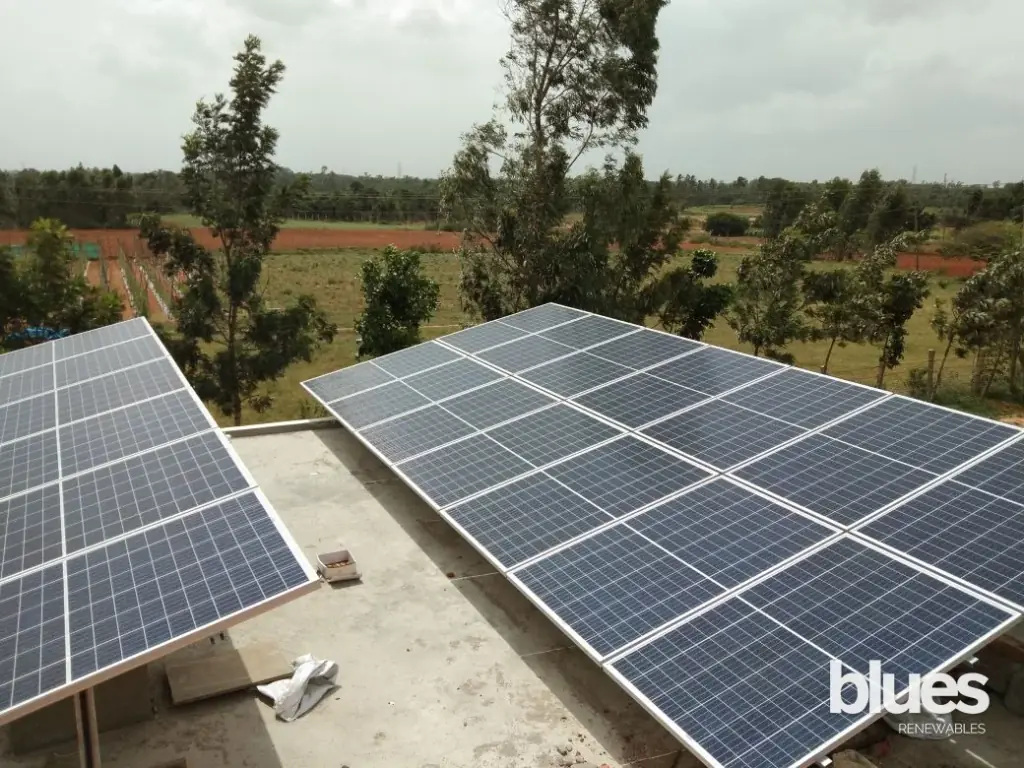
Standard 5 kW example
What a typical 5 kW home system does here. Your own figures come from the survey.
Your figures, not these ones
The numbers above are a standard 5 kW example. What your roof in Injambakkam can carry, and what it costs after subsidy, comes from a free survey: an engineer on the terrace, not a salesperson on the phone.
Not sure what your site can carry?
Send us your last electricity bill on WhatsApp and we will come back with an indicative system size and what it would offset. No visit needed for that first answer.
The local picture
Beach properties and hospitality load
Injambakkam’s property mix is unusual: large private beach houses alongside resorts, guest houses and event venues, most sitting close enough to the sea that salt mist corrosion is the governing specification factor. It is also a locality where a significant share of the demand is commercial hospitality rather than household, and hospitality load behaves nothing like an office or a factory.
The coastal specification is not optional here
IEC 61701 salt mist corrosion certified modules
Verifiable on the datasheet, not a verbal assurance.
Hot dip galvanised or aluminium structures
With corrosion-resistant fasteners. Painted mild steel fails quickly this close to the sea.
Wind design for a coastal site
Tamil Nadu’s coastal districts sit in a high wind speed zone with a cyclone factor applied.
Sheltered siting for inverters and protection equipment
Away from direct sea exposure where the building allows.
The second distinguishing factor
Hospitality load behaves nothing like an office
A resort or event venue does not consume on regular hours. Occupancy varies by season and by weekend, air conditioning and kitchen loads peak in the evening, and some properties run substantial event lighting into the night. Solar covers the daytime baseline well and the evening peak not at all without storage, so we look at the seasonal pattern rather than the annual total.
The opposite problem
Intermittently occupied beach houses
A property used at weekends generates through the week with nobody consuming it, and surplus exported under net metering is credited, but credit still unused on 31 March lapses. For those properties a smaller, better-matched system usually returns more than a larger one.
Areas we cover around Injambakkam: ECR, Injambakkam beach side, Akkarai, Uthandi approach, Kottivakkam border, the resort stretch.
All areas we cover in Chennai →Residential
Solar for Injambakkam homes
Beach houses and villas
Typically install 4 kW to 10 kW, though occupancy pattern matters as much as roof size in setting the right figure.
Weekend and holiday properties
Should be sized against actual consumption rather than roof capacity, since generation with nobody home is exported at a lower value than it saves when consumed.
Gated communities
Along the stretch, following the association route for common areas.
Coastal specification
Applies to every property here without exception.
Commercial and industrial
Solar for Injambakkam businesses
Hospitality is the defining commercial segment in Injambakkam. We audit twelve months of bills specifically to capture the seasonal variation, because an annual average will size the system wrongly in both directions.
Resorts and guest houses
Continuous but variable load, with evening peaks. Solar addresses the daytime baseline including pool pumps, laundry and daytime air conditioning.
Event venues and banquet properties
Highly variable, sometimes intense evening load. Sizing needs to follow the pattern rather than the peak.
Restaurants and beach cafés
Refrigeration through the day, evening trading, and often leased premises where roof rights need establishing.
Small offices and clinics
Along the ECR service road. Standard daytime commercial case.
Local guide
Before you go solar in Injambakkam: approvals, the marsh buffer and the canal side
Injambakkam grew from 10,084 people in 2001 to 23,346 in 2011, and it lies along the ECR beside the sea. Two current rules now decide what an owner should check before adding anything to a roof: the coastal regulation cases on the ECR and the 1 km buffer around the Pallikaranai marsh.
The High Court's ECR building list
In its order of 6 July 2026 on the long-running ECR batch, the Madras High Court recorded that authorities had identified about 798 buildings in Neelankarai, Injambakkam, Sholinganallur and Uthandi built in violation of approval, without plan approval or in breach of CRZ rules. At least 300 had no permission at all, and the Court directed action against those with no appeal or revision pending. If your building has a notice, or its approval is in doubt, settle that before investing in solar. The Court has also asked for a separate list of buildings put up before the CRZ rules with local body permission, so owners in that position should keep proof of the original approval and its date.
The 1 km Pallikaranai marsh buffer
After a National Green Tribunal order in September 2025, CMDA halted planning permissions inside a 1 km influence zone around the Pallikaranai marsh, and Injambakkam is on the list. Residents report that even repairs now need permission. A rooftop array bolted to an existing roof adds no floor area. A covered steel pergola that roofs over a terrace can look like an addition, so our design choice here is an open frame with no side cladding, and a check with the Corporation before anything that encloses space. The listed localities run from Madipakkam and Velachery to Sholinganallur and Injambakkam. Keeping the array on the existing slab, with no new walls or roofing, keeps it within the building's existing footprint.
Canal side plots and where equipment goes
Okkiyam Maduvu carries water from the Pallikaranai marsh and joins the Buckingham Canal near Injambakkam. In the 2015 floods, outflow along this route slowed because the canal was already overflowing with water from the Adyar. On plots on the canal side, mount the inverter and distribution boards on an upper floor wall or the terrace stair room, and keep cable joints above ground floor level. On the sea side, salt spray is the bigger issue, and the same upper wall position, out of direct wind, keeps the inverter sheltered.
What 4 kW and 5 kW make in Injambakkam
At the Chennai yield of 1,600 units per kW a year, a 4 kW system, the largest that fits a single-phase connection, makes about 6,400 units a year. A 5 kW system makes about 8,000 units a year but needs three-phase supply. For a home up to 10 kW, the network charge on generation is about ₹0.32 a unit. A 5 kW system costs about ₹3,20,000 before subsidy and about ₹2,20,000 after both subsidies. Many Injambakkam houses could take more, but sizing should follow twelve months of bills, not the roof.
What we install
What we install in Injambakkam
The process
How installation works
Free site survey
Shade-free roof area measured across the day, structure checked, connection name and sanctioned load confirmed.
Design and itemised quotation
Sized against twelve months of consumption, with every component named.
Approvals filed
PM Surya Ghar and TANGEDCO net metering, plus load enhancement or phase conversion in parallel where needed.
Installation
One to three days for a residential system, carried out by our own team rather than subcontracted.
Inspection and commissioning
TANGEDCO inspects, the net meter goes in, the system goes live.
Subsidy tracked to your account
And two years of maintenance included from commissioning.
We check the name on your electricity connection at the survey, because a mismatch stops more applications than any technical issue. See what to keep ready.
Free, no obligation
What will it cost on your roof in Injambakkam?
Only use the property some of the time?
Then a smaller system usually returns more than a larger one. Generation with nobody home is exported below retail value, so we size against your bills rather than your terrace.
What happens after you send your details
- We call you within one working day, and an engineer rather than a salesperson attends the site.
- The survey is free. We measure usable area and shading, check your connection and sanctioned load, and photograph the site.
- You get an itemised quotation naming every component and brand, with the subsidy or depreciation position set out.
- No obligation at any point. If solar does not make sense for your property, we will say so.
Common questions
Solar in Injambakkam, common questions
Does a beach house in Injambakkam need special solar hardware?
Yes, without exception. Properties this close to the sea sit in heavily salt-laden air, which corrodes module frames, mounting structures and fasteners far faster than inland. IEC 61701 salt mist certified modules and hot dip galvanised or aluminium structures are the minimum specification, and it is worth asking any installer to show the certification on the datasheet.
I only use my Injambakkam property at weekends. Is solar still worth it?
It can be, but the sizing changes. Generation through the week with nobody consuming it is exported, and surplus is credited under net metering, but any credit still unused on 31 March lapses unpaid. A smaller system matched to actual consumption usually returns more than a larger one sized to the roof. We work from twelve months of bills rather than roof area.
How is solar sized for a resort or event venue?
Against the seasonal pattern rather than the annual average, because occupancy varies and an average month tells you very little. Solar covers the daytime baseline well, including pool pumps, laundry and daytime cooling, but evening peaks from air conditioning, kitchens and event lighting are outside generating hours and cannot be served without storage.
How long does installation take in Injambakkam?
Six to ten weeks in Injambakkam. Lead time on salt-mist certified modules and galvanised structure can add a few days at the procurement stage, which we tell you at quotation rather than after you have signed.
Do you handle the subsidy and TANGEDCO paperwork?
Yes. We file the PM Surya Ghar application and the TANGEDCO net metering paperwork, and follow both through the section office. One point specific to coastal properties like those in Injambakkam: the hardware has to be ALMM-listed for the subsidy, and the salt-mist rated modules we specify here are, so the specification never puts the claim at risk.
What is included after installation?
Two years of free maintenance from commissioning, covering panel cleaning, annual inspection of connections and structure, generation monitoring and warranty coordination with the manufacturer.
My Injambakkam house is inside the 1 km marsh buffer. Can I still install solar?
The buffer restricts new planning permissions, and residents say repairs now need permission too. A rooftop array on an existing, approved roof adds no floor area, but check with the Corporation before building any covered structure on the terrace. We keep the design to an open frame for that reason.
There is a CRZ notice on our building. Should we wait before going solar?
Yes. The High Court has directed action against unapproved buildings on this stretch, and a system designed for 25 years should not go onto a roof whose future is in question. Once the notice is resolved, the survey and subsidy filing can go ahead as normal.
Long tail coverage
Areas we cover around Injambakkam
Not listed? We survey across Chennai and the surrounding districts. Call and we will tell you straight away whether we can reach your site this week.